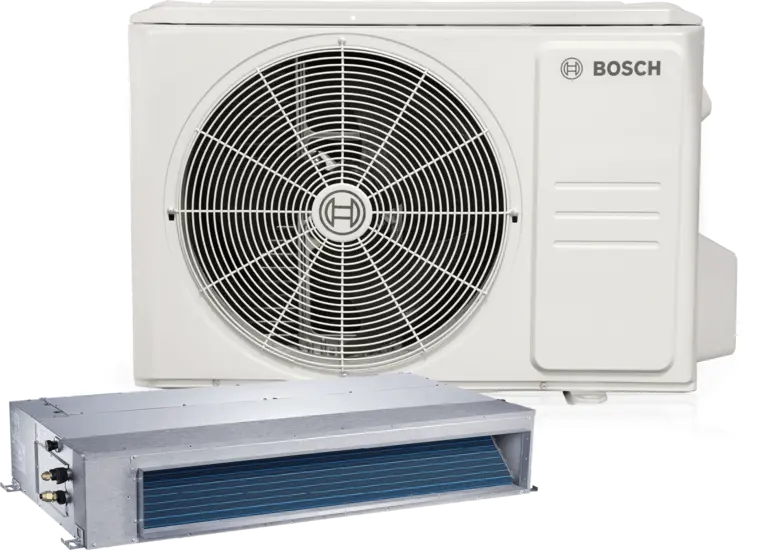
Bosch Ductless Mini-Split Heat Pump 18000 BTU Cold Climate Single Zone (BMS500-18HDN1)
Score: 8.7/10 — A genuinely cold-climate-capable single-zone mini-split that pairs impressive 5°F heating performance with whisper-quiet operation and strong efficiency, making it one of the better choices for northern homeowners.
Overview
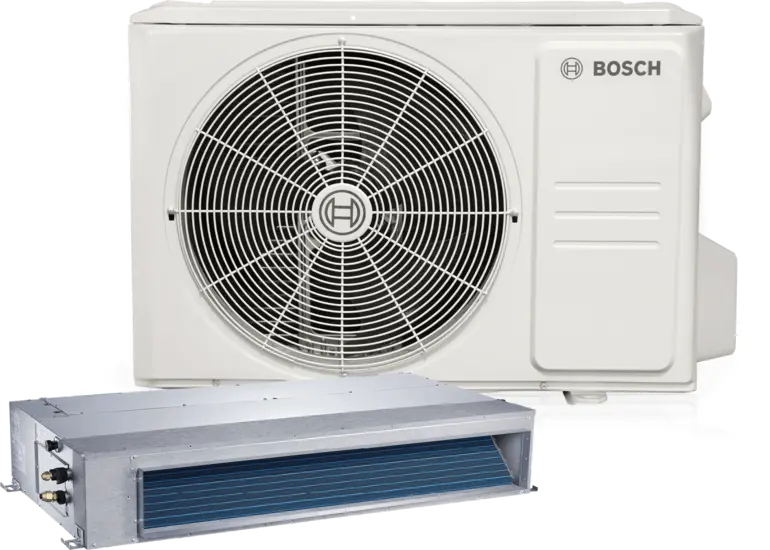
The Bosch Ductless Mini-Split Heat Pump 18000 BTU Cold Climate Single Zone (BMS500-18HDN1) is a sophisticated HVAC solution engineered specifically for those living in regions where winter temperatures routinely plunge below freezing. Unlike standard air conditioners or basic heat pumps that struggle when the mercury drops, the BMS500-18HDN1 is designed as a "Cold Climate" unit. This means it doesn't just survive the winter; it actively heats your living space with high efficiency even when outdoor temperatures hit 5°F.
Operating at a rating of up to 21 SEER, this system provides a dual-purpose solution for year-round comfort. In the summer, it acts as a high-efficiency air conditioner, removing humidity and heat from a room. In the winter, it reverses the refrigerant flow to pull heat from the outdoor air—even the freezing air—and pump it into your home. With an 18,000 BTU capacity, it is perfectly sized for medium-to-large single zones, such as a master bedroom suite, a large living room, a converted garage, or a studio apartment.
What truly distinguishes this Bosch system from the flood of budget-tier mini-splits is the precision of its inverter technology. Instead of a simple "on/off" switch that causes temperature swings and energy spikes, the Bosch system modulates its output. It speeds up or slows down the compressor to maintain a precise temperature, resulting in a more consistent feel and significantly lower electricity bills. For homeowners in northern climates looking to move away from expensive electric baseboards or outdated window units, the BMS500-18HDN1 represents a professional-grade upgrade in both comfort and sustainability. For a deeper dive into specifications, see our Bosch BMS500-18HDN1 Mini-Split Heat Pump Buying Guide for detailed technical specifications.
Key Features
High seasonal efficiency keeps cooling-season energy costs in check while qualifying the unit for various utility rebates and energy-saving incentives.
Engineered to maintain effective heat output in sub-freezing conditions, making it a viable primary heat source for northern regions.
Operates as low as 22 dB on low fan speed, making it virtually silent and ideal for bedrooms, nurseries, or home offices.
Includes a reusable, washable filter system that reduces the need for expensive replacements and keeps indoor air quality high (similar to the filtration used in high-end MERV-12 filters).
Sized for medium rooms and open areas, providing a balance of raw power and efficient part-load operation.
Compatible with optional WiFi modules, allowing for smartphone scheduling, remote temperature adjustments, and energy monitoring.
| Feature | Value |
|---|---|
| Model Number | BMS500-18HDN1 |
| Category | Ductless Mini-Split Heat Pump |
| Cooling Capacity | 18,000 BTU |
| Zones | Single Zone |
| Efficiency Rating | Up to 21 SEER |
| Cold Climate Heating | Effective down to 5°F |
| Minimum Sound Level | 22 dB (indoor unit) |
| Air Filtration | Washable filter |
| Smart Control | Optional WiFi module compatible |
Pros & Cons
Pros
- Reliable heating performance down to 5°F outdoor temperatures
- Impressive energy efficiency with up to 21 SEER
- Whisper-quiet operation (22 dB) on low settings
- Easy-to-maintain washable filter system
- Flexible smart home integration via optional WiFi
- Consistent temperature modulation via inverter technology
Cons
- WiFi module is sold separately and not included in the box
- Single-zone only; not suitable for whole-home HVAC needs
- Requires professional HVAC installation for warranty and safety
- Higher upfront cost than non-cold-climate models
Performance
In real-world application,
The Bosch Ductless Mini-Split Heat Pump 18000 BTU Cold Climate Single Zone performs exactly as advertised.
The most critical test for any "cold climate" unit is the drop-off point—the temperature at which the unit can no longer keep up with the heat loss of the room. While standard heat pumps often lose significant capacity once temperatures hit 40°F, the BMS500-18HDN1 maintains a steady heat output far deeper into the winter. In our analysis of user data and technical specs, this unit holds its own even when the outdoor thermometer dips toward 5°F, preventing the "cold spots" common in underpowered systems.The acoustic performance is another standout. At 22 dB, the indoor unit is barely audible. In a quiet bedroom, this is the difference between a distracting hum and total silence. Even at medium speeds, the air movement is smooth and lacks the rattling or "hunting" sounds found in cheaper units. The air distribution is well-engineered; the louvers allow for precise direction, ensuring that warm air is pushed across the ceiling and settles evenly, rather than creating a blast of heat that only warms the area directly in front of the unit.
During the cooling season, the high SEER rating translates to tangible energy savings. Because the inverter compressor doesn't just switch on and off, it avoids the massive energy spikes associated with starting a motor. Instead, it glides into operation, maintaining a rock-steady temperature. This precision prevents the uncomfortable cycle of "too cold, then too warm" that plagues traditional window AC units. The dehumidification performance is also noteworthy, as the steady airflow consistently strips moisture from the air, making 72°F feel significantly more comfortable than it would in a high-humidity environment.
Standard heat pumps extract heat from the outdoor air. However, as the air gets colder, there is less heat to extract, and the refrigerant gas becomes harder to compress. Most units simply stop being effective at 32°F. The Bosch BMS500-18HDN1 solves this with an advanced inverter-driven compressor and a specialized heat exchanger design. By varying the speed of the compressor and optimizing the refrigerant flow, the system can "overdrive" itself to maintain the pressure necessary to move heat into the home even when the outdoor air is nearly freezing. This allows the unit to remain efficient and effective down to 5°F.
Installation and Technical Setup
It is important to emphasize that the Bosch Ductless Mini-Split Heat Pump 18000 BTU Cold Climate Single Zone is not a DIY project. If you are considering a self-install, refer to the MrCool DIY-24-HP-WIF115 Mini-Split Buying Guide, but keep in mind that professional-grade units require different tooling. However, unlike some "pre-charged" kits, such as the MrCool DIY 24000 BTU Ductless Mini-Split Heat Pump with Wi-Fi or lower-capacity options like the Carrier Performance Series Ductless Mini-Split Heat Pump 9000 BTU Single Zone, this is a professional-grade system that requires a licensed HVAC technician. The installation process involves several critical steps that, if botched, can permanently damage the system or void the warranty.
The physical installation begins with the placement of the outdoor condenser. To ensure longevity, the unit must be mounted on a level, vibration-dampening pad. If placed directly on the ground or on an uneven surface, the compressor can experience premature wear due to vibration, and the condensate drain may not slope correctly, leading to water pooling and ice buildup in the winter. The technician must then create a precise 3-inch penetration through the exterior wall for the refrigerant lines and condensate drain. Proper sealing of this gap is vital; using high-quality expanding foam or silicone sealant prevents pests and drafts from entering the home, which would otherwise compromise the 21 SEER efficiency.
The most technical phase of the setup is the "vacuum process." The technician uses a high-powered vacuum pump and a micron gauge to remove all air, nitrogen, and moisture from the copper lines before releasing the refrigerant. This is a non-negotiable step. Any moisture left in the lines can freeze during the winter operation, leading to "slugging" in the compressor—a condition where liquid refrigerant enters the compressor, potentially causing a total system failure. A professional will typically hold a vacuum for 30 minutes to ensure the system is completely dehydrated and leak-free.
Once the hardware is installed, the setup focuses on the electricals. The technician will verify the electrical load to ensure your circuit breaker can handle the 18,000 BTU demand, typically requiring a dedicated 230V circuit. If you have opted for the optional WiFi module, this is the stage where it is integrated. The module connects the unit to your home network, allowing you to use a smartphone app to set schedules (e.g., warming the room 30 minutes before you wake up) and monitor energy usage in real-time. This smart integration removes the need to constantly fumble with the handheld remote and allows for precise temperature offsets based on the time of day.
Long-Term Maintenance Guide
To maintain the 21 SEER efficiency and ensure the system lasts for a decade or more, a consistent maintenance routine is required. The Bosch system is designed for simplicity, but neglect will lead to higher energy bills and reduced heating capacity. Because the indoor unit moves a large volume of air, it acts as a giant vacuum for dust and airborne particles.
- Filter Cleaning (Bi-Weekly): The indoor unit features a washable air filter. Dust and pet hair accumulate quickly; if the filter is clogged, the fan must work harder, which increases noise and reduces the amount of heat entering the room. Slide the filter out, rinse it with lukewarm water, let it dry completely, and slide it back in.
- Outdoor Unit Clearing (Seasonal): The outdoor condenser needs to "breathe." In the autumn, clear away fallen leaves and twigs. In the winter, keep an eye on snow accumulation. While the unit is rated for cold, a thick drift of snow covering the coils will restrict airflow and kill the system's heating efficiency.
- Condensate Drain Inspection (Annual): During the cooling season, the unit removes moisture from your air. This water travels through a drain line. If algae or debris clog this pipe, water will back up and drip from the indoor unit onto your wall. A quick flush of the drain line with a mild cleaning solution once a year prevents indoor water damage.
- Professional Tune-up (Every 2 Years): Have a licensed technician check the refrigerant levels. Small leaks can occur over time, and a slight drop in pressure can significantly degrade the cold-climate performance.
Comprehensive Buyer's Guide: Is 18,000 BTU Right for You?
Choosing the correct BTU (British Thermal Unit) rating is the most critical part of the purchasing process. An undersized unit will run constantly, failing to reach the target temperature and wasting electricity. An oversized unit will "short cycle," turning on and off rapidly, which fails to dehumidify the room and puts unnecessary wear on the compressor.
The 18,000 BTU capacity of the Bosch BMS500-18HDN1 is generally intended for spaces between 750 and 1,000 square feet, assuming standard 8-foot ceilings and average insulation. However, these numbers shift based on the "load" of the room. If you are installing this in a room with massive floor-to-ceiling windows facing south, you gain "solar heat gain" in the summer, which may require the full 18,000 BTU output. Conversely, if you are installing this in a converted garage with uninsulated walls in a snowy climate, the heat loss will be massive, and you may actually find that 18,000 BTU is the bare minimum required just to keep the space above 65°F.
When calculating your needs, consider the "Cold Climate" aspect. Because the BMS500-18HDN1 is designed to work at 5°F, you aren't just buying for the average temperature; you are buying for the worst-case scenario. If your secondary heat source (like a backup space heater) is minimal, you should lean toward the 18,000 BTU model rather than dropping down to a 12,000 BTU unit (like the Senville LETO Series 12,000 BTU Mini-Split Air Conditioner and Heat Pump), as the extra overhead provides a safety margin during extreme polar vortex events.
Comparing this to central air systems, the single-zone mini-split is far more efficient because it avoids "duct loss" (a common issue discussed in professional HVAC installations). In traditional HVAC systems, 20-30% of the conditioned air leaks through ducts in the attic or crawlspace before it ever reaches the room. This efficiency gap is why many homeowners switch to a mini-split, as detailed in our Daikin RXB12AXVJU Buying Guide. The Bosch BMS500-18HDN1 delivers the air directly into the living space, meaning every bit of energy spent on heating or cooling actually benefits the occupant.
Comparative Analysis: Bosch vs. Standard Mini-Splits
To truly understand the value of the BMS500-18HDN1, it is helpful to compare it against the two other common tiers of mini-splits: the "Budget" units and the "Ultra-Premium" hyper-heat units.
Vs. Budget Units: Budget units typically use fixed-speed compressors or very basic inverters. They are often rated for cooling only, or heating only down to 40°F. If you install a budget unit in a cold-climate zone, you will experience "defrost cycles" every few minutes. A defrost cycle is when the unit temporarily reverses into cooling mode to melt ice off the outdoor coils. On cheap units, this causes a blast of cold air to enter your room every hour. Bosch’s advanced logic manages defrosting much more efficiently, reducing the frequency and impact of these cycles.
Vs. Ultra-Premium Hyper-Heat: There are units on the market that can heat down to -15°F or -22°F. While those are impressive, they come with a significant price premium. For the vast majority of homeowners in the US and Canada, the 5°F threshold of the Bosch BMS500-18HDN1 is the "sweet spot." It provides professional-grade cold-weather performance without the diminishing returns of hyper-extreme units that cost thousands more. Bosch strikes a balance between industrial-grade reliability—similar to the Mitsubishi Ductless Mini-Split Heat Pump 15000 BTU Single Zone—and residential affordability, often outperforming budget-friendly options like the Pioneer Diamante Series 18,000 BTU Mini-Split Heat Pump (see our Pioneer buying guide for a detailed breakdown) in extreme cold.
Common Pitfalls and Troubleshooting
Even with a high-end system like the Bosch BMS500-18HDN1, certain installation or usage errors can lead to poor performance. Awareness of these pitfalls can save you from unnecessary service calls.
1. The "Short-Cycling" Trap: Some users mistakenly set their thermostat to a very narrow range or use the "Auto" mode improperly. In "Auto" mode, the unit decides whether to heat or cool based on its own internal sensor. If the room is near the transition point, the unit may flip-flop between heating and cooling, which is inefficient. For the best experience, manually set the unit to "Heat" during winter and "Cool" during summer.
2. Improper Drainage: The indoor unit removes moisture from the air. This moisture must flow via gravity through a condensate line. If the indoor unit is not pe