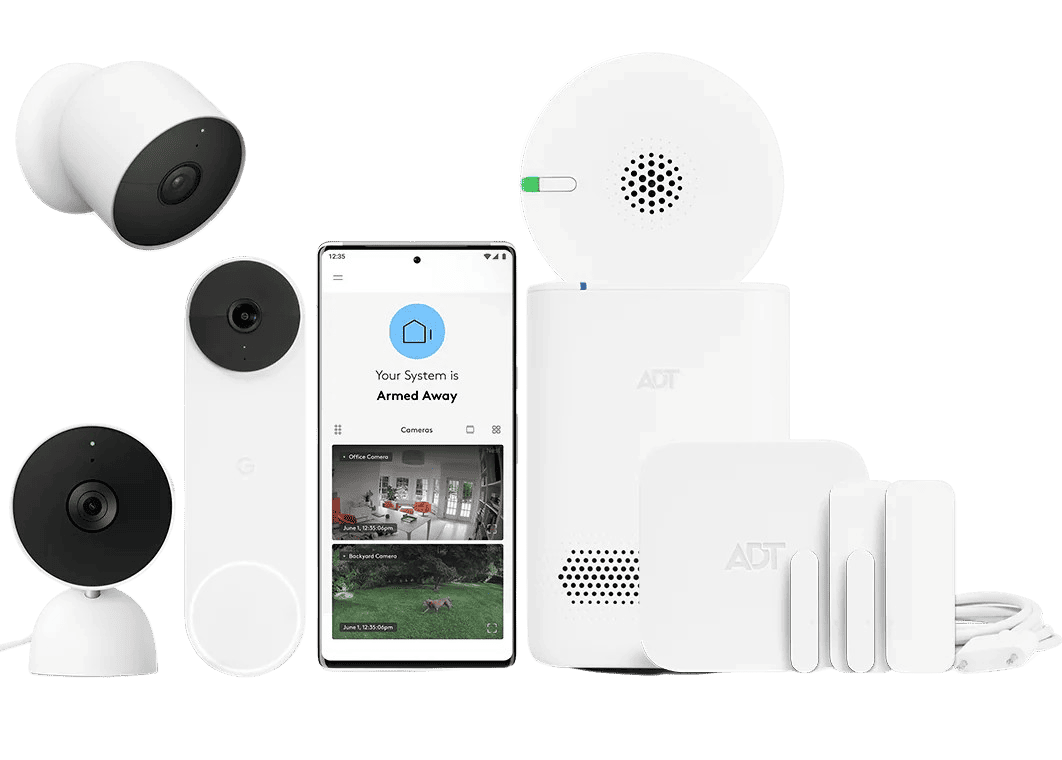
For homeowners and renters, a self-installed security system is most useful when it balances easy setup, dependable professional monitoring services, and smart home compatibility. The ADT Self Setup 12-Piece Home Security Kit is one of the best comprehensive DIY home security solutions designed for shoppers who want ADT’s professional monitoring ecosystem without scheduling a technician visit. This guide covers what the kit includes, who it makes the most sense for, and how it compares as a single-product buying decision for apartments, rental homes, and small-to-medium houses.
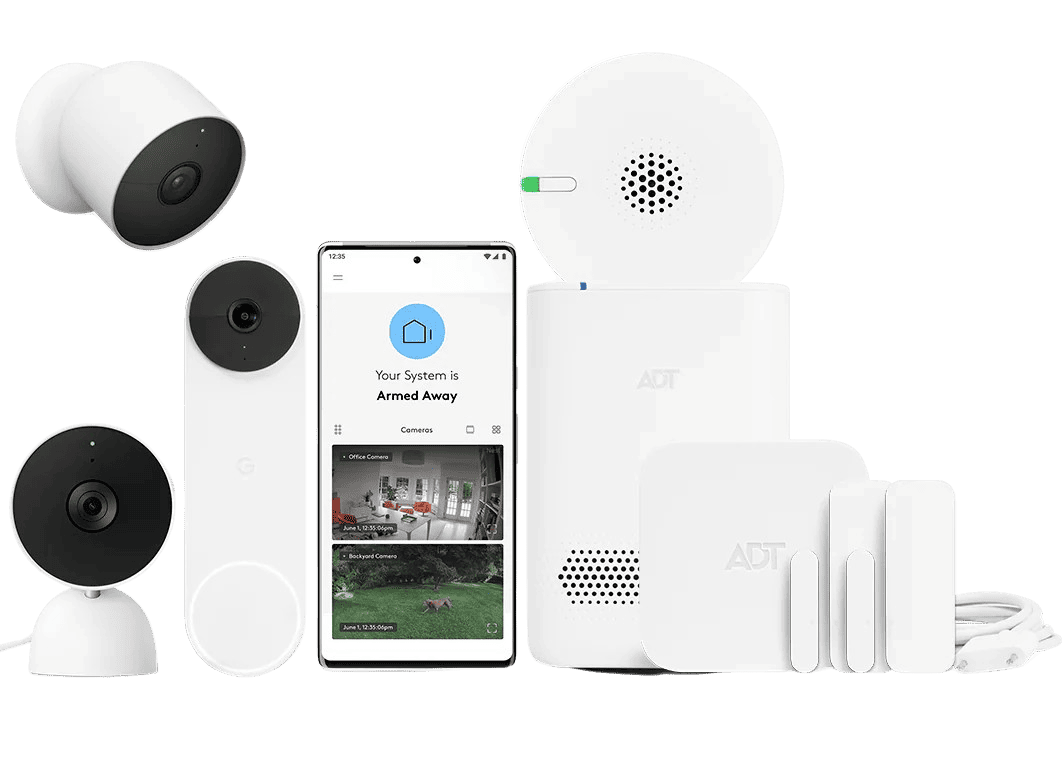
Best Overall: ADT Self Setup 12-Piece Home Security Kit
Score: 9.0/10. The strongest choice for buyers who want a DIY installation process paired with access to ADT’s 24/7 professional monitoring network.
ADT Self Setup 12-Piece Home Security Kit
The ADT Self Setup 12-Piece Home Security Kit is built around a straightforward idea: give you the core pieces of a professionally monitored home security system while keeping installation approachable. Instead of requiring a technician, the kit is intended for DIY setup, making it especially appealing for renters, first-time homeowners, or anyone who wants to avoid a complicated installation appointment. By removing the barrier of professional installation, ADT has pivoted toward a more agile, modern consumer who prefers to manage their own hardware deployment.
The kit includes the essentials most homes need to begin securing common entry points and interior spaces: door and window sensors, a motion detector, and a central hub. The hub connects the system to ADT’s professional monitoring network, so the system is not just a local alarm setup. For buyers who want more reassurance than a standalone siren or app-only alert system can offer, that monitoring connection is the biggest reason to consider this kit. It bridges the gap between "smart home gadgets" and "professional security infrastructure."
Smart home compatibility is another key advantage. The system works with Alexa and Google Assistant, which helps it fit into an existing voice-control or smart home routine. That matters if you already use smart speakers, routines, or voice commands and want your security system to feel like part of the same ecosystem rather than a separate device you rarely interact with. Whether you are arming the system via a voice command as you leave for work or receiving a notification on your smart display, the integration is seamless.
This kit is best for people who want a recognizable security brand, professional monitoring availability, and a setup process they can manage themselves. It may be less ideal for shoppers who want a no-fee, self-monitoring-only system (like the Wyze Home Monitoring Starter Kit or the Eufy Security Alarm (S330) review or Eufy Security Alarm S330) or those with a large property that needs many more sensors from the start. If you need an even smaller starter set, see the ADT Self Setup 7-Piece Home Security System or the ADT Self Setup 9-Piece Home Security Kit. However, for the vast majority of urban and suburban dwellings, this 12-piece configuration provides a comprehensive safety net that is operational in under an hour.
Pros
- DIY installation avoids scheduling a technician visit
- Backed by ADT’s professional monitoring ecosystem
- Includes core sensors for doors, windows, and motion detection
- Good fit for renters and first-time homeowners
- Works with Alexa and Google Assistant
Cons
- Professional monitoring may require an ongoing service plan
- Larger homes may need additional sensors or accessories
- Not the best fit for buyers who want a fully local, no-subscription system
- DIY setup still requires careful placement of sensors and the hub
Professional monitoring services are typically subject to separate monthly subscription fees paid to ADT.
| Specification | ADT Self Setup 12-Piece Home Security Kit |
|---|---|
| Model number | B0GQNT6SD7 |
| Category | Home Security Systems |
| Installation type | DIY self setup |
| Included security components | Door/window sensors, motion detector, central hub |
| Monitoring support | Connects to ADT’s 24/7 professional monitoring network |
| Smart assistant compatibility | Alexa and Google Assistant |
| Best fit | Renters, first-time homeowners, and DIY security buyers |
Detailed System Breakdown: How It Works
To understand why the ADT Self Setup 12-Piece Home Security Kit is a viable alternative to traditional wired security, it is important to look at the communication architecture. The system operates on a hub-and-spoke model. The central hub serves as the "brain" of the operation, communicating wirelessly with the various sensors placed throughout the home. This wireless approach eliminates the need to fish wires through walls or drill holes into the exterior of the property, which is a primary pain point in traditional security installs.
When a door/window sensor is triggered (meaning the magnetic contact is broken) or the motion detector identifies movement in a programmed zone, a signal is sent immediately to the hub. Depending on your settings, the hub then triggers a local siren to alert occupants and intruders, while simultaneously sending an encrypted alert to ADT's professional monitoring centers via cellular or Wi-Fi connectivity. This dual-path communication is critical; if a burglar cuts your internet line, a cellular backup (depending on the specific plan) can still get the alarm out to the monitoring center.
Pro Tip: For the most reliable connection, place the central hub in a central location of your home, away from large metal objects or thick concrete walls that might interfere with the wireless signals from the sensors.
The "Self Setup" aspect means the hardware is designed for adhesive-based mounting. Most sensors utilize heavy-duty double-sided tape, meaning you don't need a drill or a screwdriver to get the system operational. This is a massive advantage for those living in apartments where drilling into door frames or window sills would violate a lease agreement. (For those in basements or low-lying areas, we also recommend looking into battery backup sump pumps for flood protection or our Ridgid SP-650C review to ensure your lower level is fully protected to protect your home from water damage). However, it is important to clean the surface with rubbing alcohol before applying the adhesive to ensure a permanent bond that won't fail over time.
The role of professional monitoring is the defining feature of this kit. Unlike basic "smart alarms" that only send a push notification to your phone, this kit is designed to integrate with ADT's 24/7 monitoring network. In a critical event—such as a break-in while you are asleep or away from your phone—the ADT dispatch center receives the alert. They can then attempt to contact you and, if unable to reach you or if the situation is confirmed as an emergency, they can dispatch local emergency services (Police, Fire, or Medical). This eliminates the "notification fatigue" where a user might miss a phone alert during a meeting or while sleeping.
Comprehensive Installation and Setup Guide
Setting up the ADT Self Setup 12-Piece Home Security Kit is designed to be intuitive, but a strategic approach ensures maximum coverage and minimal false alarms. A haphazard installation often leads to "ghost alarms" or missed triggers. Follow these phases for an optimal deployment.
Phase 1: Hub Positioning
Start by plugging in the hub. It should be placed near your internet router for easy initial pairing, but ultimately it needs to be centrally located. Since the sensors communicate wirelessly, the hub should be within a reasonable range of all protected entry points. Avoid placing it inside a closed cabinet or behind a television, as electronic interference can degrade signal strength. The hub is the heart of the system; if its signal is blocked by a heavy appliance, your sensors may experience latency or disconnection.
Phase 2: Sensor Mapping
Before sticking any sensors to your walls, map out your high-risk areas. Do not simply place them where they fit; place them where they are most effective. Consider the following:
- Primary Entry Points: Front and back doors are the most common targets. Ensure the sensor is placed on the frame and the magnet on the door itself.
- Ground Floor Windows: Any window accessible from the street, a backyard, or a fire escape. Priority should be given to windows that are hidden from street view.
- Main Hallways: Ideal for the motion detector to catch any intruder moving between rooms. Place the motion sensor about 7 feet high in a corner to maximize the field of view.
Verify that the sensor and the magnet are aligned according to the manual (usually within a 1/2 inch gap) to avoid "open" alerts when the door is actually closed. A common mistake is placing the magnet too far from the sensor, which causes the system to think the door is open even when it's locked.
Phase 3: App Integration and Pairing
Download the ADT app and follow the prompts to add each device. It is recommended to name each sensor clearly (e.g., "Kitchen Window" instead of "Sensor 3") so that when an alert hits your phone, you know exactly where the breach occurred without having to guess. This is particularly important in larger homes where multiple windows might be triggered simultaneously.
Caution: Ensure you test every sensor in "Test Mode" before arming the system for the first time. This prevents accidental police dispatch during your initial configuration.
Maintenance and Long-Term Care
Because this is a wireless system, maintenance is minimal but essential for reliability. A security system that fails during an actual event is useless, so a quarterly maintenance routine is recommended. Many users "set it and forget it," which is a mistake in the world of home security.
Battery Management
The sensors run on batteries. While they are designed to last for years, the app will typically notify you when a battery is running low. Do not ignore these alerts. Replacing a CR2032 or similar coin-cell battery takes seconds but ensures your perimeter remains secure. We recommend replacing batteries annually, regardless of whether the app reports a low level, to avoid sudden system failure during a power outage.
Physical Inspections
Adhesives can wear down over time, especially in high-humidity environments like bathrooms or near kitchen windows. Every few months, gently tug on your sensors to ensure they haven't loosened. If a sensor falls off, the system may report it as "open," leading to frustration or false alarms. If you find a sensor is consistently loose, consider using a small screw (if permitted) for a more permanent mount.
Firmware Updates
The central hub will periodically receive over-the-air (OTA) updates. These updates often include security patches or improvements to sensor sensitivity. Ensure your hub remains connected to Wi-Fi to allow these updates to install automatically. If you notice a lag in app response, check if there is a pending firmware update for the hub.
Buyer's Guide: Is This the Right Kit for You?
Choosing a security system is not a one-size-fits-all decision. Depending on your living situation and risk tolerance, the 12-piece kit may be exactly what you need or potentially under-powered. To help you decide, we have broken down the layout by user profile.
The "Rental" Use Case
For renters, this kit is almost ideal. The lack of permanent wiring means you can take the system with you when you move. The adhesive mounts leave minimal residue, and the setup doesn't require permission from a landlord for electrical work (though for other DIY electrical tasks, knowing how to replace a circuit breaker safely or understanding best furnace control boards is a useful skill). If your primary goal is to deter opportunistic thieves and have peace of mind while at work, this is a top-tier choice. It transforms a temporary living space into a secured environment without risking a security deposit over wall damage. For those seeking a different DIY approach, our SimpliSafe (SS3-13PKGCAM) review offers a great comparison.
The "First-Time Homeowner" Use Case
New homeowners often face a "decision paradox"—they want total security but are overwhelmed by the cost of full professional installations. This kit allows them to establish a security perimeter immediately. As they get more comfortable with their home's traffic patterns and vulnerabilities, they can expand the system by adding more sensors or integrating cameras like the Arlo Pro 4 Spotlight Camera Security Bundle (detailed in our Arlo Essential (VMK4352W) review). It serves as a scalable entry point into a professional security ecosystem. For those comparing brands, SimpliSafe 12-Piece Wireless Home Security System is another strong contender in this category.
The "Tech Enthusiast" Use Case
If you are already deep into the Alexa or Google Home ecosystem, this kit is appealing because it doesn't exist as a separate "island" of technology. Being able to arm the system as part of a "Goodnight" routine (where lights turn off and the alarm arms) adds a layer of convenience that traditional systems lack. However, the tech enthusiast should be aware that this is a streamlined system; it is not designed for those who want to write custom scripts or integrate with complex third-party local hubs like Home Assistant without official API support.
Comparing DIY vs. Professionally Installed Systems
When evaluating the ADT Self Setup kit, it's helpful to compare it against the traditional "Full Service" model and the "Pure DIY" model. Understanding these three tiers helps justify the choice of the 12-piece kit.
| Feature | Pure DIY (App-only) | ADT Self Setup Kit | Full Pro Installation |
|---|---|---|---|
| Installation Cost | Low (Free) | Low (Free/Self) | High (Labor Fees) |
| Setup Time | Minutes | Under 1 Hour | Hours/Days |
| Monitoring | Self-Monitored Only | 24/7 Pro Monitoring | 24/7 Pro Monitoring |
| Hardware Mounting | Adhesive/Tape | Adhesive/Tape | Wired/Screwed |
| Rental Friendly | High | High | Low |
The ADT Self Setup kit occupies the "Golden Middle." If you are weighing different DIY options, you might also consider the ADT Self Setup 9-Piece Home Security Kit, the SimpliSafe (SS3-13PKGCAM) review, or Cove Home Security Complete Package for a direct comparison.