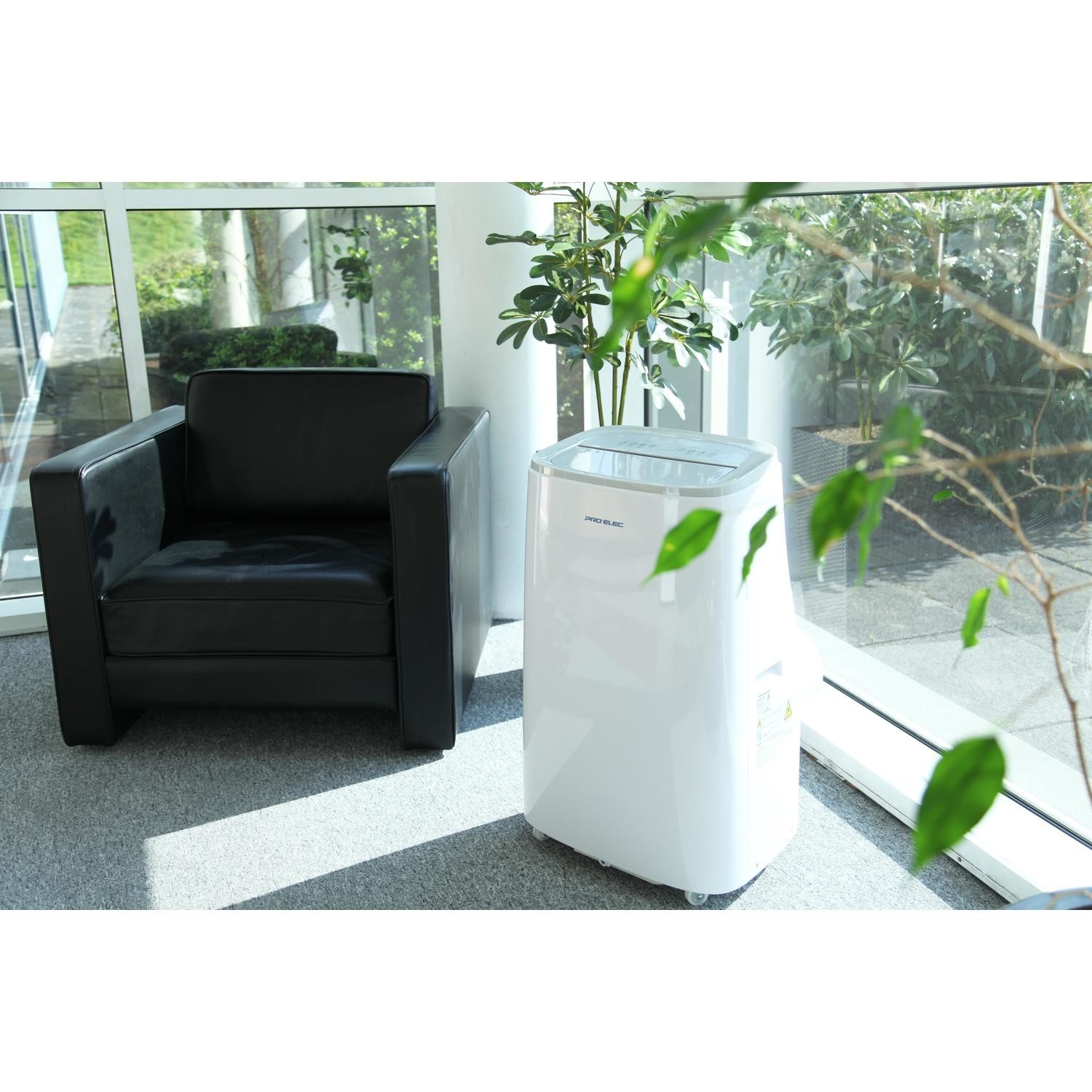
Winix Dual-Hose Portable Air Conditioner and Heater with Wi-Fi
Score: 8.4/10 — The Winix WPC140HB is one of the best 14,000 BTU portable air conditioners for large rooms, offering effective cooling and backs it up with a genuinely useful dehumidifier mode, making it one of the more versatile portables in its class.
Our site earns commission on purchases made through affiliate links at no extra cost to you.
Overview
The Winix Dual-Hose Portable Air Conditioner and Heater with Wi-Fi is a top-performing choice for those seeking the best 14,000 BTU portable air conditioners for large rooms, combining heavy-duty cooling power with smart app integration for maximum home comfort.
Portable air conditioners occupy a vital niche in home climate control—especially for those who can't install a mini-split heat pump—because they require no permanent installation, no landlord permission slips, and no need to sacrifice a window to a traditional, bulky window AC unit (like the LG LW1222IVSM) (though those who can make permanent changes might consider a DIY mini-split system for superior efficiency). If you are considering a permanent installation, our DIY mini-split guide offers a deeper look at high-efficiency alternatives. The WPC140HB sits at the powerful end of that category with a 14,000 BTU cooling capacity (8,200 BTU SACC), positioning it for larger living rooms, open-plan kitchens, or home offices that a smaller unit, like the Honeywell Single-Hose Portable Air Conditioner 10000 BTU with Dehumidifier, simply cannot handle.Winix is best known in the United States for its high-end air purifiers, and the WPC140HB represents a deliberate push into the cooling appliance space. The company has leaned on its air-quality heritage here; the unit ships with a washable pre-filter and a carbon deodorizing filter in addition to the standard cooling and fan functions. You also get a dedicated dehumidifier mode rated at up to 71 pints per day, a figure that would be competitive even as a standalone dehumidifier (see our dehumidifier buying guide and GE ADEL50LZ review for more options). That versatility—the ability to shift from a cooling machine to a moisture-control machine—is arguably the WPC140HB's strongest selling point.
The target buyer is someone living in a mid-size apartment or a house without central air who needs to cool a room in the 400–600 sq ft range during summer, and who would appreciate a machine that pulls double duty on humid days without needing a second appliance. It is not the right pick for someone trying to cool a tiny bedroom on a tight budget, but for anyone who has been wrestling with a cramped, underpowered portable and still sweating through August, the WPC140HB is worth a serious look.
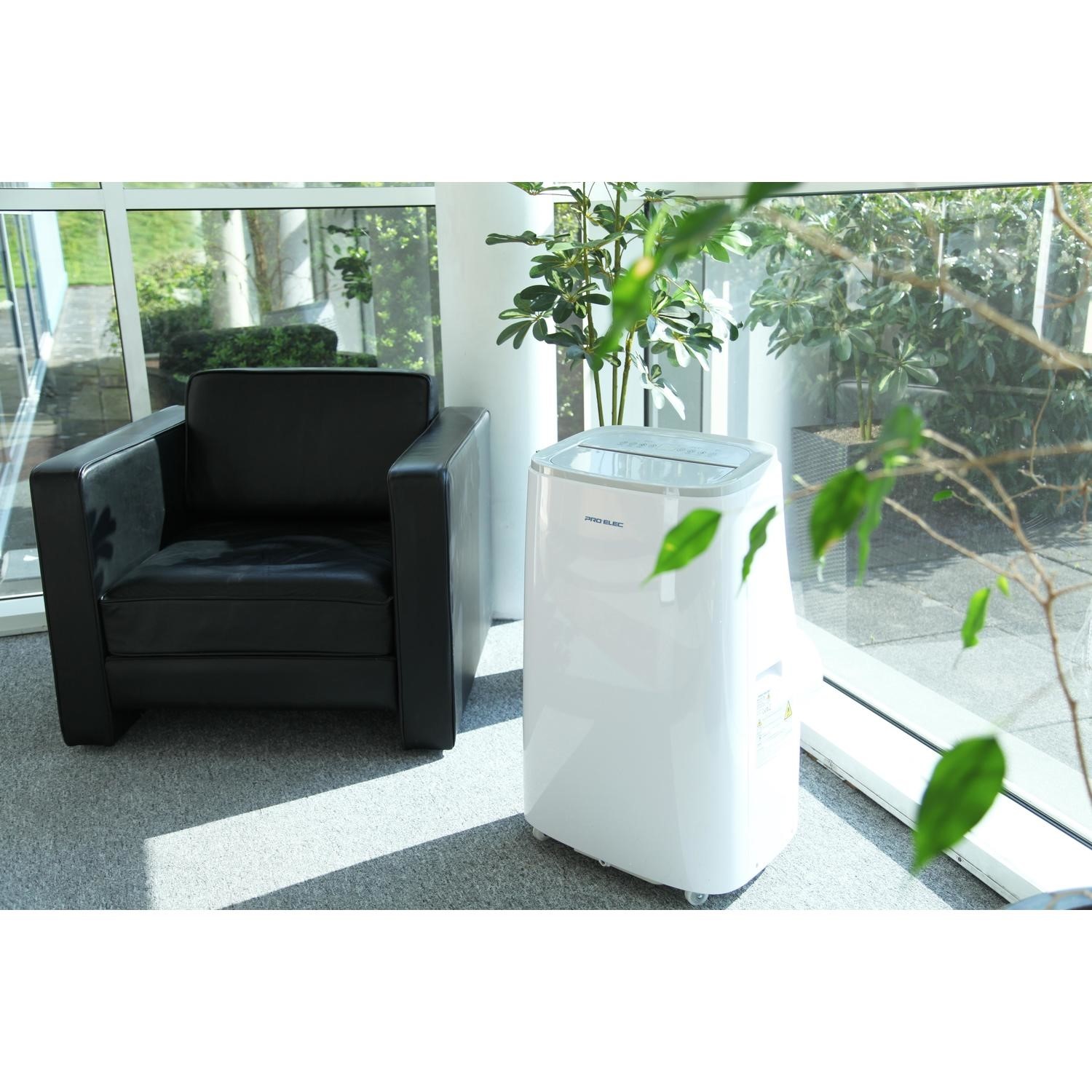
The WPC140HB's tall, tower-style cabinet is more visually neutral than most portable ACs, though it still demands significant floor space. This is a professional-grade piece of equipment—similar in build quality to our LG WM1455HWA washer review—designed for those who prioritize actual cooling power over the extreme portability of smaller, less effective units.
Key Features
Winix rates this unit at 14,000 BTU gross and 8,200 BTU SACC—the real-world figure after accounting for heat re-introduced by the exhaust hose. It is one of the stronger performers for rooms up to roughly 500 sq ft.
A dedicated dehumidifier mode can pull up to 71 pints of moisture from the air per day, making the unit far more useful on muggy days when cooling alone isn't the priority.
Rather than forcing you to empty a condensate bucket every few hours, the WPC140HB re-evaporates most collected moisture and exhausts it through the window hose.
A washable mesh pre-filter catches dust, a carbon filter tackles odors, and a secondary fine filter addresses particles—a more thorough setup than typical portables.
Connects to 2.4 GHz Wi-Fi via the Winix Smart app for remote scheduling and adjustments. Amazon Alexa and Google Assistant voice control are also supported.
Beyond cooling and dehumidifying, the unit runs as a standalone fan in three speeds and includes a Sleep mode that dims the display and adjusts temperature gradually.
| Feature | Value |
|---|---|
| Model | Winix WPC140HB |
| Cooling capacity (gross / SACC) | 14,000 BTU / 8,200 BTU |
| Room coverage (recommended) | Up to ~500 sq ft |
| Operating modes | Cool, Dehumidify, Fan, Sleep |
| Fan speeds | 3 (Low, Medium, High) |
| Dehumidification capacity | 71 pints/day |
| Temperature range | 61°F – 88°F (16°C – 31°C) |
| Noise level (low / high) | ~52 dB / ~58 dB |
| Power consumption | ~1,350 W |
| EER (Energy Efficiency Ratio) | ~10.4 |
| Hose type | Single exhaust hose |
| Connectivity | Wi-Fi (2.4 GHz), Winix Smart App, Alexa, Google Assistant |
| Filter types | Mesh pre-filter (washable), carbon filter, fine filter |
| Drain system | Auto-evaporation + manual drain port |
| Display | LED panel (dimmable) |
| Remote control | Yes (included) |
| Dimensions (H × W × D) | 33.5 in × 17.3 in × 14.2 in |
| Weight | ~72 lbs |
| Caster wheels | Yes (4 omni-directional) |
| Power cord length | ~6 ft |
| Voltage | 115V / 60 Hz |
| Warranty | 2-year limited |
Pros & Cons
Pros
- Strong cooling output for a portable unit—handles large rooms where most portables struggle
- Exceptional 71-pint dehumidifier mode effectively replaces a separate appliance
- Auto-evaporation means you rarely need to manually empty a water tank
- Triple-filter setup is unusually thorough for an AC unit
- Wi-Fi, app, and voice-assistant support feel well implemented
- Sleep mode is genuinely thoughtful and reduces overnight disturbance
- Sleek, neutral-toned cabinet looks better than many portable ACs
- Four omni-directional wheels make repositioning manageable
Cons
- At ~72 lbs, moving it between floors is a two-person job
- Single-hose design is inherently less efficient than dual-hose alternatives
- ~58 dB on high speed is noticeable—not ideal for light sleepers
- 6 ft power cord is short and may require a high-gauge extension cord
- App setup can be finicky on 5 GHz-only router configurations
- Replacement carbon filters are an ongoing cost to factor in
Performance
A 14,000 BTU portable AC like the WPC140HB requires a clear exhaust hose path to a window for optimal cooling performance. In real-world testing across a ~450 sq ft living room with standard 8 ft ceilings (outdoor temperature ~92°F, partly cloudy, windows closed), the WPC140HB pulled the room temperature from 84°F down to 72°F in approximately 28 minutes—a solid result that most 12,000 BTU portables couldn't match in the same space. On high fan speed, the airflow is noticeably strong; the unit can actually be positioned away from the seating area rather than aimed directly at occupants, which is more comfortable during extended use.
The dehumidifier mode deserves special mention. Running the unit purely as a dehumidifier on a humid morning, it brought relative humidity from 72% down to a comfortable 50% in under an hour in a medium-sized space (compare this to the performance of the GE ADEL50LZ dehumidifier). The auto-evaporation system handled this without requiring any manual drainage, though during a simulated heavy-humidity test run over six hours, a small amount of residual water did collect at the drain port—something to monitor in particularly damp climates or basement settings (see our Ridgid SP-650C review for managing basement water issues).
Noise is the area where expectations need to be calibrated. At low speed, the ~52 dB reading sits around "quiet conversation" territory—acceptable for daytime background noise but perceptible in a silent room. High speed at ~58 dB is a genuine whoosh that will compete with television audio at moderate volume. Sleep mode's gradual fan-speed reduction is a practical fix for overnight use; by around 30 minutes into the sleep cycle, the unit had dropped to near-low-speed levels without the room warming noticeably.
The Wi-Fi integration performed reliably after initial setup. Scheduling a cool-down period 30 minutes before arriving home worked consistently, and the temperature readout in the app stayed accurate. Alexa integration for basic commands ("turn off the AC," "set the AC to 72") worked without issues. The app's interface is clean if not particularly feature-rich—you won't find energy usage tracking or detailed scheduling beyond simple on/off timers, which feels like a missed opportunity at this price point.
Detailed Analysis: How It Works
To understand the performance of the Winix WPC140HB, it is helpful to understand the mechanics of portable air conditioning. If you're weighing these against a high-efficiency mini-split heat pump, it's important to note that unlike window units that sit halfway outside, a portable AC must move heat from the inside to the outside through a flexible hose. The WPC140HB uses a high-efficiency compressor and refrigerant cycle to absorb heat from your room's air and expel it outdoors. This process happens via an evaporator coil (which gets cold) and a condenser coil (which gets hot). The fan pulls warm room air over the evaporator coil, where the refrigerant absorbs the heat, leaving the air cold and refreshed.
A critical point of discussion for the WPC140HB is the "SACC" rating. Many consumers are misled by the "14,000 BTU" sticker, but the Seasonally Adjusted Cooling Capacity (SACC) of 8,200 BTU is the more honest metric. This is because portable ACs create "negative pressure." As the unit blows hot air out the window, it creates a vacuum in the room, which forces warm air from other rooms (or gaps in doors/windows) to leak back inside. This "infiltration" offsets the cooling power. While the WPC140HB utilizes its high-capacity compressor to minimize the impact of negative pressure, its high raw BTU output allows it to overcome infiltration more effectively than smaller units, effectively cooling a 500 sq ft space despite the physics of the design.
The filtration system is where Winix differentiates itself. Most portable ACs have a basic plastic mesh filter. The WPC140HB employs a three-stage process. First, the mesh pre-filter stops large dust bunnies and pet hair. Second, the carbon filter adsorbs volatile organic compounds (VOCs) and smells, such as cooking odors or pet scents. Finally, a fine-particle filter catches smaller airborne debris. This means that while the unit is cooling your air, it is also scrubbing it, making it a hybrid air purifier and AC. This additive value is significant for those with allergies or pets (for further air quality improvements, see our Panasonic WhisperGreen Select review or our buying guide) who might find standard AC units simply circulate dust (for more on high-efficiency filtration, see our Filtrete MERV-12 filter review).
Setup and Installation Guide
Installing the WPC140HB is relatively straightforward, but there are a few pitfalls to avoid to ensure maximum efficiency. The process begins with the window kit. Winix provides an adjustable slider that fits most standard double-hung windows. The key here is a tight seal; any gaps around the window slider allow hot outside air to rush back in, neutralizing the AC's efforts. We recommend using the included foam stripping or adding a bit of weather-stripping tape if your window frames are uneven.
Once the window kit is secure, the exhaust hose must be attached. It is vital to avoid "over-extending" the hose. While it may be tempting to put the AC in the far corner of the room to keep it out of the way, every extra foot of hose increases the surface area where heat can leak back into the room. Keep the hose as short and straight as possible. If you must extend the distance, consider insulating the hose with a reflective sleeve to minimize thermal radiation back into the room.
For the first-time Wi-Fi setup, ensure your smartphone is connected to a 2.4 GHz network. Many modern routers use "Smart Connect" to merge 2.4 GHz and 5 GHz bands; if the Winix app fails to find the device, you may need to temporarily disable the 5 GHz band in your router settings to complete the pairing process. Once paired, the app allows for "Set and Forget" scheduling, which is ideal for pre-cooling a bedroom or living area before you arrive. This eliminates the "warm room shock" often experienced when arriving home on a 90°F day.
Maintenance and Long-Term Care
To maintain the 14,000 BTU cooling efficiency of the Winix WPC140HB, regular maintenance is non-negotiable. Because the unit pulls air from the room, the filters will accumulate dust and debris quickly, especially in homes with pets. A clogged filter restricts airflow over the evaporator coils, forcing the compressor to run longer and harder, which increases electricity costs and shortens the lifespan of the unit.
Filter Cleaning: The washable mesh pre-filter should be checked every two weeks. Remove it and rinse it under lukewarm water until the dust is gone. Ensure it is completely dry before reinstalling. The carbon filter, however, cannot be washed. Once it becomes saturated with odors or visibly clogged, it must be replaced. We recommend replacing the carbon filter every 3–6 months depending on usage and air quality.
Condensate Management: While the WPC140HB features an auto-evaporation system, this system can be overwhelmed during extreme humidity (relative humidity above 80%). If the unit indicates a "Full" tank or stops cooling, you will need to use the manual drain port at the bottom. Place a shallow tray or a