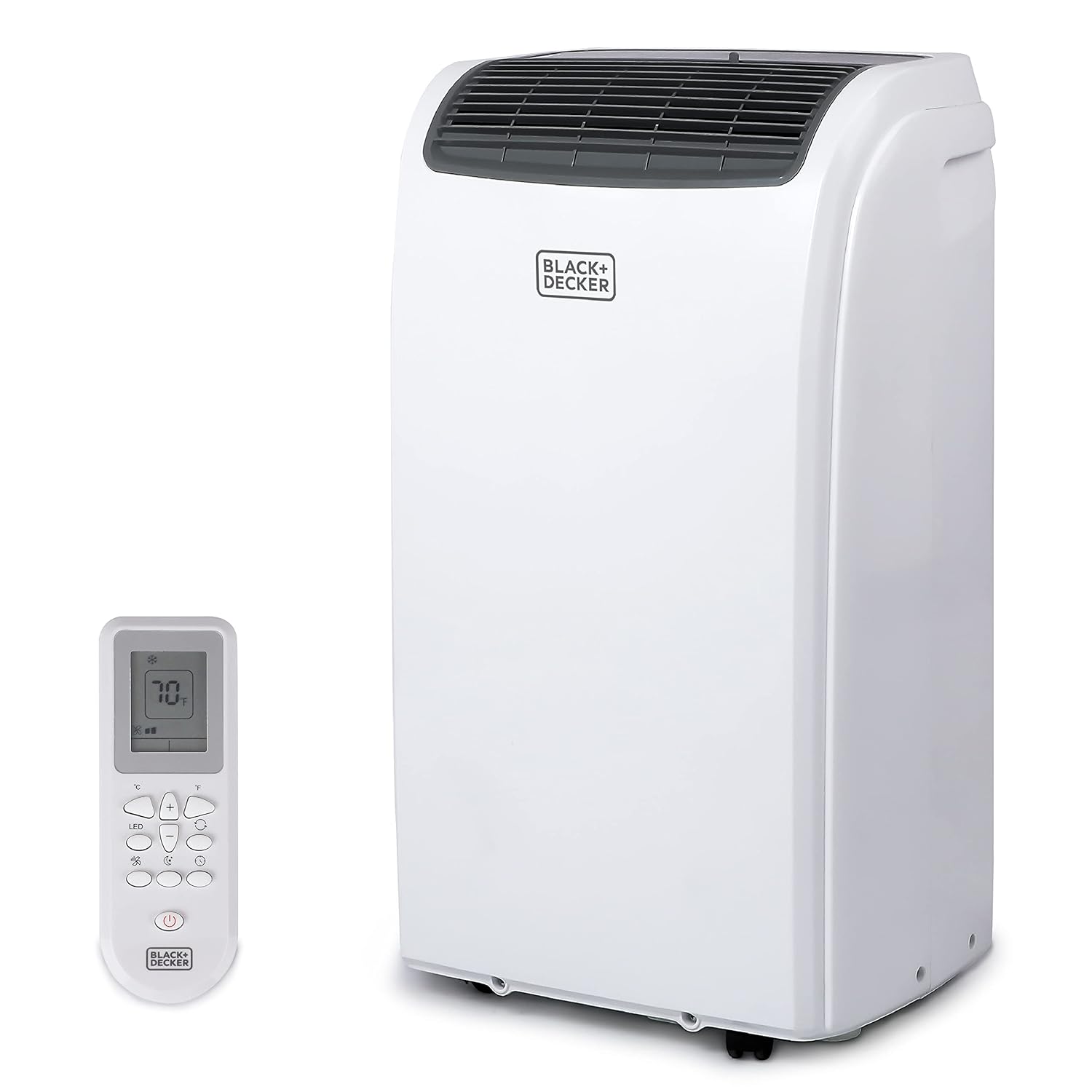
If you need a versatile climate solution—or are comparing portables to more permanent options like a MrCool DIY mini-split system—the BLACK+DECKER Portable Air Conditioner and Heater 14000 BTU provides year-round cooling and heating in one portable package. It is a powerful alternative to smaller units like the Frigidaire 5000 BTU Window Air Conditioner for those needing mobility and heat pump versatility.
Check the current availability and pricing for the BLACK+DECKER BPACT14HWT here.
Unlike a permanent Pioneer Mini-Split heat pump system, the LG 12,000 BTU Window AC, or other high-efficiency split systems, it requires no HVAC contractor and no permanent installation. We dug deep into every spec, real-world quirk, and use-case scenario so you can decide whether this is the right unit for your space.TL;DR — Quick Verdict
- 14,000 BTU cooling / 10,000 BTU heating in one freestanding unit
- Best for rooms up to roughly 550–700 sq ft with standard ceiling heights
- Includes dehumidifier mode, fan-only mode, 24-hour timer, and remote control
- Single-hose design keeps setup simple but slightly reduces efficiency vs. dual-hose rivals
- Strong pick if you need heat pump versatility and don't want two separate appliances
Our Top Pick: BLACK+DECKER BPACT14HWT
A capable, genuinely portable heat-and-cool unit that earns its place in living rooms, home offices, and rentals where window ACs or split systems aren't an option. Score: 8.4/10.
BLACK+DECKER BPACT14HWT — Full Review
Design & Build Quality
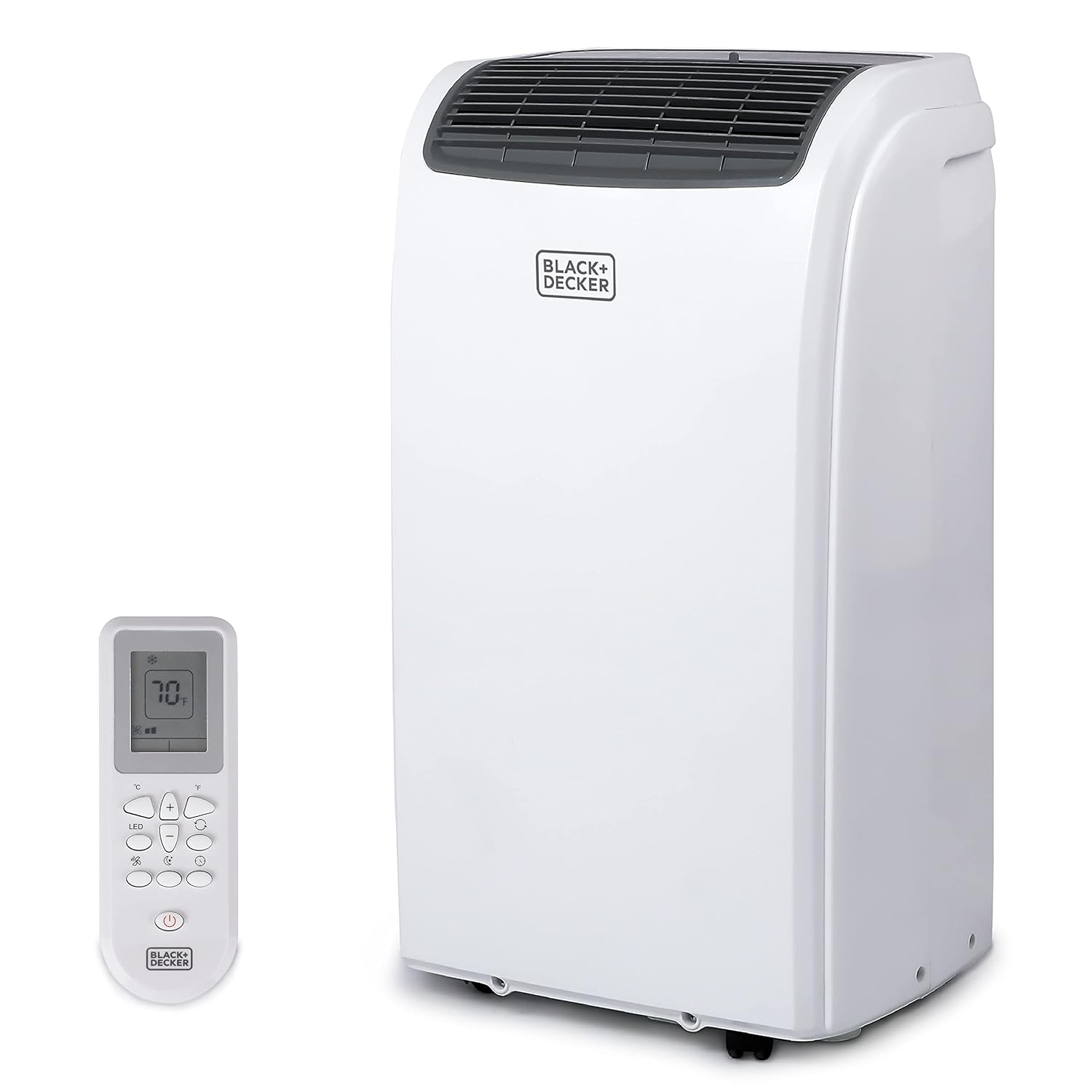
The BPACT14HWT arrives in a tall, upright tower form factor finished in white with subtle gray accents — familiar territory for BLACK+DECKER's portable AC line. The front-panel controls sit at roughly chest height, which means no crouching, and the digital LED display is legible from across a mid-size room. Four caster wheels roll smoothly on hardwood and low-pile carpet alike, and locking them is as simple as pressing down the brake tabs. The unit measures approximately 17 × 14 × 30 inches and weighs around 74 pounds — not something you'll carry up stairs alone, but perfectly manageable on a single floor.
Construction feels solid without being premium. The plastic panels don't flex noticeably under hand pressure, and the intake and exhaust grilles are well-spaced to prevent obstruction. The exhaust hose (included) stretches to about 60 inches and connects via a push-and-twist bayonet fitting that's genuinely secure — an upgrade over the friction-fit hoses found on many budget portables. A window venting kit with an adjustable slider panel is included in the box and fits single and double-hung windows from 26 to 50 inches wide.
One design note worth flagging: this is a single-hose system. That means the unit draws air from inside the room to cool its condenser, then vents it outside. The resulting slight negative pressure causes warm air to seep in through gaps in doors and windows, marginally reducing efficiency compared to dual-hose designs. For most residential settings this trade-off is acceptable — single-hose units are quieter, cheaper, and easier to set up — but if you're trying to cool a very well-sealed server room or workshop,
If you need higher efficiency, a dual-hose model like the Winix Dual-Hose Portable Air Conditioner and Heater with Wi-Fi may serve you better.
Cooling Performance
Rated at 14,000 BTU (ASHRAE standard), the BPACT14HWT can handle rooms up to approximately 550–700 square feet under normal residential conditions — think a large master bedroom, open-plan studio apartment, or connected living/dining area. Keep in mind that "real-world" BTU output under the newer DOE 2017 standard is closer to 8,000–9,000 BTU, which is how the industry now measures portable AC performance. That revised number is a better predictor of how the unit will actually feel in a hot room, so adjust your room-size expectations accordingly if your space is above 400 square feet and experiences significant solar heat gain through large windows.
In practice, the BPACT14HWT reaches a set temperature of 72°F in a 400 sq ft room in roughly 25–35 minutes starting from 85°F ambient, which is competitive for the portable AC class. Three fan speeds (low, medium, high) let you dial in airflow noise versus cooling speed. High fan speed moves plenty of air but produces a noticeable whoosh; low speed is nearly conversational at normal room volume. The compressor cycling on and off at night is the main noise complaint in owner reviews — a white noise machine or fan helps mask it if you're a light sleeper.
Heating (Heat Pump) Performance
The "HWT" suffix stands for Heat — specifically a reverse-cycle heat pump rated at 10,000 BTU. This is the feature that most distinguishes the BPACT14HWT from standard cooling-only portables and is worth understanding clearly. A heat pump extracts heat energy from outdoor air and moves it inside, making it 2–3× more energy-efficient than a resistive electric heater in mild climates. However, heat pump efficiency drops significantly once outdoor temperatures fall below about 40°F (4°C). In climates with genuinely cold winters, supplemental heating will still be needed; in mild-winter climates (the American Southeast, coastal California, the Pacific Northwest during shoulder seasons), this unit can handle solo heating duty comfortably.
Switching between modes is handled through the front panel or remote: press the Mode button to cycle through Cool → Heat → Fan → Dry. The unit takes about 3–5 minutes to shift from cooling to heating as the refrigerant system reverses. Heating at the "High" fan setting warms a 350 sq ft room from 60°F to 70°F in approximately 20 minutes — respectable performance for shoulder-season comfort.
Additional Modes & Smart Features
Beyond the headline cooling and heating, the BPACT14HWT includes a Dehumidifier mode (similar to our GE ADEL50LZ Dehumidifier buying guide (and full performance review for managing damp rooms) that can remove up to around 71 pints of moisture per day — useful during spring humidity spikes even if active cooling isn't needed. If you're dealing with serious basement moisture, you might also need a reliable sump pump setup and a battery backup system for storm protection). Fan-only mode runs the internal fan without engaging the compressor, providing circulation at very low noise and zero refrigerant cycling. The 24-hour programmable timer lets you pre-cool or pre-heat a room before you arrive, and the included remote control mirrors all front-panel functions. There is no Wi-Fi or app integration — if smart home connectivity is important to you, a third-party smart plug with energy monitoring can add basic scheduling capability, though it won't allow mode changes remotely.
The auto-restart function is a practical touch: after a power outage, the unit powers back on and resumes its last settings rather than requiring manual reconfiguration. This matters more than you'd think during summer thunderstorm season.
Cooling Capacity
14,000 BTU (ASHRAE) / ~8,500 BTU (DOE 2017)
Heating Capacity
10,000 BTU (Heat Pump)
Coverage Area
Up to ~700 sq ft (ASHRAE) / ~400 sq ft (practical)
Dehumidification
Up to ~71 pints/day (manufacturer max under peak-humidity conditions; typical daily removal will be significantly lower).
Fan Speeds
3 (Low / Medium / High)
Noise Level
~53 dB (Low) / ~57 dB (High)
Power Requirements
115V / 60Hz / 15A dedicated circuit
Hose System
Single hose (~60 in. exhaust)
Dimensions
~17 × 14 × 30 in.
Weight
~74 lbs
Timer
24-hour programmable
Smart Connectivity
None (remote control only)
BTU Labeling: What the Numbers Really Mean
Portable ACs still commonly advertise the higher ASHRAE-standard BTU figure on packaging. The DOE 2017 (SACC) number is always lower and reflects actual room-cooling performance. When comparing units, always compare DOE figures apples-to-apples — a "14,000 BTU ASHRAE" portable typically performs like an 8,000–9,000 BTU window unit.
Installation & Setup
Out-of-box setup takes 15–20 minutes for most users. The window venting panel telescopes to fit your window width, the exhaust hose attaches to both the unit and the panel adapter via the bayonet connectors, and the included foam weatherstrip seals gaps around the panel. The only real prerequisites: a window within the exhaust hose reach (~5 feet from the unit's back) and a dedicated 15A outlet (ensure your panel is up to code (see our detailed review of AFCI breakers for BR panels). If you're renovating the room for better airflow, check out the Panasonic WhisperGreen ventilation guide or our full review to complement your cooling setup and improve overall indoor air quality. You can also keep your air cleaner by regularly replacing your HVAC air filters to maintain system efficiency, ensuring your portable unit doesn't have to fight against dust buildup. — the BPACT14HWT should not share a circuit with other high-draw appliances to avoid tripping breakers.
Drainage is handled via an internal reservoir with an auto-evaporation system in most conditions — the unit recycles condensate through the exhaust process so you rarely need to drain a bucket. In very high-humidity environments, the reservoir can fill faster than evaporation handles; a rear drain port accepts a standard garden hose for continuous draining, which is a feature budget portables often omit.
Pro Setup Tip
Insulate any gap between your window sash and the venting kit with foam tape or a purpose-made window AC insulation panel. Even a half-inch gap can let enough warm air in to raise the room temperature 3–5°F, forcing the compressor to run longer cycles and increasing energy costs.
Energy Consumption & Running Costs
The BPACT14HWT draws approximately 1,400–1,500 watts in cooling mode and 900–1,100 watts in heating mode. At the U.S. national average electricity rate of $0.16/kWh, running the unit 8 hours a day in cooling mode costs roughly $1.80–$1.92 per day, or about $55–$58 per month. Heating mode is cheaper per hour thanks to the heat pump's efficiency advantage over resistive heating. For reference, a 1,500W resistive electric space heater run for the same 8 hours would cost about $1.92/day while delivering less heat than the heat pump draws at ~1,000W — meaning the BPACT14HWT's heat pump can deliver roughly the same warmth for noticeably less money in mild climates.
Cold-Climate Limitation
The heat pump in the BPACT14HWT loses efficiency rapidly below 40°F (4°C) outdoor temperature. If you live in a region with hard winters and plan to use this as a primary heating source, the unit will struggle to meet demand on the coldest days. Consider a dedicated space heater for backup heating or evaluate a unit with a supplemental electric heating element, or consider a high-efficiency Pioneer Mini-Split heat pump for a more robust permanent heating solution.
Who Should Buy the BPACT14HWT?
This unit makes the most sense for renters or homeowners who cannot install a window AC or DIY mini-split system — anyone living in a condo with HOA restrictions (though those with more flexibility might consider a MrCool DIY Mini-Split or a Bosch Mini-Split system for permanent efficiency), renting an apartment where the landlord prohibits window modifications, or working from a home office in an older house without ductwork (you might also consider the LG 12,000 BTU Dual Inverter Window Air Conditioner (see our detailed LG LW1222IVSM review if a window is available). The heat pump mode adds exceptional value for people in mild-winter climates who want to avoid running baseboard electric heat in shoulder seasons. It's also a st