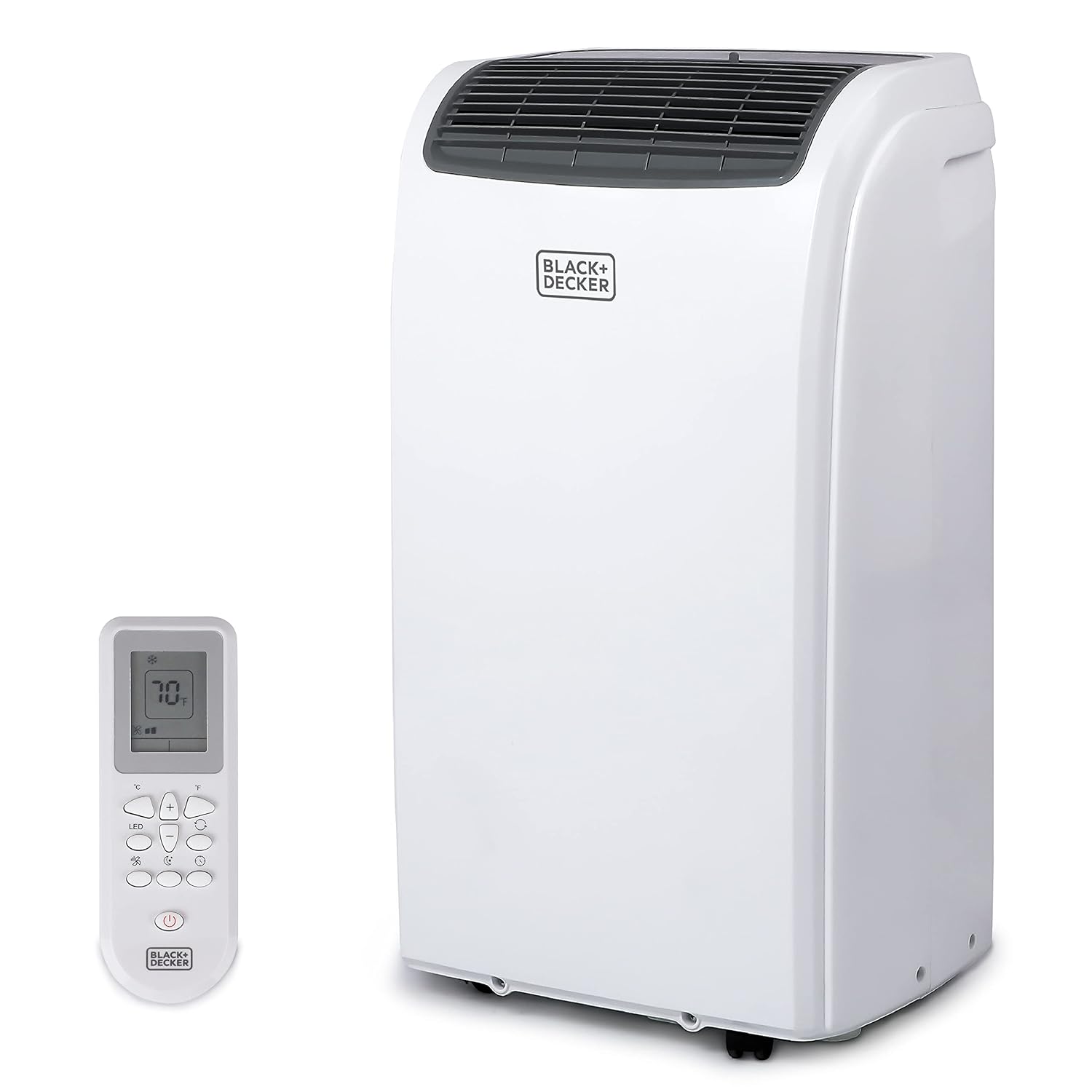
Summer heat waves and surprise cold snaps are no match for a versatile all-season unit. The BLACK+DECKER Portable Air Conditioner and Heater 14000 BTU is a powerful all-in-one solution designed to handle cooling, heating, and dehumidifying in a single appliance. Our comprehensive buying guide analyzes real-world performance, energy costs, and everyday usability so you can decide if this 14,000 BTU portable heat-and-cool unit is the right investment for your space. If you are considering a permanent installation instead, our MrCool DIY mini-split guide offers a high-efficiency alternative for year-round climate control, providing more stability than portable units.
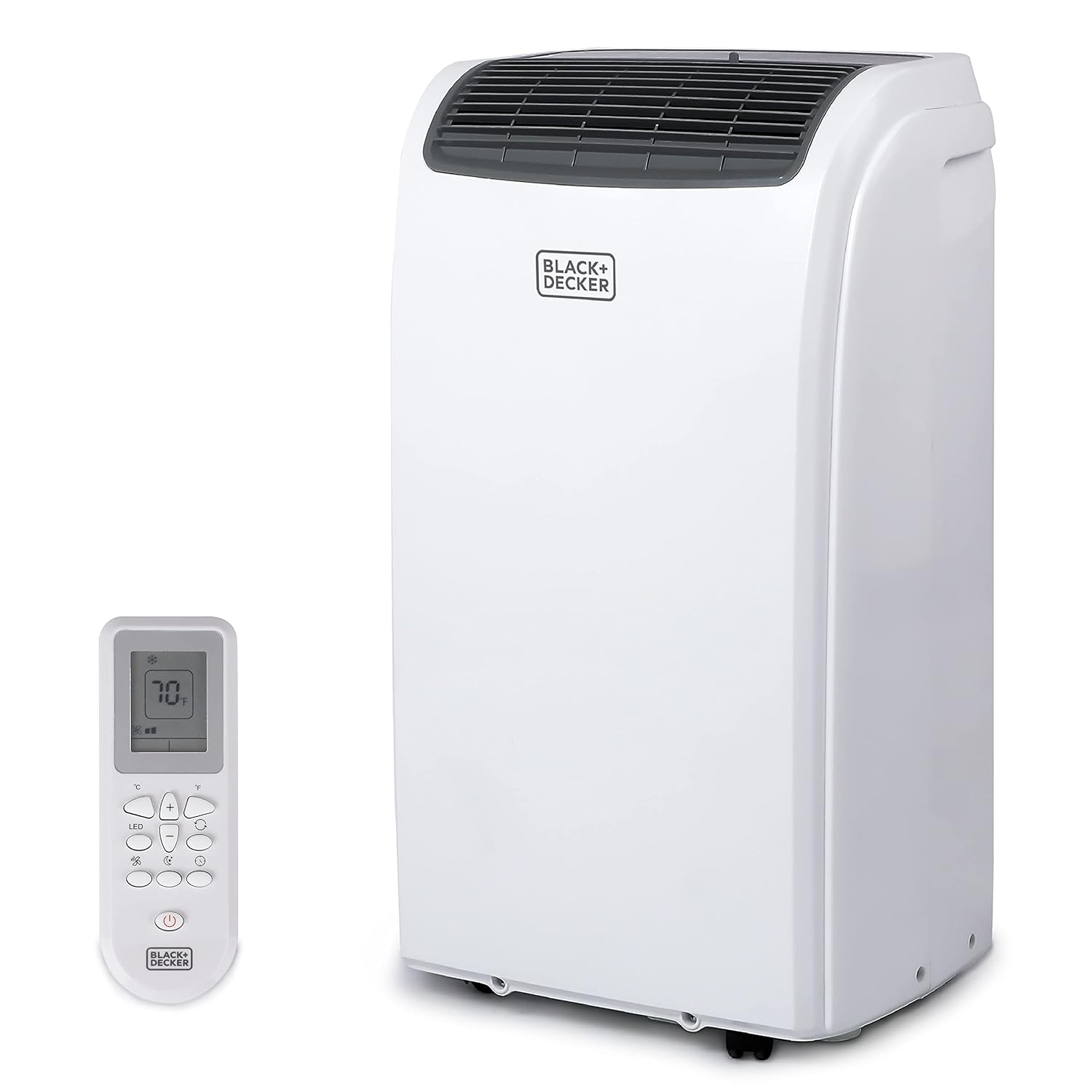
- Capacity: 14,000 BTU (ASHRAE) / 8,000 BTU (SACC) cooling + 10,000 BTU heating.
- Coverage: Ideal for rooms up to ~450 sq ft depending on insulation.
- Versatility: Four-in-one operation (Cool, Heat, Fan, Dehumidify).
- Convenience: Remote control, 24-hour timer, and self-evaporative system.
- Trade-off: Single-hose design simplifies setup but reduces peak efficiency.
Our Top Pick: BLACK+DECKER Portable Air Conditioner and Heater 14000 BTU (BPACT14HWT)
A versatile, genuinely portable heat-and-cool unit that earns its place in apartments, sunrooms, and home offices where installing a traditional split system (like a DIY mini-split) simply isn't an option. Score: 8.2 / 10
BLACK+DECKER Portable Air Conditioner and Heater 14000 BTU
The BLACK+DECKER Portable Air Conditioner and Heater 14000 BTU is engineered for the renter or homeowner who lacks the luxury of central air or permanent window installations but requires year-round climate control.
By combining a high-capacity cooling system with a resistive heater and a powerful dehumidifier, it eliminates the need to store three different seasonal appliances in a crowded closet. It rolls into place on heavy-duty caster wheels and connects to a window in minutes, making it one of the most adaptable solutions in the portable HVAC category, alongside options like the Honeywell Single-Hose Portable Air Conditioner 10000 BTU with Dehumidifier.From a cooling perspective, the unit is rated at 14,000 BTU under the older ASHRAE standard. However, modern buyers should look at the SACC (Seasonally Adjusted Cooling Capacity) rating of 8,000 BTU. This is the number that reflects real-world performance after accounting for the heat that leaks back into the room via the single-hose exhaust. In practice, this means the unit is most effective in rooms between 350 and 450 square feet. If you have a room with massive south-facing windows or vaulted ceilings, you may find the unit works harder and runs longer to maintain a target temperature. In such cases, a more powerful option like the Midea U-Shaped Smart Inverter Window Air Conditioner or the GE Profile ClearView Smart Ultra Quiet Window Air Conditioner might be more efficient.
The "HWT" designation signifies the integrated heat function. Unlike heat pumps, which move heat from outside to inside, this unit utilizes resistive electric heating. This is a critical distinction: resistive heat is generally more expensive to run per hour than a heat pump, but it is significantly more reliable in freezing temperatures. When the outdoor air drops below 40°F, many heat pumps lose their efficiency; the BPACT14HWT, however, continues to pump out consistent warmth regardless of the external weather. This makes it an ideal choice for "shoulder season" transitions or as a supplementary heat source for a drafty home office.
One of the most praised features of this model is its dehumidification capability. If you are struggling with a particularly damp area, our GE ADEL50LZ dehumidifier buying guide and detailed performance review offers a deeper dive into dedicated moisture control, which is essential for those also managing a wet basement with a sump pump (see our sump pump battery backup guide for flood protection). Capable of removing up to 75 pints of moisture per day, it transforms a damp basement or a humid coastal bedroom into a crisp, comfortable environment. Because it uses a self-evaporative system, the water collected from the air is mostly recycled to cool the internal condenser coils and expelled as vapor through the exhaust hose. While you may still need to manually drain the reservoir in extremely swampy conditions, for most users, the "bucket emptying" chore is virtually eliminated.
Pros
- Combined cooling, heating, and dehumidifying in one chassis
- Self-evaporative system minimizes manual water drainage
- Auto-restart feature preserves settings after power flickers
- Reliable resistive heat works even in very cold weather
- Tool-free window kit installation for fast setup
- 24-hour programmable timer for energy management
Cons
- Single-hose design is less energy-efficient than dual-hose
- SACC rating (8,000 BTU) is modest for larger, open-concept areas
- Electric resistance heat carries higher operating costs than heat pumps
- Weight (~68 lbs) makes moving between floors a two-person task
- Average noise levels (58-60 dB) can be disruptive in quiet bedrooms
- Lack of Wi-Fi/Smart Home integration
How it Works: The Engineering of Portable HVAC
For those considering a more permanent, energy-efficient installation, you might explore a mini-split heat pump system or a Bosch mini-split for permanent efficiency, but for immediate flexibility, portable units are unmatched.
To understand why the BPACT14HWT performs the way it does, it is helpful to understand the mechanics of a single-hose portable system. If you find a portable unit isn't enough, a high-efficiency mini-split or a Carrier heat pump system is the gold standard for permanent room cooling.
A traditional window AC (such as the LG 12,000 BTU Window AC) is split; the "hot side" (condenser) stays outside, and the "cold side" (evaporator) stays inside. A portable unit puts both in one box. To get rid of the heat generated by the compressor, the unit sucks air from your room, uses it to cool the condenser, and blows that hot air out the hose.This process creates "negative pressure." Since air is being pushed out of the room and into the outdoors, new air must enter to replace it. This air often leaks in through gaps around your doors, window frames, or electrical outlets. This is why the SACC rating is lower than the ASHRAE rating—the unit is fighting against the warm air it is inadvertently pulling back into the room. To optimize the BPACT14HWT, we recommend sealing your room as much as possible and keeping the exhaust hose as straight and short as possible to reduce air friction.
The heating element operates on a different principle. If you only need air circulation without heat, you might consider a dedicated ceiling fan like the Hunter Comfort Select. The resistive heater uses electrical coils (similar to a space heater) to generate warmth. When you switch to "Heat" mode, the cooling compressor shuts off, and the heating element activates. The fan then pushes air across these hot coils and into your room. Because there is no refrigerant being moved from outside to inside, the exhaust hose is not used in the same way during heating, although the unit still requires proper ventilation for safety and airflow.
Comprehensive Setup and Installation Guide
Installing the BLACK+DECKER BPACT14HWT is designed to be a tool-free process, but achieving a perfect seal is the difference between a room that is "chilly" and one that is "ice cold." Follow these steps for a professional-grade installation:
- Window Preparation: Identify whether you have a double-hung window (slides up and down) or a sliding window (moves left to right). The included kit provides sliders for both. Ensure the window track is clean and free of debris.
- Fitting the Slider: Place the window slider into the track and adjust the length to fit the opening tightly. Use the provided foam gaskets to fill any gaps between the slider and the window frame. If you have a particularly wide window, you may need a piece of plexiglass or a custom cardboard insert to seal the remaining void.
- Hose Connection: Attach the 5-inch diameter exhaust hose to the back of the unit. Ensure the locking ring clicks into place to prevent the hose from popping out during operation, which could leak hot air and condensate into your home.
- Window Coupling: Snap the other end of the hose into the window slider. For the best seal, use a small amount of weather-stripping tape around the coupling point.
- Placement: Position the unit at least 12 to 20 inches away from walls or furniture. The intake vents on the back and sides need clear access to air; if the unit is pushed too close to a curtain or wall, the compressor will overheat, causing the unit to cycle off prematurely.
Maintenance and Long-Term Care
Portable air conditioners are high-maintenance compared to central air. To prevent the BPACT14HWT from losing efficiency or developing a "musty" smell, adhere to the following maintenance schedule. For those also concerned about air purity, checking your HVAC air filter ratings or upgrading your Panasonic WhisperGreen Select ventilation system can help ensure total home air quality—perhaps by pairing it with a whole-house filtration system—especially if you're also managing moisture with a GE ADEL50LZ dehumidifier buying guide.
Every 2 Weeks
Filter Cleaning: Slide out the air filters. Vacuum the dust and debris or rinse them with lukewarm water. A clogged filter restricts airflow, forcing the motor to work harder and increasing your electricity bill.
Monthly
Hose Inspection: Check the exhaust hose for kinks or leaks. Ensure the window seal is still tight and that no rain is leaking through the slider kit into your home.
Seasonal (Before Storage)
Deep Drain: Even with the self-evaporative system, sediment can build up in the base pan. Use the manual drain port to empty all remaining water before storing the unit for the winter.
Seasonal (Before Use)
Coil Check: Ensure the rear coils are free of dust bunnies. Use a soft brush or canned air to clear the fins without bending them.
Common Pitfalls and What to Avoid
Many users experience frustration with portable ACs not because the machine is broken, but because of "environmental mismatches." Here are the most common mistakes we see with the BPACT14HWT:
The "Too Large Room" Mistake: A common error is attempting to cool a 700 sq ft open-concept living room. While the marketing may suggest large coverage, the 8,000 SACC BTU rating is best suited for an enclosed room of about 400 sq ft. For larger spaces, a dedicated window unit like the Midea U-Shaped Smart Inverter Window Air Conditioner or a Frigidaire 5000 BTU Window Air Conditioner or a high-capacity LG 12,000 BTU Dual Inverter Window Air Conditioner (see our LG 12,000 BTU Window AC review) is often a better fit.
If you try to cool a massive space, the compressor will never stop running, the room will never reach the target temperature, and your energy bill will spike.The "Extension Cord" Danger: This unit pulls significant amperage (12.2A). Plugging it into a thin, cheap extension cord or a power strip can cause the cord to overheat or the breaker to trip. Always plug the BPACT14HWT directly into a grounded wall outlet. If you must use an extension, ensure it is a heavy-duty 12-gauge appliance cord rated for high wattage.
Ignoring the Dehumidifier Mode: Users often run the unit on "Cool" to remove humidity. While this works, using the dedicated "Dehumidify" mode allows the unit to manage moisture more efficiently without over-cooling the room, which is particularly useful during rainy spring days when it's humid but not necessarily hot.
Technical Specifications
| Feature | Specification (BPACT14HWT) |
|---|---|
| Cooling Capacity (ASHRAE) | 14,000 BTU |
| Cooling Capacity (SACC) | 8,000 BTU |
| Heating Capacity | 10,000 BTU (Electric Resistance) |
| Recommended Coverage | Up to ~450 sq ft |
| Dehumidification Capacity | Up to 75 Pints / Day |
| Fan Speeds | 3 (Low, Medium, High) |
| Noise Level | ~52 dB (Fan) / ~58-60 dB (Cooling) |
| Operating Modes | Cool, Heat, Fan, Dehumidify |
| Timer | 24-hour Programmable |
| Voltage/Amperage | 115V / 12.2A |
| Dimensions | 28.5" H x 17.5" W x 13.5" D |
| Weight | ~68 lbs |
| Hose Type | Single-hose, 5-inch diameter |
| Water Management | Self-evaporative + Manual Drain |
| Remote Control | Included |
How the BPACT14HWT Compares
To provide a clear picture of where this unit sits in the market, we compare it against typical portable HVAC configurations. While we aren't comparing it to a specific single model, it competes closely with high-performance options like the LG 12,000 BTU Dual Inverter Window A