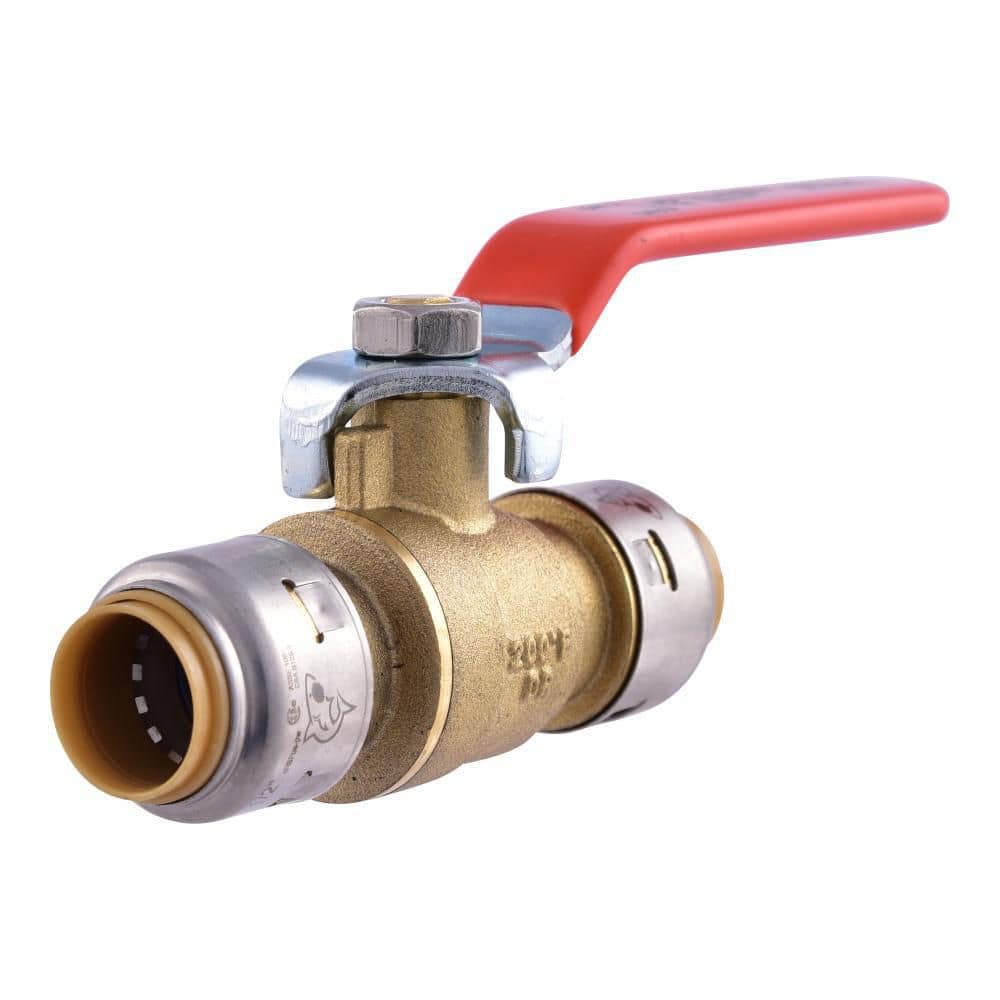
SharkBite 1/2 inch Push-to-Connect Ball Valve
Score: 8.4/10 — A genuinely tool-free, reusable shut-off valve that earns its premium price through rock-solid reliability and compatibility with virtually every residential pipe type.
Overview
Plumbing shut-off valves are one of those components that most homeowners never think about — right up until they need one urgently. Our top pick for a reliable DIY water shut-off valve is the SharkBite 1/2 inch Push-to-Connect Ball Valve, built to eliminate
the most time-consuming steps in isolation valve installation for DIYers and professional plumbers alike, removing the need for soldering, crimping tools, or clamp rings entirely. You literally push the pipe in until it seats, turn the lever a quarter-turn to confirm flow, and you're done. That's the entire installation process.Related parts & accessories
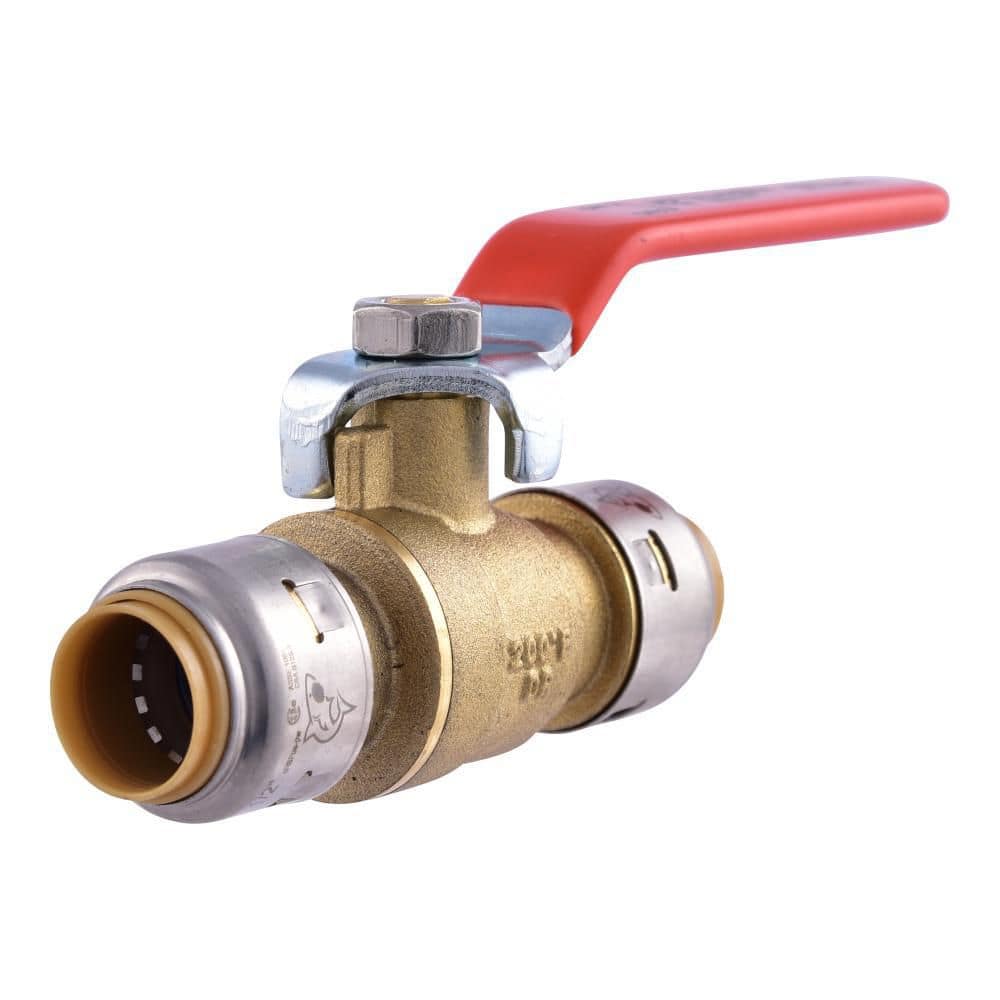
The valve is built around SharkBite's signature push-fit collet mechanism, which uses a stainless-steel grab ring and an EPDM O-ring to create a watertight, pressure-rated connection on ASTM-standard pipes, CPVC, Uponor AquaPEX White PEX-A Tubing, Apollo Half-Inch White PEX-B Flexible Water Pipe Tubing Coil, PEX-C, and HDPE pipe. It's NSF 61 and NSF 372 certified for potable water, meaning it's code-compliant for drinking water systems in all 50 US states. The bright-red quarter-turn lever gives instant visual confirmation of whether the valve is open or closed — a small detail that matters a lot during an emergency.
If you are starting a larger project, explore the full range of SharkBite push-fit fittings for a tool-free installation.
The target audience is broad: weekend DIYers who want to add a shut-off under a new sink, remodelers swapping out an old gate valve, and plumbing professionals who need to get a job done fast. If you're planning a wider system update, check out our SharkBite 1/2-inch coupling buying guide for more installation tips. For those dealing with more critical water management in the basement, including whole-house water filtration, we also recommend our Ridgid SP-650C sump pump review and our sump pump buying guide for comprehensive basement water management. The trade-off with SharkBite is price — these fittings cost meaningfully more than traditional sweat fittings — so whether the convenience premium makes sense depends on your specific installation needs. This review breaks that down thoroughly.
How the Technology Works
To understand why the SharkBite 1/2 inch Push-to-Connect Ball Valve is so effective, one must look at the engineering inside the brass housing. Traditional valves require a mechanical bond (like solder) or a mechanical compression (like a nut and olive) to prevent water from escaping. SharkBite utilizes a three-part seal system: the stainless-steel grab ring, the EPDM O-ring, and the precision-engineered brass body.
When you push a pipe into the valve, the pipe first passes through the stainless-steel grab ring. This ring consists of small, sharp teeth that bite into the exterior of the pipe, ensuring that once the pipe is in, it cannot be pulled out by water pressure. Following the grab ring is the EPDM (Ethylene Propylene Diene Monomer) O-ring. This rubber gasket is compressed against the pipe wall, creating a primary watertight seal. The O-ring is designed to maintain its elasticity over decades, resisting the degrading effects of chlorine and heat.
The "Push-to-Connect" aspect is a passive locking system. Unlike a compression fitting where you must tighten a nut to squeeze a ferrule, the SharkBite mechanism relies on the force of the insertion to seat the pipe past the teeth of the grab ring. This eliminates human error associated with "under-tightening" or "over-tightening" a fitting. Because the seal is created by the O-ring and the grip is created by the steel ring, the valve remains secure even under significant thermal expansion and contraction cycles common in hot and cold water lines.
Furthermore, the internal ball mechanism is a "full-port" design. In the world of valves, "full-port" means the internal diameter of the ball is nearly identical to the diameter of the pipe. This is critical because it prevents turbulence and pressure drops that often occur in smaller-port valves. Whether you are shutting off a toilet line or a main branch for a bathroom remodel focused on modern fixtures (which often involves updating fixtures like the MOEN Chateau 7430) (perhaps upgrading to a budget-friendly modern faucet), the flow remains unimpeded when the valve is open. This is especially useful when pairing with high-quality tubing like Uponor AquaPEX White PEX-A Tubing Coil.
Key Features
No solder, no crimper, no clamp tool required. Pipe inserts into the collet and locks automatically on contact with the internal grab ring.
Works on copper, CPVC, PEX-A, PEX-B, PEX-C, and HDPE — no adapters needed when transitioning between pipe materials.
Connections can be released using a SharkBite disconnect clip or disconnect tongs, making the valve reusable in future projects.
Dezincification-resistant brass body meets NSF 372 lead-free requirements, safe for potable and hot-water applications.
Full-port ball design delivers minimal flow restriction when open; the red lever shows open/closed status at a glance.
Listed for potable water use, ensuring compliance with local plumbing codes across the United States.
| Feature | Value |
|---|---|
| Pipe Size | 1/2 inch |
| Connection Type | Push-to-Connect both ends |
| Compatible Pipe Types | Copper, CPVC, Uponor AquaPEX White PEX-A Tubing, Apollo Half-Inch White PEX-B Flexible Water Pipe Tubing, PEX-C, HDPE |
| Body Material | Lead-free DZR brass |
| Seal Material | EPDM O-ring |
| Grab Ring Material | Stainless steel |
| Max Working Pressure | 200 PSI |
| Max Temperature | 200°F (93°C) |
| Valve Type | Full-port ball valve |
| Certifications | NSF 61, NSF 372, UPC, cUPC |
| Demountable | Yes (requires disconnect tool) |
| Approximate Weight | 4.2 oz (119 g) |
Pros & Cons
Pros
- Genuinely tool-free installation in seconds
- Works on copper, PEX, and CPVC without adapters
- Connections are reusable and demountable
- Lead-free brass is durable and code-compliant
- 200 PSI rating exceeds typical residential supply pressure
- Full-port design doesn't restrict flow
- Red lever gives instant open/closed visual feedback
- NSF 61/372 listed for potable water — universally code-acceptable
Cons
- Costs significantly more than a sweat-fit ball valve
- Disconnecting requires a separate SharkBite tool (not included)
- Pipe end must be cut square and deburred — sloppy cuts cause leaks
- Not rated for gas lines
- Collet can trap debris if pipe isn't cleaned before insertion
- A small number of jurisdictions with local code amendments may require inspector pre-approval for concealed push-fit installations
Installation Guide & Best Practices
While the SharkBite 1/2 inch Push-to-Connect Ball Valve is marketed as "push and go," the difference between a leak-free installation and a flooded basement often comes down to preparation. To ensure a professional result, follow these detailed steps.
Step 1: Precise Cutting
The most critical failure point in push-fit plumbing is the cut. If the pipe is cut at an angle, the O-ring may not seat fully, or the grab ring may not grip the pipe securely. You must use a dedicated pipe cutter (a wheel cutter for copper or a tubing cutter for PEX). Avoid using a hacksaw or a reciprocating saw unless you have a guide to ensure a perfectly square 90-degree cut. Once cut, inspect the edge for any jagged protrusions.
Step 2: Deburring and Cleaning
A "burr" is a small shard of metal or plastic left over from the cutting process. If a burr is present on the outer diameter of the pipe, it can slice the EPDM O-ring as the pipe is inserted, leading to a slow "weeping" leak. Use a deburring tool or a small piece of fine-grit sandpaper to smooth the outer edge of the pipe. Additionally, wipe the end of the pipe with a clean cloth to remove any sawdust, metal shavings, or oils that could compromise the seal.
Step 3: Marking the Insertion Depth
One of the most common mistakes is not pushing the valve far enough onto the pipe. If the pipe is only halfway in, it may hold for a few minutes but fail under pressure. Use a SharkBite depth gauge or a permanent marker to mark the distance from the end of the pipe to the shoulder of the valve. Push the valve onto the pipe until the mark disappears into the body of the fitting. You should feel a distinct "stop" when the pipe has fully seated.
Step 4: Final Verification
Once installed, manually turn the valve handle to ensure it operates freely. Gently tug on the pipe to confirm the grab ring has locked. Slowly open the main water supply and inspect the connection with a dry paper towel; if the towel stays dry, the seal is successful.
Performance
In day-to-day use, the SharkBite ball valve does exactly what it promises. Inserting 1/2-inch copper pipe — properly cut square with a pipe cutter and lightly deburred — results in an immediate, confident click as the grab ring seats. Turn the supply back on and there is simply no drip, no weep, no drama. The same experience repeats on Apollo Half-Inch White PEX-B Flexible Water Pipe Tubing Coil: mark the insertion depth with a SharkBite depth gauge or a marker, push until the mark disappears into the body, and the seal is done.
Flow performance through the full-port ball valve is indistinguishable from a traditionally soldered fitting. There's no perceptible pressure drop at normal domestic supply pressures (40–80 PSI). The quarter-turn lever operates smoothly and with just enough resistance that it won't be accidentally bumped closed — but not so stiff that it's difficult to operate in a cramped under-sink cabinet.
Long-term reliability data from plumbing contractors who have used SharkBite fittings since their US launch in the mid-2000s is broadly positive. The EPDM O-ring holds up well to chlorinated municipal water, which is why many homeowners also install a GE GXWH40L whole-house water filter guide for total system protection to maintain water quality and protect their plumbing. The one environment where wear accelerates is high-temperature recirculating hot-water systems (such as those found with an A.O. Smith EES-40 water heater review) running continuously at or near the 200°F maximum (compatible with professional hot-water setups) — in those cases, many pros prefer traditional fittings to eliminate any concern about O-ring degradation over a decade or more.
Disconnection, when needed, is straightforward with a SharkBite disconnect tool (a cheap plastic tool sold separately). Slide it around the pipe and into the fitting collar, push in to depress the collet, and the pipe releases cleanly. The fitting and O-ring can be inspected and reused if both are in good condition — a practical advantage when reconfiguring plumbing during a renovation.
Maintenance and Long-Term Care
Unlike traditional gate valves, which are prone to "freezing" or seizing over time due to mineral buildup, the ball valve design of the SharkBite push-to-connect valve is inherently more durable. Because it uses a spherical ball with Teflon seats, it is far less likely to leak from the stem or become impossible to turn.
To maintain the valve for the long term, it is recommended to "exercise" the valve twice a year. This means turning the valve from the fully open position to the fully closed position and back again. This simple action clears away any sediment or mineral deposits that may have settled on the ball, ensuring that if you ever have a real emergency, the valve will actually close.
Regarding the O-rings, while they are rated for 200°F, homeowners in extremely hard-water areas should be aware that calcium deposits can occasionally build up around the exterior of the fitting. While this doesn't affect the internal seal, it's a good idea to occasionally wipe down the exterior of the brass body to prevent corrosion from sitting water in damp basements.
Comparison: Push-Fit vs. Traditional Methods
To determine if the SharkBite 1/2 inch Push-to-Connect Ball Valve is the right choice, it helps to compare it directly against the three most common alternatives.
1. Sweat (Soldered) Fittings
Sweat fittings are the gold standard for permanent plumbing. They create a chemical bond that is arguably the most secure possible connection. However, they require a torch, solder, flux, and significant safety precautions. For a professional, this is a 2-minute job. For a DIYer, it can be a 2-hour ordeal involving a trip to the hardware store for equipment they'll never use again. The SharkBite replaces all of this with a 5-second push.
2. Compression Fittings
Compression fittings use a brass nut to crush a ferrule onto the pipe. While tool-free-ish (requiring only a wrench), they are prone to "over-tightening,