TL;DR
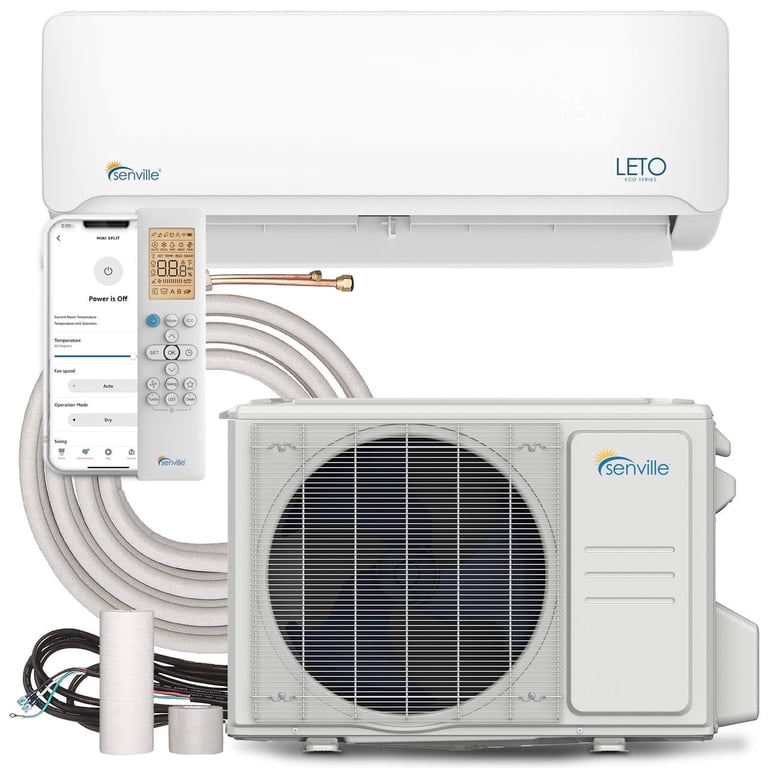
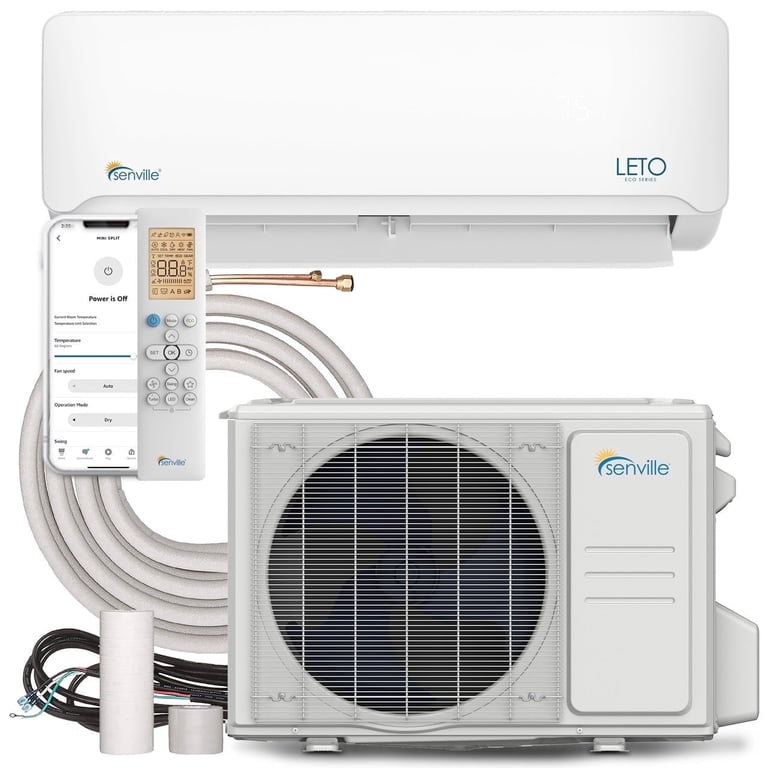
The Senville LETO Series 12,000 BTU Mini-Split is one of the best value ductless heat pump systems for homeowners seeking an efficient, budget-friendly alternative to central air for those seeking an accessible entry point into high-efficiency ductless mini-split systems, offering inverter-driven efficiency, a built-in heat pump, and DIY-friendly installation at a price that undercuts many branded competitors. If you're cooling or heating a room between 450–550 sq ft, this unit deserves a serious look.
Check the Senville LETO Series 12,000 BTU Mini-Split for the latest pricing and availability.
Finding the right mini-split can feel overwhelming — there are dozens of brands, confusing SEER ratings, and installation questions that send most buyers scrambling. The Senville LETO Series 12,000 BTU Mini-Split cuts through that noise by offering a proven, no-frills package that delivers reliable year-round comfort without the premium price tag of Mitsubishi Ductless Mini-Split Heat Pump 15000 BTU Single Zone, Carrier Performance Series Ductless Mini-Split Heat Pump 9000 BTU Single Zone (see our Carrier 38MAQB09R-3 guide), or Daikin 17 SEER Single-Zone Ductless Mini-Split Heat Pump 12000 BTU with WiFi (check out the Daikin RXB12AXVJU 17 SEER Mini-Split guide). If you are considering a DIY-specific alternative, our MrCool DIY-24-HP-WIF115 Mini-Split Buying Guide (ideal for those seeking a fully MrCool DIY 24000 BTU Ductless Mini-Split Heat Pump) offers a great comparison for larger spaces. In this guide we break down everything you need to know before buying: performance specs, installation requirements, real-world efficiency numbers, and who this unit is — and isn't — best suited for.
Our Top Pick: Senville LETO 12,000 BTU Mini-Split
A best-in-class value pick for single-room heating and cooling, combining inverter technology, a heat pump, and a wallet-friendly price. We rate it 8.6 / 10 for homeowners and renters who want professional-grade comfort without a professional-grade bill.
Senville LETO 12,000 BTU Mini-Split: Full Overview
The Senville LETO Series 12,000 BTU Mini-Split sits in the brand's entry-level lineup but doesn't feel like a compromise product.
It competes closely with other value-driven options like the Pioneer Diamante Series 18,000 BTU Mini-Split Heat Pump (see our Pioneer WYS018GMFI22RL buying guide). The 12,000 BTU capacity of the Senville LETO Series 12,000 BTU Mini-Split — often called a "1-ton" unit — is the sweet spot for bedrooms, home offices, sunrooms, garages, and small open-plan living areas up to roughly 550 square feet. At its core is a DC inverter compressor, which means the unit ramps its output up and down rather than cycling fully on and off. The practical upshot is quieter operation, faster temperature recovery, and noticeably lower electricity bills compared with older single-stage window AC units (like those discussed in our LG LW1222IVSM review).If you need more flexibility, consider the LG Dual Inverter Portable Heat Pump 14000 BTU.
On the heating side, the LETO functions as a heat pump, extracting warmth from outdoor air and transferring it inside. Senville rates it for operation down to approximately 5°F (–15°C) on the low end, which puts it in the "cold-climate capable" territory — though efficiency does drop significantly below 20°F. In most of the continental United States, this means the LETO can serve as a primary heating source for the shoulder seasons and a supplemental source in deep winter, reducing reliance on furnaces or electric baseboard heaters. For those in harsher climates, you might also explore the Bosch Ductless Mini-Split Heat Pump 18000 BTU Cold Climate Single Zone (detailed in our Bosch BMS500-18HDN1 buying guide) for increased efficiency at lower temperatures.
The system ships as a complete set: a wall-mounted indoor air handler, an outdoor condensing unit, a remote control, a mounting bracket for the outdoor unit, and a wiring guide. What it does not include is the lineset (the copper refrigerant tubing connecting indoor and outdoor units) or line-hide conduit. Senville markets the LETO as DIY-installable (similar to the approach detailed in our MrCool DIY-24-HP-WIF115 buying guide), and while a handy homeowner can certainly handle the electrical and mounting work (ensure you use the correct AFCI breaker for your panel) and mounting work (consider using Rockwool Safe 'n' Sound insulation for sound dampening for better sound dampening behind the unit), the refrigerant lines must be vacuumed and charged by an EPA 608-certified technician in the United States — a step often overlooked in marketing materials.
Aesthetically, the indoor unit follows the slim, white-panel design language common to most mini-splits. It's unremarkable but inoffensive, and the auto-sweep louvers distribute airflow across a wide horizontal arc. The included wireless remote handles all core functions — mode selection, fan speed, sleep timer, and swing direction — while a simple LED display on the unit itself shows the current set temperature. There is no native Wi-Fi or smart-home integration on the base LETO model, which is the most significant feature gap versus pricier competitors.
Pros
- Competitive SEER2 rating for the price tier
- DC inverter compressor for quiet, efficient operation
- Heat pump included — cools and heats
- Low ambient heating down to ~5°F outdoor temp
- Complete kit ships with mounting hardware
- Self-cleaning mode reduces mold/mildew buildup
- Auto-restart after power outage
- Low noise level on indoor unit (~32 dB on low)
Cons
- No built-in Wi-Fi or app control
- Lineset not included in the box
- Refrigerant charging still requires EPA 608 tech
- Efficiency drops considerably below 20°F
- Limited U.S. service center network vs. Mitsubishi/Daikin
- No dehumidifier-only mode with precise % control
- Outdoor unit aesthetics are utilitarian
This site earns a commission on qualifying purchases. Prices and availability are verified at time of publication but may change.
Senville LETO 12,000 BTU — Detailed Specs
Cooling Capacity
12,000 BTU/hr (1 ton)
Heating Capacity
12,000 BTU/hr (heat pump mode)
Coverage Area
450–550 sq ft (recommended)
SEER Rating
208–230V model: Up to 19 SEER
115V model: Up to 21.2 SEER
These are two distinct units with different wiring requirements. Confirm your panel voltage and circuit availability before purchasing.
HSPF Rating
Up to 9.0 HSPF (legacy standard; equivalent HSPF2 will be lower — confirm the HSPF2 value on the AHRI certificate when comparing to other current models)
Voltage
208–230V / 60Hz / 1-Phase
Amperage (Running)
~5.1A cooling / ~5.4A heating
Refrigerant
R-410A (pre-charged to 25 ft)
Note: R-410A is being phased down under the EPA AIM Act. Existing systems can still be serviced, but refrigerant prices are likely to rise over the unit's lifespan. Factor this into your long-term cost expectations.
Min / Max Operating Temp (Cooling)
14°F to 115°F outdoor
Min / Max Operating Temp (Heating)
5°F to 75°F outdoor
Indoor Unit Noise
32–46 dB(A)
Outdoor Unit Noise
~54 dB(A)
Indoor Unit Dimensions
33.5" W × 11.8" H × 7.9" D
Outdoor Unit Dimensions
27.6" W × 21.7" H × 12.2" D
Indoor Unit Weight
~18 lbs
Outdoor Unit Weight
~55 lbs
Max Lineset Length
65 ft (20 m)
Max Height Difference
33 ft (10 m) indoor/outdoor
Operating Modes
Cool, Heat, Fan, Dry (Dehumidification) mode (compare with standalone GE dehumidifiers), Auto
Fan Speeds
5 speeds + Auto
Filter Type
Washable mesh + activated carbon (for high-efficiency air cleaning, see our Filtrete MERV-12 review)
Warranty
5-yr parts / 7-yr compressor