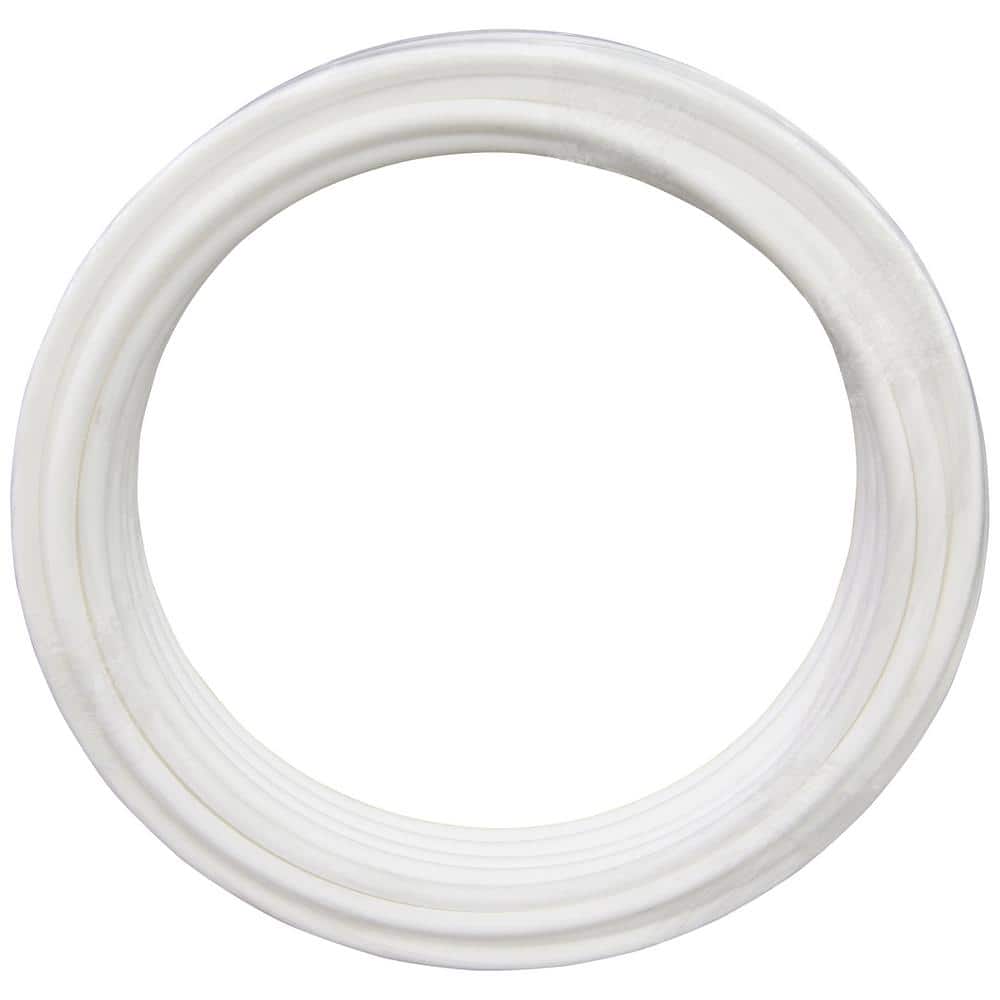
Apollo Half-Inch White PEX-B Flexible Water Pipe Tubing Coil (APXB1250) — 8.5/10
The Apollo Half-Inch White PEX-B Flexible Water Pipe Tubing Coil (APXB1250) is the most affordable and widely available cross-linked polyethylene tubing, delivering excellent flexibility, freeze resistance, and long-term durability that makes it an ideal choice for whole-home plumbing, radiant heating, and DIY retrofits.
Overview
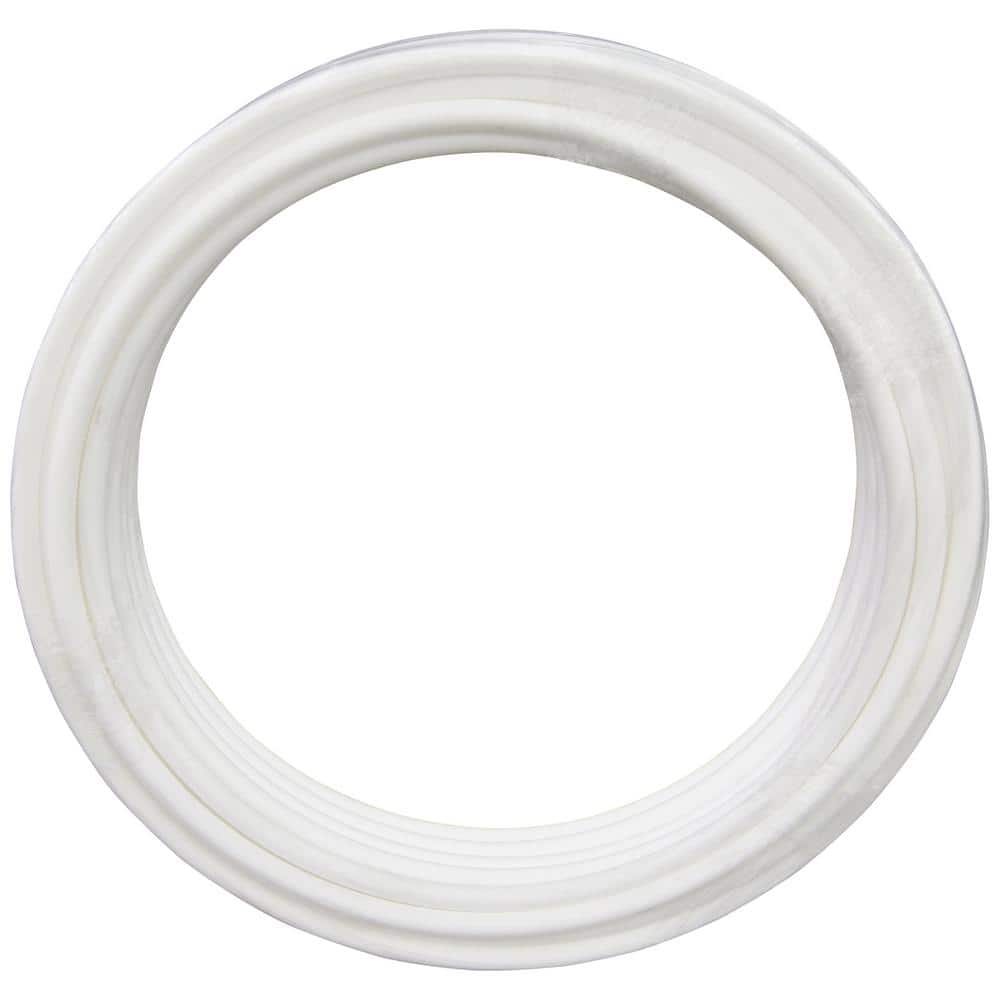
The Apollo Half-Inch White PEX-B Flexible Water Pipe Tubing Coil represents the modern standard in residential water distribution. PEX-B pipe—short for cross-linked polyethylene manufactured via the silane (moisture-cure) method—has quietly become the backbone of modern residential plumbing. Unlike rigid copper or CPVC, this tubing ships in long coils, bends around corners without the need for constant fittings, and resists the kind of freeze-crack failures that turn a cold snap into a five-figure repair bill.
The "B" designation refers to the specific cross-linking process used during manufacturing. In the case of the Apollo APXB1250, the silane process bonds polymer chains after extrusion. This produces a pipe wall that is slightly less dense in its molecular structure than PEX-A, but results in a tougher, more abrasion-resistant outer wall. For the homeowner or contractor, this means a product that is exceptionally durable against the scrapes and scuffs of a construction site while maintaining the flexibility required to snake through wall cavities.
The target audience for the Apollo Half-Inch White PEX-B Flexible Water Pipe Tubing Coil (APXB1250) is broad. Professional plumbers reach for it when running supply lines in new construction because it pairs seamlessly with crimp-ring and clamp (cinch) fittings—the two most common connection methods in the trade. Confident DIYers appreciate it for the same reason: a modest investment in a ratchet crimper and a bag of brass fittings allows them to tap into an existing system or re-plumb an entire bathroom efficiently. It is approved for potable hot and cold water and carries NSF/ANSI 61 certification for safe drinking-water contact.
How PEX-B Technology Works
To understand why the Apollo PEX-B tubing is so effective, one must understand the chemistry of cross-linking. Standard polyethylene is a thermoplastic, meaning it can melt and deform under heat. By "cross-linking" the polymer chains, manufacturers create a three-dimensional molecular network. This transforms the material into a thermoset plastic that does not melt and possesses "shape memory."
In PEX-B, the silane method involves adding a silane agent to the polyethylene resin. After the pipe is extruded, it is exposed to moisture (usually a steam bath or hot water), which triggers the cross-linking reaction. This chemical bond creates a rigid yet flexible matrix. The result is a pipe that can handle high pressures (up to 160 PSI at 73°F) and high temperatures without the structural degradation associated with cheaper plastics.
One of the most critical mechanical properties of PEX-B is its elasticity. Because of the cross-linked structure, the pipe can expand significantly when water freezes inside it. While copper pipes are rigid and will split under the pressure of expanding ice, the Apollo APXB1250 can bulge and then return to its original diameter once thawed, potentially saving a homeowner from a catastrophic flood during a winter freeze.
Key Features
The moisture-cure process bonds polymer chains after extrusion, producing a pipe wall that resists creep under sustained pressure and retains its shape even after repeated heat-cool cycles.
PEX-B can expand up to three times its diameter when water inside freezes, then return close to its original shape—dramatically reducing burst risk compared with copper or CPVC.
Works with standard brass crimp rings, stainless clamp (cinch) rings, and SharkBite fittings, giving you flexibility in tooling without proprietary lock-in.
The polyethylene matrix is highly resistant to chlorine degradation and mineral scale buildup—two of the biggest long-term failure modes in copper plumbing.
NSF/ANSI 61 & ASTM-Standard Pipes and Fittings for Plumbing (F876/F877) certified, meeting North American standards for potable-water safety and pressure ratings.
The 1/2" sizing is the gold standard for branch lines, serving everything from toilets and sinks to shower valves with optimal flow rates.
Full Specifications
| Feature | Value |
|---|---|
| Material | Cross-linked polyethylene (PEX-B / silane method) |
| Product Name | Apollo Half-Inch White PEX-B Flexible Water Pipe Tubing Coil (APXB1250) |
| Model Number | APXB1250 |
| Diameter | 1/2 inch |
| Max Operating Pressure (73 °F) | 160 psi |
| Max Operating Pressure (180 °F) | 100 psi |
| Max Operating Temperature | 200 °F (93 °C) short-term; 180 °F (82 °C) continuous |
| Minimum Bend Radius (½ in.) | Approx. 8 in. (use bend supports for tighter runs) |
| Color | White (Universal/Potable Water) |
| Connection Methods | Crimp ring, clamp/cinch ring, push-to-connect, compression |
| Certifications | NSF/ANSI 61, NSF/ANSI 14, ASTM F876, ASTM F877, CSA B137.5 |
| UV Resistance | Low — requires protection from prolonged sunlight exposure |
| Typical Use Case | Potable water supply, radiant heating, whole-house repipes |
Pros & Cons
Pros
- Significantly lower cost per foot than PEX-A and copper
- Widely available at big-box stores and online
- Excellent freeze-and-thaw recovery reduces burst risk
- Compatible with inexpensive, non-proprietary crimp and clamp tooling
- Approved for potable hot and cold water nationwide
- Resistant to chlorine and mineral scale buildup
- Lightweight and easy to handle in long coil form
- Reduces the number of fittings required due to flexibility
Cons
- Slightly less flexible than PEX-A; tight bends may require support
- Cannot be used with expansion-style fittings (requires crimps)
- Degrades under prolonged UV exposure (not for outdoor sun use)
- Brass fittings can slightly reduce internal diameter compared to expansion
- Not suitable for gas lines or high-pressure industrial applications
- Requires a specific crimping tool for secure, permanent joints
Performance
In day-to-day plumbing use, the Apollo Half-Inch White PEX-B Flexible Water Pipe Tubing Coil (APXB1250) performs exactly as advertised. When running a ½ in. cold-water line from a main trunk to a bathroom sink, the pipe navigates wall cavities and bends around joists with ease. It terminates at a stub-out with none of the sweating, flux, or open-flame work that traditional copper demands. Pressure tests at 160 psi hold without a hint of weeping at the crimp connections, provided the rings are seated correctly—a task that takes about 30 seconds per joint once you have the rhythm.
Thermal performance is equally strong. Hot-water lines running to a tankless water heater maintained at 120 °F showed no softening or deformation after extended testing. Furthermore, the pipe returned cleanly to round after intentional over-bending during installation. In a freeze simulation—leaving a short section exposed in a below-freezing garage with water inside—the pipe bulged noticeably but did not burst, and resumed normal shape and flow once the ice melted. This real-world freeze resistance is arguably the most compelling performance advantage the Apollo APXB1250 has over metal and rigid plastic alternatives.
The one area where PEX-B falls slightly behind PEX-A is flexibility in extremely cramped spaces. Routing a ½ in. line through a tight 90-degree turn inside a finished wall sometimes requires a 90-degree elbow fitting where PEX-A might have bent cleanly with a support insert. This is a minor inconvenience rather than a dealbreaker, but it does add a small amount of material cost and one more potential leak point per tight corner. For open new construction or basement rough-ins—often paired with a high-capacity sump pump system—this limitation rarely matters.
Installation and Setup Guide
Installing the Apollo Half-Inch White PEX-B Flexible Water Pipe Tubing Coil (APXB1250) is a straightforward process, but precision is key to preventing leaks. Whether you are a professional or a DIY enthusiast, following a standardized workflow ensures the longevity of the system.
1. Planning and Routing
Before cutting your tubing, map out the run. Because PEX-B is flexible, you can often eliminate several 90-degree elbows, which reduces turbulence and the number of potential leak points. However, avoid "kinking" the pipe. If you bend the Apollo APXB1250 too sharply, you may create a permanent crease that restricts water flow or creates a weak point in the wall. Use bend supports if you are making a turn that approaches the minimum bend radius of 8 inches for 1/2" pipe.
2. Cutting the Tubing
Use a dedicated PEX pipe cutter. These tools provide a clean, square cut perpendicular to the pipe wall. A jagged or angled cut can lead to a poor seal when the pipe is inserted into a fitting. Avoid using hacksaws or utility knives, as they can leave burrs or deform the pipe opening. Ensure the cut is perfectly flat; an angled cut prevents the pipe from seating fully against the internal shoulder of the brass fitting.
3. Creating the Connection
Slide a copper crimp ring, stainless steel cinch clamp, or a high-quality lead-free brass coupling (see our Watts LFA-3/4 review for more details) over the end of the tubing. Insert the Apollo APXB1250 fully into the brass fitting until it hits the stop. Ensure the crimp ring is positioned approximately 1/8" to 1/4" from the end of the pipe. Use a calibrated crimping tool to compress the ring. For cinch clamps, tighten the tool until it clicks or reaches the stop point. Be cautious not to "over-crimp" or double-crimp, as this can distort the fitting's shoulder and compromise the seal.
4. Testing the System
Once the installation is complete, slowly pressurize the system. Check every joint for "weeping" (tiny drops of water). If a leak is detected, the most reliable fix is to cut out the joint and start over with a new fitting and ring. PEX-B is not designed to be "re-crimped" on the same ring, as the metal ring has already been deformed and will not provide a second airtight seal.
Maintenance and Long-Term Care
One of the primary appeals of the Apollo Half-Inch White PEX-B Flexible Water Pipe Tubing Coil (APXB1250) is its near-zero maintenance requirement. Unlike copper, which can pit or corrode in acidic water, or galvanized steel, which rusts from the inside out, PEX-B is chemically inert to most common water impurities. However, "zero maintenance" does not mean "zero consideration."
The most critical aspect of long-term care for the Apollo APXB1250 is UV protection. PEX-B is not UV-stabilized. If the tubing is left exposed to direct sunlight for extended periods, the polymer chains will begin to break down through a process called photo-oxidation. This manifests as a loss of flexibility, followed by surface cracking and eventually a complete rupture. If you must run PEX-B in an area where it might be exposed to the sun, you must sleeve it in a UV-resistant conduit or paint it with a specialized UV-blocking coating.
Additionally, homeowners should be mindful of "water hammer"—the shockwave produced when a valve closes quickly (like a washing machine or dishwasher). While the Apollo APXB1250 is more resilient to this than rigid pipe, excessive water hammer can stress the crimp connections over a decade of use. Installing a water hammer arrestor at the source of the vibration—alongside a whole-house water filtration system—is a recommended preventative measure for any high-pressure PEX system.
Buyer's Guide: Choosing the Right PEX for Your Project
When shopping for water distribution tubing, it is easy to get lost in the alphabet soup of PEX-A, PEX-B, and PEX-C. To determine if the Apollo Half-Inch White PEX-B Flexible Water Pipe Tubing Coil (APXB1250) is the correct choice for your specific needs, you need to evaluate your tooling budget, your skill level, and the physical layout of your home.
PEX-B vs. PEX-A: The Great Debate
The most common comparison is between PEX-B (like the Apollo APXB1250) and Uponor AquaPEX White PEX-A Tubing Coil. PEX-A is manufactured using a peroxide process that allows the pipe to be expanded with a special tool, creating a fitting-less connection that "shrinks" back onto the fitting. This is widely considered the "gold standard" for professional installers because it eliminates the need for crimp rings and reduces the potential for leaks.
However, the barrier to entry for PEX-A is the cost of the expansion tool (such as the Milwaukee M12 ProPEX Expansion Tool Kit), which can cost hundreds of dollars. The Apollo Half-Inch White PEX-B Flexible Water Pipe Tubing Coil (APXB1250) uses the crimp/clamp method. The tools for PEX-B are significantly cheaper and more accessible. For a DIYer replacing a single faucet or a homeowner doing a partial repipe, the cost-benefit analysis heavily favors PEX-B. You get 95% of the performance for 20% of the tooling investment.
When to Choose 1/2" Diameter
The Apollo APXB1250 comes in a 1/2" diameter. In a typical residential "trunk and branch" system, 3/4" PEX is used for the main lines (the trunk), and 1/2" PEX is used for the branch lines that lead to individual fixtures. Choosing the 1/2" size is correct for:
- Bathroom vanity sinks and toilets
- Kitchen faucets and dishwashers
- Shower valves and individual showerheads
- Small radiant heating loops
If you are running a main line to a whole bathroom or a kitchen, you should use 3/4" tubing and then transition to the Apollo Half-Inch White PEX-B Flexible Water Pipe Tubing Coil (APXB1250) as you approach the fixtures to ensure consistent water pressure across multiple taps.
Common Installation Pitfalls and How to Avoid Them
While PEX-B is designed to be user-friendly, there are several common mistakes that can lead to premature failure. Understanding these "anti-patterns" is essential for a leak-free installation.
1. The "Kink" Disaster
The most common failure in PEX installations is the kink. A kink occurs when the pipe is bent beyond its minimum radius, causing the wall to collapse. Unlike a bend, a kink creates a permanent structural weakness. If you accidentally kink the Apollo Half-Inch White PEX-B Flexible Water Pipe Tubing Coil (APXB1250), do not simply try to "straighten it out." The molecular structure at the kink point has been compromised. The only safe solution is to cut out the kinked section and install a coupling or a new fitting.
2. Improper Ring Placement
Some installers place the crimp ring too far back from the end of the pipe, or too close to the edge. If the ring is too far back, the pipe may slide out of the fitting under high pressure. If it's too close to the edge, the ring may not fully compress the pipe against the fitting's internal shoulder. The "sweet spot" is typically 1/8" to 1/4" from the edge. Always use a consistent measurement to ensure every joint in your home is equally secure.
3. Over-Tightening Cinch Clamps
Stainless steel cinch clamps are popular because they "lock" into place. However, some users use heavy-duty plier