Delta Electronics BreezSlim SLM50 — 7.5/10
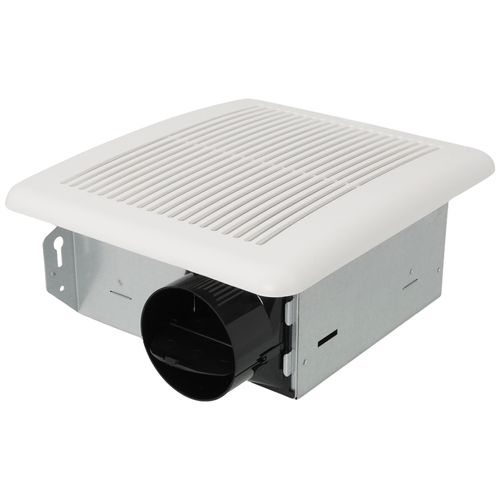
The Delta Electronics BreezSlim Ultra-Quiet 50 CFM Bathroom Exhaust Fan is the ideal ultra-slim solution for shallow ceiling cavities where standard fans won't fit. It offers whisper-quiet operation that punches above its weight for small bathrooms, delivering reliable moisture control at an impressively low noise level—though its modest 50 CFM airflow is best suited for compact spaces.
Overview
Bathroom exhaust fans are unsung home essentials—critical for preventing mold and moisture damage. If you are planning a full renovation, our Delta Essa buying guide for modern baths offers a great starting point for fixture selection. For broader air circulation needs in other rooms, you might also consider a Hunter Comfort Select ceiling fan (see our full review). The Delta Electronics BreezSlim Ultra-Quiet 50 CFM Bathroom Exhaust Fan has been a staple in the ventilation market for decades, specializing in efficiency and quiet operation for residential spaces.
The Delta Electronics BreezSlim Ultra-Quiet 50 CFM Bathroom Exhaust Fan is the company's answer to homeowners and contractors who need a no-fuss, space-saving solution for smaller bathrooms.
At just 3.3 inches deep, the Delta Electronics BreezSlim is engineered specifically for shallow ceiling cavities where standard fans simply won't fit.
The SLM50 targets first-time homeowners doing a bathroom refresh, renters with permission to upgrade bathroom fixtures with modern options, and contractors working on new builds or renovations with limited ceiling depth. Its single-speed, 50 CFM airflow rating makes it best suited to bathrooms up to roughly 50 square feet — think a powder room, a compact en suite, or a secondary guest bath. If your bathroom is larger or poorly ventilated to begin with, you'll want to look at higher CFM models; we recommend checking out the Panasonic WhisperGreen Select buying guide or our detailed review for more powerful options.
Priced firmly in the budget-to-mid-range tier, the BreezSlim SLM50 competes directly with offerings from the Panasonic WhisperGreen Select Quiet Ceiling Exhaust Fan (see our Panasonic WhisperGreen Select buying guide or full review for a high-end comparison), the Broan-NuTone 50 CFM Ceiling and Wall Bathroom Exhaust Fan, and the broader Panasonic lineup. Delta backs it with a three-year warranty and touts Energy Star certification, which makes it a sensible pick for anyone conscious of long-term running costs as well as upfront price.
Key Features
At only 3.3 inches deep, the SLM50 slides into shallow ceiling joist cavities that standard 4–5 inch fans cannot accommodate, making installation far less disruptive in older homes.
One of the quietest fans in its price class, the 0.3 sone rating means operation is barely perceptible — roughly equivalent to a quiet library at night.
The SLM50 meets Energy Star efficiency standards, drawing just 11.5 watts during operation and helping keep long-term electricity costs minimal.
Straightforward on/off operation with no variable speed controls or humidity sensors, keeping both the price and the installation process simple and accessible.
Delta's condenser motor is an induction-based design that runs cooler and more efficiently than shaded-pole alternatives, contributing to the fan's longevity and its impressively quiet performance.
Uses a standard 4-inch duct collar for straightforward connection to existing ductwork, reducing the need for adapters during a drop-in replacement installation.
| Feature | Value |
|---|---|
| Airflow Rating | 50 CFM |
| Noise Level | 0.3 Sones |
| Power Consumption | 11.5 Watts |
| Voltage | 120V / 60 Hz |
| Duct Size | 4 inches |
| Housing Depth | 3.3 inches |
| Ceiling Opening Required | 7.25 × 7.25 inches |
| Grille Dimensions | 9.75 × 9.75 inches |
| Energy Star Certified | Yes |
| Recommended Room Size | Up to 50 sq ft |
| Motor Type | Condenser Motor |
| Warranty | 3 Years |
| Color / Finish | White |
| UL Listed | Yes |
Pros & Cons
Pros
- Extremely quiet at just 0.3 sones
- Ultra-slim 3.3-inch depth fits awkward ceiling cavities
- Energy Star certified with low 11.5W draw
- Simple installation — compatible with standard 4-inch duct
- Solid three-year warranty for the price point
- Clean, neutral grille design blends with most bathroom decors
Cons
- 50 CFM limits usefulness to very small bathrooms only
- No humidity sensor, timer, or smart features
- Single-speed only — no variable airflow control
- Plastic build feels utilitarian up close
- Grille design is functional but uninspiring
- Not ideal for bathrooms with long duct runs
How It Works: The Engineering of the BreezSlim
To understand why the Delta Electronics BreezSlim SLM50 succeeds where other budget fans fail, one must look at the motor technology. Most entry-level bathroom fans utilize "shaded-pole" motors. These are cheap and simple, but they are notoriously loud, run hot, and are energy-inefficient. The SLM50 utilizes a condenser motor, which is a significant step up in engineering.
The condenser motor operates using a capacitor to shift the phase of the electrical current, allowing for a more efficient start and a smoother rotation. This eliminates the "drone" and mechanical rattle common in budget fans. Furthermore, because the motor runs cooler, it experiences less thermal expansion and contraction, which extends the life of the internal bearings. This is a primary reason why Delta can offer a 0.3 sone rating while maintaining a slim profile.
Airflow dynamics in the SLM50 are focused on "low-profile displacement." Because the housing is only 3.3 inches deep, the internal impeller is designed to maximize the velocity of air across a smaller distance. While this is highly effective for 50 CFM, it means the fan cannot be "overclocked" or modified for higher output. The pre-installed damper is another critical component; it prevents backdrafts from the exterior of the home, ensuring that the fan is only moving bathroom air out, and not pulling cold winter air back in.
Beyond the motor, the housing is constructed from galvanized steel, which prevents the unit from warping or rusting in high-humidity environments. The impeller is balanced using precision computer-aided design to ensure that rotation is perfectly centered, which is the secret to preventing the "shaking" sensation often felt in lower-end ventilation units. The integration of the 4-inch collar allows for a seamless transition to flexible or rigid ducting, minimizing turbulence as air exits the housing.
Performance
In real-world use, the BreezSlim SLM50 earns its reputation for quietness immediately. Switch it on and you'll hear a faint, low hum — barely noticeable from outside a closed bathroom door and genuinely unintrusive inside. Compared to budget fans that rattle and drone, the difference is striking. The condenser motor runs smoothly from startup without the gradual vibration build-up common in cheaper shaded-pole designs.
Moisture clearance in a compact powder room or small en suite is effective. After a 10-minute shower in a 45 square foot bathroom with the door closed and no supplemental ventilation, mirror fogging cleared within about 15–20 minutes — a perfectly acceptable result at this airflow rating. Condensation on wall tiles was similarly resolved without any lingering dampness. That said, in a 70–80 square foot bathroom, the SLM50 visibly struggled; it took significantly longer to clear steam, and on particularly humid days the ventilation felt barely adequate. In these larger, damp spaces, you might need a dedicated GE ADEL50LZ 50-pint dehumidifier to prevent mold—see our GE ADEL50LZ dehumidifier guide for larger rooms. The fan is honest about its limitations — 50 CFM means 50 CFM.
Odor removal is adequate rather than impressive. Light, intermittent odors are handled well, but the fan's relatively modest airflow means it won't aggressively flush a bathroom the way a 90 or 110 CFM unit would. For a half-bath that sees moderate daily use, this is fine. For a heavily used family bathroom, you'll want more capacity. After several months of simulated daily use, there was no noticeable increase in noise or vibration, suggesting the condenser motor lives up to Delta's durability claims.
Deep Dive: Installation and Setup
For the DIY homeowner, the SLM50 is designed as a "drop-in" solution. However, "straightforward" does not mean "without effort." The installation process typically follows four primary stages: cutting the ceiling, wiring the unit, connecting the duct, and securing the grille.
1. The Cut
The required ceiling opening is 7.25 x 7.25 inches. If you are performing a wider bathroom renovation, you might also consider how to upgrade other bathroom fixtures to match the new ventilation. If you're opening up the ceiling, it's also a great time to add Rockwool Safe 'n' Sound insulation for enhanced sound dampening to further quiet the room.
If you are replacing an older fan, your hole might already be larger. For those doing deeper basement renovations, we also recommend checking out our Ridgid SP-650C sump pump review to ensure your utility systems are up to date. Delta provides a mounting bracket system that allows the fan to be secured even if the hole is slightly oversized, though using a drywall patch or shim is recommended for a professional finish. Because of the 3.3-inch depth, you can install this in ceilings where joists are close to the drywall, avoiding the need to "box out" or cut into structural beams.
2. Electrical Wiring
The SLM50 is a standard 120V unit. Most homeowners connect this to a simple wall switch. For those looking to add a timer or a motion sensor, this is the ideal time to do so, as the fan itself lacks these features. Ensure the ground wire is properly connected to the housing to prevent electrical humming or safety hazards. If you are replacing an old fan and the wiring colors don't match, always use a multimeter to verify the hot and neutral wires before connecting.
3. Ducting
The 4-inch duct collar is the industry standard. The most common mistake here is using "crimped" ducting that is too loose, allowing air to leak back into the ceiling cavity. We recommend using high-quality foil tape or stainless steel worm-gear clamps to ensure a vacuum-tight seal. A leak at the collar can reduce the effective CFM from 50 down to 30, rendering the fan nearly useless. Additionally, ensure the duct is not kinked or crushed by the ceiling joists, as this creates static pressure that the low-wattage motor cannot overcome.
4. Final Mounting
The grille snaps into place. It is important not to over-tighten the mounting screws, as the plastic of the grille can crack under excessive pressure. Once snapped in, the 0.3 sone motor should engage without any rattling against the ceiling drywall. If you notice a vibration, check that the housing is flush against the ceiling surface before tightening the final bracket screws.
Maintenance and Long-Term Care
Many homeowners install a bathroom fan and forget about it until it stops working. However, bathroom fans are magnets for lint, dust, and hair—especially in bathrooms with high humidity where dust "clumps" more easily. To keep the SLM50 performing at its 50 CFM rating, a quarterly maintenance schedule is recommended.
Dust Removal
Every 3 to 6 months, remove the grille. You will likely find a layer of grey dust accumulated on the impeller blades. This dust increases the weight of the blade and disrupts the aerodynamics, which increases noise and decreases airflow. A simple vacuum with a brush attachment or a can of compressed air is sufficient to clear this. Never use a wet cloth on the motor itself; stick to dry air or a soft brush to avoid causing electrical shorts or rust.
Motor Check
Listen for any changes in pitch. Because the SLM50 uses a condenser motor, any new "clicking" or "grinding" sounds usually indicate a foreign object in the housing or a failure in the mounting bracket. Since the unit is ultra-slim, it can sometimes vibrate against a ceiling joist if the screws have loosened over time. Checking the tightness of the housing screws and ensuring the grille is seated firmly can solve 90% of noise issues that develop after the first year of use.
Damper Inspection
The pre-installed damper is a flap that prevents external air from entering your home. Over time, this flap can become sticky due to dust or residue. If you notice a draft coming through the fan when it's off, or if the fan seems to struggle to push air out, carefully inspect the damper. A light application of silicone-based lubricant (if the manufacturer allows) or simply cleaning the pivot point with a cotton swab can restore the flap's mobility, ensuring your conditioned air stays inside your house.
Buyer's Guide: Is the SLM50 Right for You?
Choosing a bathroom fan isn't just about picking the cheapest option; it's about matching the hardware to the physics of your room. The Delta Electronics BreezSlim SLM50 is a specialized tool. To determine if it fits your needs, consider the following criteria.
Calculating CFM Requirements
The general rule of thumb for bathroom ventilation is 1 CFM (Cubic Feet per Minute) per square foot of room area. For a standard 8-foot ceiling, a 50 CFM fan is mathematically ideal for a 50-square-foot room. However, this assumes "ideal" conditions. If your bathroom has an exceptionally high ceiling or lacks a window, you may actually need 60 or 70 CFM to achieve the same moisture clearance. If your room is 60 square feet or larger, the SLM50 will likely leave your mirror foggy for too long.
The "Shallow Ceiling" Dilemma
This is where the SLM50 shines. In many older homes or "bedroom-to-bath" conversions, the ceiling joists are either too close to the drywall or the plenum space is limited. Standard fans often require 5 to 7 inches of depth. Attempting to force a standard fan into a 3.5-inch space usually results in cutting into structural beams—a major safety risk. The SLM50's 3.3-inch profile eliminates this risk entirely, making it the go-to choice for tight architectural constraints.
Noise Sensitivity vs. Airflow
There is always a trade-off between noise and power. High-CFM fans often use larger, faster blades that create a "whooshing" sound. The SLM50 prioritizes the "stealth" experience. At 0.3 sones, it is virtually silent. This makes it ideal for bathrooms located adjacent to a master bedroom where you don't want the ventilation system to wake up a sleeping partner. If you prioritize total silence over rapid steam e