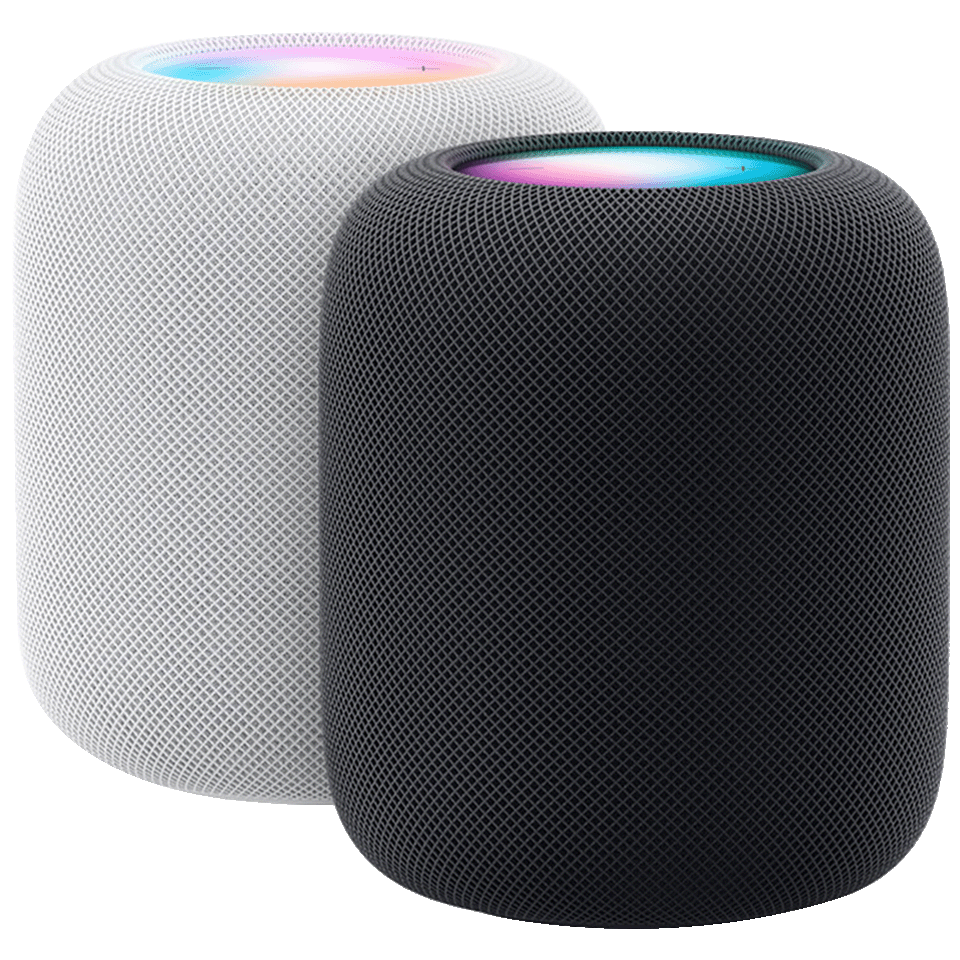
Our Verdict
Apple HomePod (2nd Gen) — 8.5/10. A richly sounding, ecosystem-savvy smart speaker that earns its place in an Apple-first home but remains too locked-in and pricey to recommend to everyone.
Apple HomePod (2nd Gen)
8.5 / 10 — The second-generation HomePod delivers rich, room-filling audio and a tighter smart-home hub experience, but its premium price tag and Apple-only ecosystem keep it a luxury pick rather than an obvious must-buy.
Our site earns commission on purchases made through affiliate links at no extra cost to you.
Overview
Apple's original HomePod landed in 2018 with sky-high audio ambitions and a sky-high price to match. It was quietly discontinued in 2023 — only to be replaced almost immediately by a refreshed second-generation model that trims the cost slightly, tucks in a new chip, and finally gives Siri the temperature and humidity sensing it probably should have had all along. The result is a smart speaker that feels meaningfully evolved rather than simply rehashed.
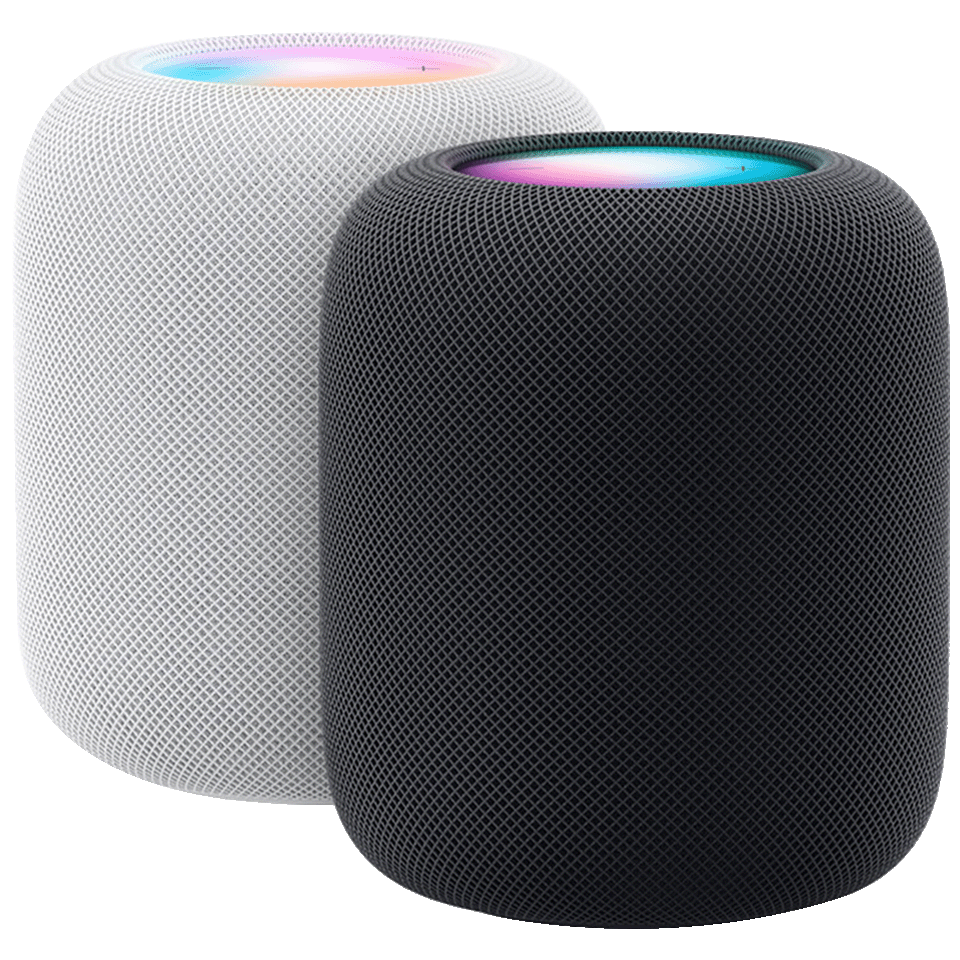
At its core, the HomePod (2nd Gen) is a 360-degree, spatially aware home speaker powered by the S9 chip, the same silicon found in the Apple Watch Series 9. That upgrade unlocks on-device Siri processing for many requests, meaning responses arrive faster and your voice data stays local more of the time. Apple has also added a built-in temperature and humidity sensor, Ultra Wideband support for seamless iPhone handoff, and the ability to act as a Thread border router — making it an increasingly capable hub for the Matter smart-home standard. Households outside the Apple ecosystem can get similar Matter/Thread functionality from devices like the Amazon Echo Hub.
The HomePod (2nd Gen) is designed squarely for people who are already deep in the Apple ecosystem. If you live your life through an iPhone, iPad, Apple TV, and HomeKit-compatible devices, this speaker slots into that world almost frictionlessly. Expect effortless AirPlay 2 streaming, robust stereo pairing, and a Siri that genuinely knows your household. If you use Android, Spotify as a primary service, or lean on Alexa or Google Assistant routines, you will likely find the HomePod frustrating rather than freeing.
Key Features
Apple's latest wearable silicon handles on-device Siri processing, reducing latency and keeping more voice queries local rather than in the cloud.
A custom-built 4-inch woofer with a powerful motor and long-throw suspension delivers deep, distortion-free bass even at high volumes.
Five beamforming tweeters positioned around the base project audio in every direction, filling the room with consistent, even sound.
Full support for Spatial Audio tracks from Apple Music means compatible content sounds three-dimensional and immersive through a single speaker.
A first for the HomePod line — the built-in environmental sensor can feed data into HomeKit automations, such as triggering a smart fan or humidifier.
Acts as a HomeKit hub, Thread border router, and Matter controller, making it a central brain for a growing ecosystem of smart-home devices.
Bring your iPhone close and a tap transfers whatever is playing directly to the HomePod — music, podcasts, or phone calls — with zero lag.
Two HomePods in the same room automatically pair into a true stereo system, with each speaker handling its own independent audio channel.
Specifications
| Feature | Value |
|---|---|
| Chip | Apple S9 |
| Woofer | 4-inch high-excursion woofer |
| Tweeters | Five horn-loaded tweeters |
| Microphones | Four-microphone array (always-on "Hey Siri") |
| Connectivity | Wi-Fi 4 (802.11n), Bluetooth 5.0, Ultra Wideband, Thread |
| Smart Home | HomeKit hub, Thread border router, Matter support |
| Sensors | Temperature, humidity, accelerometer (for auto-setup) |
| Audio Formats | AAC, Apple Lossless (ALAC), Spatial Audio, Dolby Atmos |
| Streaming | AirPlay 2, Apple Music (native), Siri audio requests |
| Height | 6.6 inches (168 mm) |
| Weight | 5.16 lbs (2.3 kg) |
| Colors | Midnight, White |
| Power | Wired (captive cable with magnetic connector) |
| Interoperability | iPhone or iPad with iOS/iPadOS 16.3 or later required |
| Launch Price (USD) | $299 |
Pros & Cons
Pros
- Exceptional audio quality — warm, detailed, and room-filling
- On-device Siri processing is noticeably faster
- Seamless AirPlay 2 and iPhone handoff experience
- Useful temperature and humidity sensor for automations
- Thread border router and Matter support future-proof smart home
- Clean setup process — just hold your iPhone nearby
- Stereo pairing sounds genuinely excellent
- Understated, premium industrial design
Cons
- Requires Apple ecosystem — no native Spotify or Android support
- No 3.5mm or USB audio input
- Siri still lags behind Alexa and Google Assistant for general queries
- No battery — permanently tethered to power outlet
- $299 is steep compared to Sonos Era 100 or Echo Studio
- Wi-Fi 4 only — no Wi-Fi 6 despite the price
- Limited color options
Performance
Pull the HomePod (2nd Gen) out of its box and you'll notice how satisfyingly heavy it feels — this is not cheap plastic masquerading as a premium product. Setup takes roughly 60 seconds: hold your iPhone near the speaker, tap "Set Up," pick a room, and you're done. It is genuinely the easiest smart speaker onboarding on the market.
Sound quality is where the HomePod earns its reputation. Apple's Computational Audio engine continuously analyzes and adjusts the signal in real time, and the results are remarkable. Low end is tight and authoritative without becoming boomy — an impressive trick for a speaker with a single 4-inch driver. The five-tweeter array spreads the soundstage convincingly across a room, and there's a genuine sense of air and space in well-mastered recordings. Spatial Audio tracks from Apple Music (Billie Eilish's Happier Than Ever album is a reliable demo) border on spectacular, wrapping the room in layered sound that feels almost too big for a standalone speaker.
At high volumes, the HomePod holds composure better than most similarly priced competitors. Apple's limiter kicks in to prevent distortion rather than let the driver clip, which means you hear a slight compression before any harshness. Some audiophiles will notice this ceiling; most listeners won't care.
Siri's responsiveness is noticeably improved thanks to on-device processing. "Hey Siri, turn off the kitchen lights" now happens in under a second in a quiet room, and multi-step HomeKit commands ("Hey Siri, good night") execute cleanly. Where Siri still stumbles is on open-ended knowledge queries and anything involving third-party services. Ask it who won last night's game, and you might get a link to Safari on your iPhone rather than a spoken answer. In 2024, that gap versus Alexa and Google Assistant remains real and occasionally irritating. If you're not locked into Apple, alternatives like the Google Nest Hub Max or Amazon Echo Show 15 offer broader assistant capabilities and cross-platform support.
Tip: Pair two HomePod (2nd Gen) units in the same room for a dramatic leap in stereo separation and soundstage width. The system automatically assigns left and right channels — no configuration needed.
The temperature and humidity sensor is a small but genuinely useful addition. Within minutes of setup, HomeKit began populating environmental data, and building a simple automation — "if temperature rises above 76°F between noon and 6 PM, turn on the smart fan" — took about two minutes in the Home app. It's not a replacement for a dedicated smart thermostat, but for households already invested in HomeKit accessories, it adds real value at no extra cost.
Value for Money
At $299, the HomePod (2nd Gen) is not an impulse purchase. The Sonos Era 100 launches at $249 and offers broader streaming compatibility, multi-platform app control, and Bluetooth input — real advantages for non-Apple households. Amazon's Echo Studio sits around $199 and goes toe-to-toe on bass extension. Neither quite matches the HomePod's midrange clarity or spatial presentation, but value is always relative to your use case.
For confirmed Apple users, the calculus shifts considerably. If you already pay for Apple Music, rely on HomeKit for smart-home automation, or own an Apple TV 4K, the HomePod (2nd Gen) plugs into your life as though it was always there. The Thread border router and Matter controller functionality means it also acts as infrastructure rather than just a speaker — you're not just buying audio quality, you're buying a smart-home hub that sounds great. Viewed that way, $299 is competitive.
If you want a dedicated smart-home brain rather than a speaker doubling as one, consider purpose-built hubs like the Aeotec Smart Home Hub (SmartThings) or the Hubitat Elevation, both of which offer deeper automation flexibility than HomeKit.
Who should buy this: Apple Music subscribers with a HomeKit smart home, anyone upgrading from an aging original HomePod or HomePod mini who wants full-size sound, and households looking for a polished AirPlay 2 stereo system.
If you're on the fence, the HomePod mini at $99 covers the Siri, HomeKit hub, and smart-home functionality at a third of the price. You sacrifice significant audio quality but retain every ecosystem benefit. The full-size HomePod (2nd Gen) is the right choice only when sound quality genuinely matters to you — and for music lovers who happen to live in Apple's world, it absolutely does.
Final Verdict
The Apple HomePod (2nd Gen) scores an 8.5 out of 10. It is the best-sounding smart speaker Apple has ever made, and with the S9 chip, on-device Siri processing, environmental sensing, and Thread/Matter support, it is also the most capable smart-home hub in the lineup. The improvements over the original are meaningful rather than cosmetic.
Its limitations are consistent and well-understood: it demands total commitment to the Apple ecosystem, Siri remains behind rival assistants for general knowledge tasks, and $299 is a real ask when capable alternatives cost less. But if you live in Apple's world and care deeply about how your music sounds, the HomePod (2nd Gen) is an easy recommendation — one of the most satisfying single-product purchases in home audio at this price point.
Can I use the HomePod (2nd Gen) without an Apple device?
Not easily. Initial setup requires an iPhone or iPad running iOS/iPadOS 16.3 or later. Once set up, AirPlay 2 allows any AirPlay-compatible app on any platform to stream audio, but features like Siri, HomeKit control, and handoff remain Apple-only. Android users will find the experience significantly limited.
Does it work with Spotify?
Yes, but not natively. You can stream Spotify to the HomePod via AirPlay 2 from your iPhone, iPad, or Mac, or using Spotify Connect through AirPlay. However, you cannot ask Siri to play a Spotify track by name — Siri only controls Apple Music, Apple Podcasts, and a handful of other supported services directly.
How does it compare to the original HomePod?
The second-generation model is slightly shorter and about half a pound lighter, drops from six tweeters to five, but adds the S9 chip for faster on-device Siri, a temperature and humidity sensor, Ultra Wideband handoff, and Thread/Matter smart-home support. Audio quality is broadly comparable, with some listeners preferring the slightly warmer tuning of the original. It also costs $50 less at launch.
Can two HomePod (2nd Gen) units form a stereo pair?
Yes. Place two HomePod (2nd Gen) speakers in the same room and iOS will automatically prompt you to create a stereo pair. The system assigns left and right channels dynamically and the result is a genuine stereo soundstage that represents a significant upgrade over a single unit. They can also be paired with an Apple TV 4K as a home theater audio system.
Is the temperature sensor accurate enough to replace a smart thermostat?
It is reasonably accurate for HomeKit automations — typically within a degree or two of a dedicated sensor — but it is not a replacement for a smart thermostat. The HomePod has no ability to directly control HVAC systems the way a Nest or Ecobee does. Think of it as a convenient supplemental sensor that can trigger smart plugs, fans, or humidifiers via HomeKit automations.