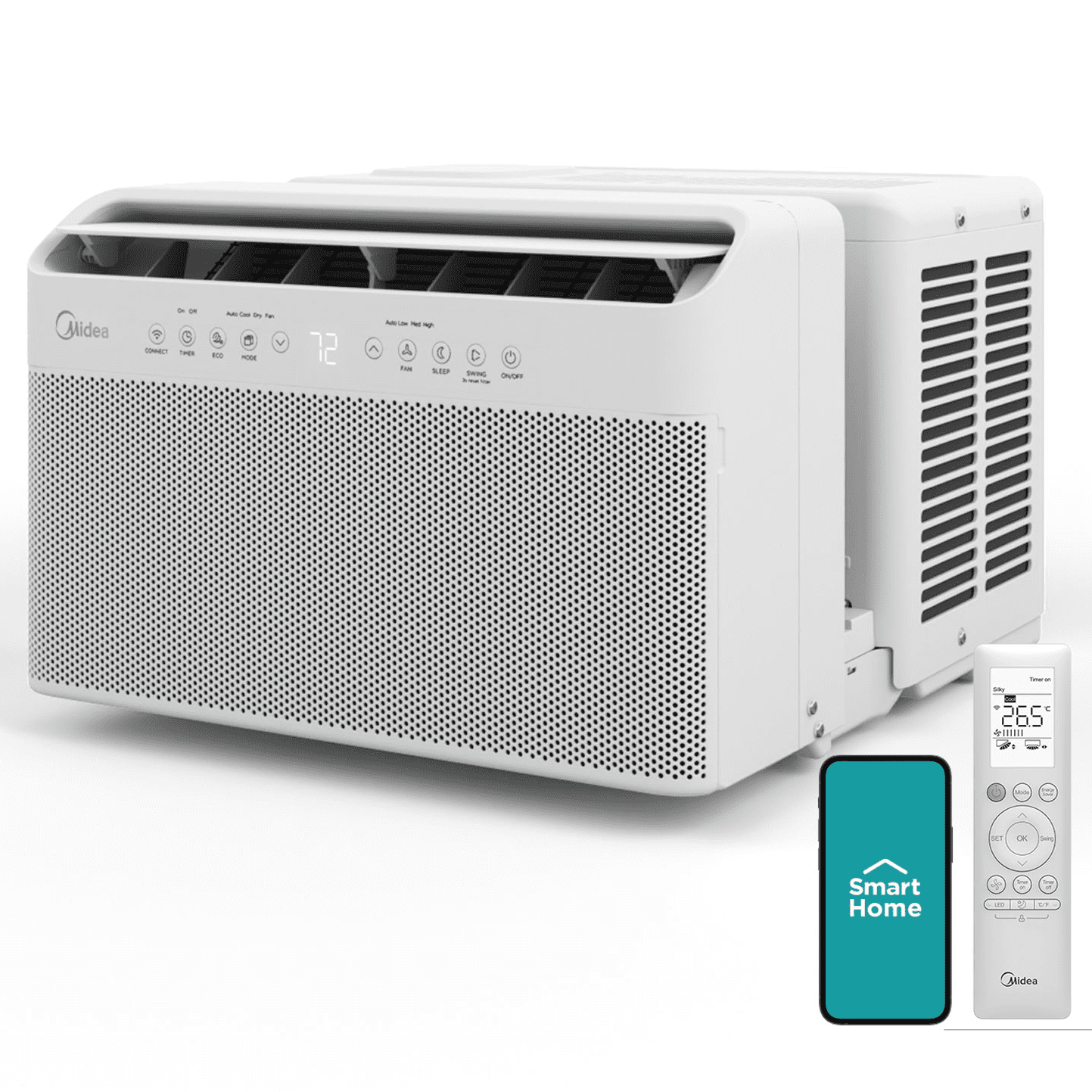
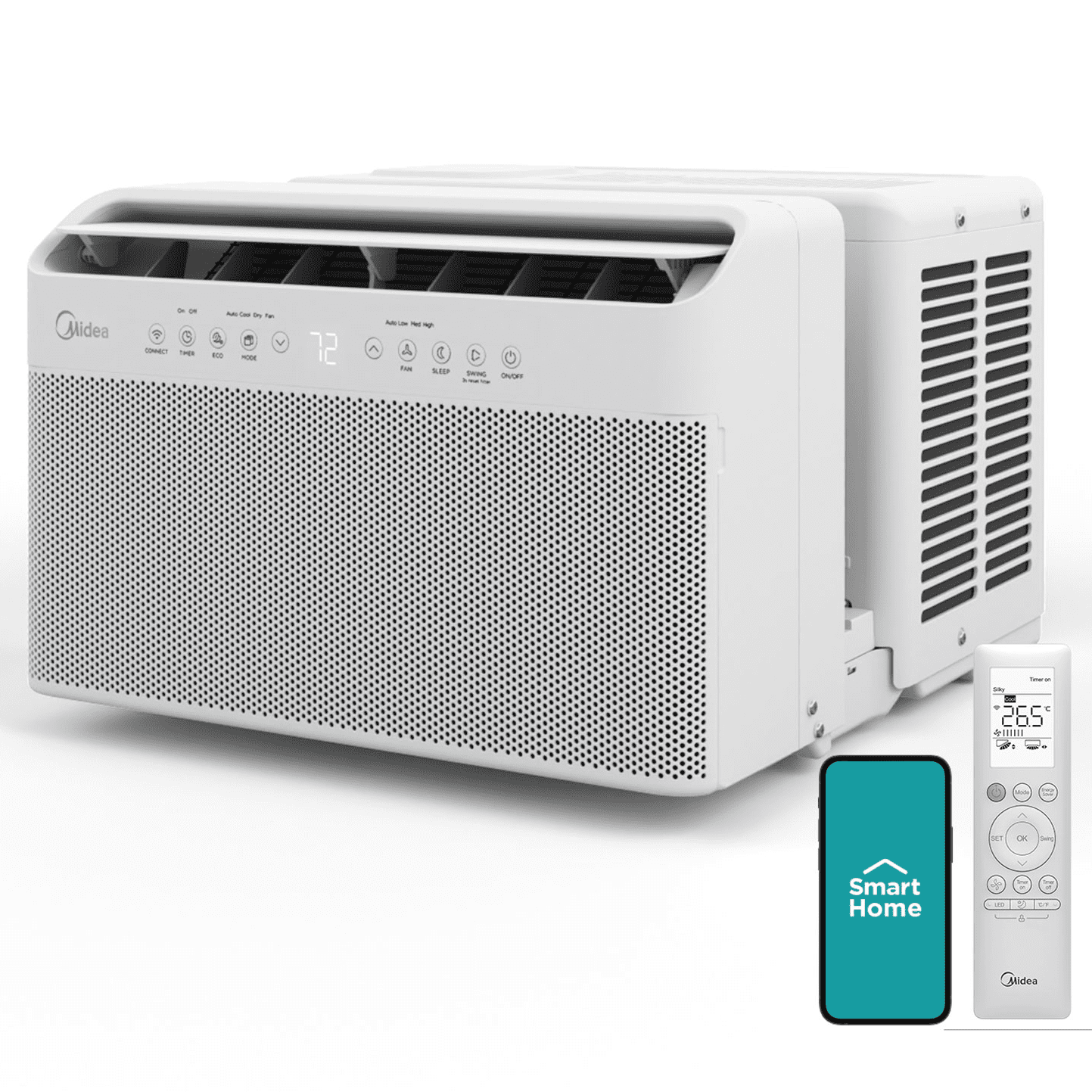
If you are looking for a high-performance cooling solution, the Midea U-Shaped Smart Inverter Window Air Conditioner 12,000 BTU is one of the best energy-efficient window AC options for quiet, powerful cooling on the market today. Its patented U-shaped chassis, variable-speed inverter compressor, and triple smart home support (Alexa, Google Assistant, and Apple HomeKit) make it a standout choice for bedrooms, home offices, and open-concept rooms up to 550 sq ft.
Check the latest deals on the Midea U-Shaped Smart Inverter Window Air Conditioner 12000 BTU for your home office or bedroom.
Whether you're cooling a master bedroom, a home office, or an open-concept living space, this guide covers everything you need to decide if the Midea U-Shape is the right fit for your home. For a hands-on perspective, see our LG LW1222IVSM Review: Is This 12,000 BTU Window AC Worth It?.
TL;DR
The Midea MAW12V1QWT is one of the quietest, most energy-efficient window ACs on the market. Its U-shaped chassis lets you open and close your window normally, while inverter technology keeps electricity bills in check. Best for bedrooms and home offices in spaces up to 550 sq ft.
Our Top Pick: Midea U-Shape 12,000 BTU Smart Inverter (MAW12V1QWT)
An exceptional window AC that earns its premium price tag through genuinely innovative design, ultra-quiet performance, and smart home integration. Score: 9.2/10.
Quick Note on Scope: This guide focuses exclusively on the Midea MAW12V1QWT 12,000 BTU model. Midea also offers this U-Shape design in 8,000, 10,000, and 14,000 BTU variants — the buying considerations are largely the same, but sizing will differ.
Midea MAW12V1QWT: Full Product Overview
The Midea U-Shape 12,000 BTU Smart Inverter is designed to cool rooms between 450 and 550 square feet.
— think large bedrooms, generous home offices, studio apartments, or combined living and dining areas. At its core, the unit's most distinctive feature is its patented U-shaped chassis, which wraps around the window sash rather than sitting in front of it. This means the window panel can remain partially open even while the unit is installed and running, dramatically reducing the noise that normally travels through the glass and into the room.Midea rates the MAW12V1QWT at just 42 decibels on its lowest fan setting — comparable to a quiet library or a soft whisper at close range. This is a genuine differentiator. Traditional window ACs, even good ones, typically hover between 52 and 60 dB, which is noticeable enough to interrupt sleep or concentration. The inverter compressor is the other major contributor to quiet operation—a technology also found in permanent solutions like the Daikin RXB12AXVJU Mini-Split.—a technology also found in high-end systems like the Pioneer Mini-Split Heat Pump and the LG 12,000 BTU Dual Inverter Window Air Conditioner (see our detailed review of the LG 12,000 BTU Dual Inverter). Rather than cycling fully on and off like a conventional compressor, it modulates speed continuously to maintain your target temperature. This eliminates the jarring click-and-blast cycle that defines most budget window units.
On the smart side, the MAW12V1QWT connects to your home Wi-Fi via the MSmartHome app (available for iOS and Android) and is compatible with Amazon Alexa and Google Assistant. You can schedule on/off times, set weekly routines, monitor energy usage, and adjust temperature from anywhere — useful if you want to cool the room down before you get home, or shut it off remotely if you forgot. The unit also supports Apple HomeKit through a firmware update that Midea rolled out in 2022, making it one of the few window ACs in this price range to work natively across all three major smart home ecosystems.
Energy efficiency is a genuine selling point. The MAW12V1QWT carries an Energy Star certification and achieves a Combined Energy Efficiency Ratio (CEER) of 15, which is significantly above the federal minimum of 11 for this BTU class. Inverter technology is the primary reason: because the compressor never runs at full tilt when it doesn't need to, power consumption stays proportionate to the actual cooling demand. Midea claims up to 35% energy savings compared to a conventional window AC of the same capacity — and independent testing has broadly supported that figure in moderate climates.
Installation Considerations
The U-shape design requires a double-hung window — the kind where the lower sash slides up. Casement windows, sliding windows, and fixed panes are not compatible. Your window opening should be between 21 and 36 inches wide, and the unit needs a minimum opening height of about 13 inches to seat properly. The MAW12V1QWT weighs approximately 56 pounds, so a second person during installation is strongly recommended.
Because the window sash closes down onto the unit's top frame, you don't need a separate foam seal or the usual accordion side panels that let in dust and insects. Midea includes a foam gasket that compresses against the window sash for an airtight fit. The included installation kit works for most standard window frames, but unusually shallow sills or vinyl windows may require the optional bracket kit sold separately. Once installed, the unit sits flush and looks considerably more intentional than a standard box AC hanging out of a window.
Performance in Practice
In independently published user testing and owner reviews, the MAW12V1QWT consistently receives high marks. If you need something smaller, the LG 8000 BTU Smart Wi-Fi Window Air Conditioner is a strong alternative for smaller rooms. The MAW12V1QWT, however, is built to cool rooms between 450 and 550 square feet and is praised for its ability to cool rooms quickly and maintain temperature without significant overshoot.
The inverter compressor ramps up fast when a room is hot, then throttles back to a gentle hum once the target temperature is reached. The fan has eight speed settings — more granularity than most window ACs — and the directional louvers cover both horizontal and vertical adjustment for even airflow distribution.The unit also includes a dehumidification mode and a fan-only mode. To further improve airflow in large rooms, pairing a window AC with a high-efficiency ceiling fan (see our Hunter Comfort Select HFC-10590 Buying Guide) can significantly reduce cooling time. For more permanent solutions to humidity and air quality, see our GE ADEL50LZ dehumidifier buying guide (ideal for wet basement environments) (or check out our GE ADEL50LZ review for performance details). Dehumidification runs the compressor without the fan blowing hard, pulling moisture from the air without creating a wind-chill effect — useful in shoulder seasons when the air is damp but not especially hot. Sleep mode gradually raises the set temperature by one degree per hour over three hours, mimicking the body's natural comfort curve as you drift into deeper sleep stages.
Pros
- Genuinely quiet at 42 dB minimum — best-in-class for window ACs
- Inverter compressor saves energy and maintains steady temperature
- Window remains partially operable when unit is installed
- Works with Alexa, Google Assistant, and Apple HomeKit
- CEER of 15 — well above federal minimums
- Cleaner, more finished installation look than traditional window ACs
- Eight fan speeds for fine-grained control
- Energy Star certified
Cons
- Requires double-hung window only — no casement or sliding window support
- 56 lb weight makes solo installation difficult
- Premium price compared to non-inverter window ACs
- Optional support bracket sold separately
- MSmartHome app can feel sluggish on older Android devices
- No built-in air purifier or HEPA filtration
- Wi-Fi setup can be finicky on 5 GHz-only routers (needs 2.4 GHz)
This guide contains affiliate links. We may earn a commission if you purchase through them, at no extra cost to you. Our editorial recommendations are made independently.
Full Specifications
| Specification | Detail |
|---|---|
| Model Number | MAW12V1QWT |
| Cooling Capacity | 12,000 BTU |
| Coverage Area | 450–550 sq ft |
| CEER Rating | 15 |
| Noise Level (Min) | 42 dB |
| Compressor Type | Variable-speed inverter |
| Fan Speeds | 8 |
| Smart Platform | Alexa, Google Assistant, Apple HomeKit |
| Wi-Fi Band | 2.4 GHz 802.11b/g/n |
| Voltage | 115V / 60Hz |
| Amperage | 9.8A |
| Power Consumption (Cooling) | 940W |
| Window Width Range | 21–36 inches |
| Minimum Window Opening Height | 13 inches |
| Unit Dimensions (W×H×D) | 21.9 × 14.5 × 20.0 inches |
| Weight | 56 lbs |
| Refrigerant | R-32 |
| Warranty | 1-year parts & labor; 5-year compressor |
| Energy Star Certified | Yes |
| Filter Type | Washable mesh filter |
| Tip: For overall home air quality, consider a high-efficiency MERV-12 air filter for your HVAC system. |
Key Feature Highlights
42 dB Quiet Operation
Library-level noise on the lowest fan setting — genuinely usable in bedrooms and nurseries without white noise masking. (For other quiet home solutions, see our Panasonic WhisperGreen ventilation guide. For smart home security to pair with your automation, check our Ring Alarm Pro guide).
Inverter Compressor
Continuously variable speed means no jarring on/off cycles. Temperature stays within ±0.5°F of your set point rather than swinging several degrees.
CEER 15 Efficiency
Significantly above the 11.0 federal minimum. Reduces operating costs meaningfully over a season of daily use.
Triple Smart Home Compatibility
Native support for Alexa, Google Assistant, and Apple HomeKit — rare at this price point and great for mixed-ecosystem households.
U-Shape Window Design
Window sash closes over the unit's top frame, eliminating accordion panel gaps and letting natural light and fresh air in when the AC isn't running.
R-32 Refrigerant
Lower global warming potential than the R-410A found in older window units. A more environmentally responsible choice for cooling your home.
How the MAW12V1QWT Compares
The Midea U-Shape sits in a specific niche: premium window ACs that prioritize quiet operation and efficiency over rock-bottom price. Here's how it stacks up against comparable models in the 12,000 BTU category. For a detailed comparison, see our comprehensive LG 12,000 BTU Dual Inverter review.
| Feature | Midea MAW12V1QWT | Typical 12K BTU Budget AC | Friedrich Chill Premier | LG 12,000 BTU Dual Inverter |
|---|---|---|---|---|
| BTU | 12,000 | 12,000 | 12,000 | 12,000 |
| Inverter Compressor | ✅ Yes | ❌ No | ❌ No | ❌ No |
| CEER Rating | 15.0 | ~11.0–11.5 | 12.2 | 12.1 |
| Noise (Min dB) | 42 dB | ~55–60 dB | ~52 dB | ~52 dB |
| Smart Home Support | Alexa, Google, HomeKit | None | Alexa, Google | Alexa, Google |
| Window Openable During Use | ✅ Yes (U-Shape) | ❌ No | ❌ No | ❌ No |
| Apple HomeKit | ✅ Yes | ❌ No | ❌ No | ❌ No |
| Energy Star | ✅ Yes | Varies | ✅ Yes | ✅ Yes |
| Refrigerant | R-32 | R-410A | R-410A | R-410A |
| Weight | 56 lbs | ~60–70 lbs | ~70 lbs | ~64 lbs |
| Compressor Warranty | 5 years | 1–2 years | 5 years | 5 years |