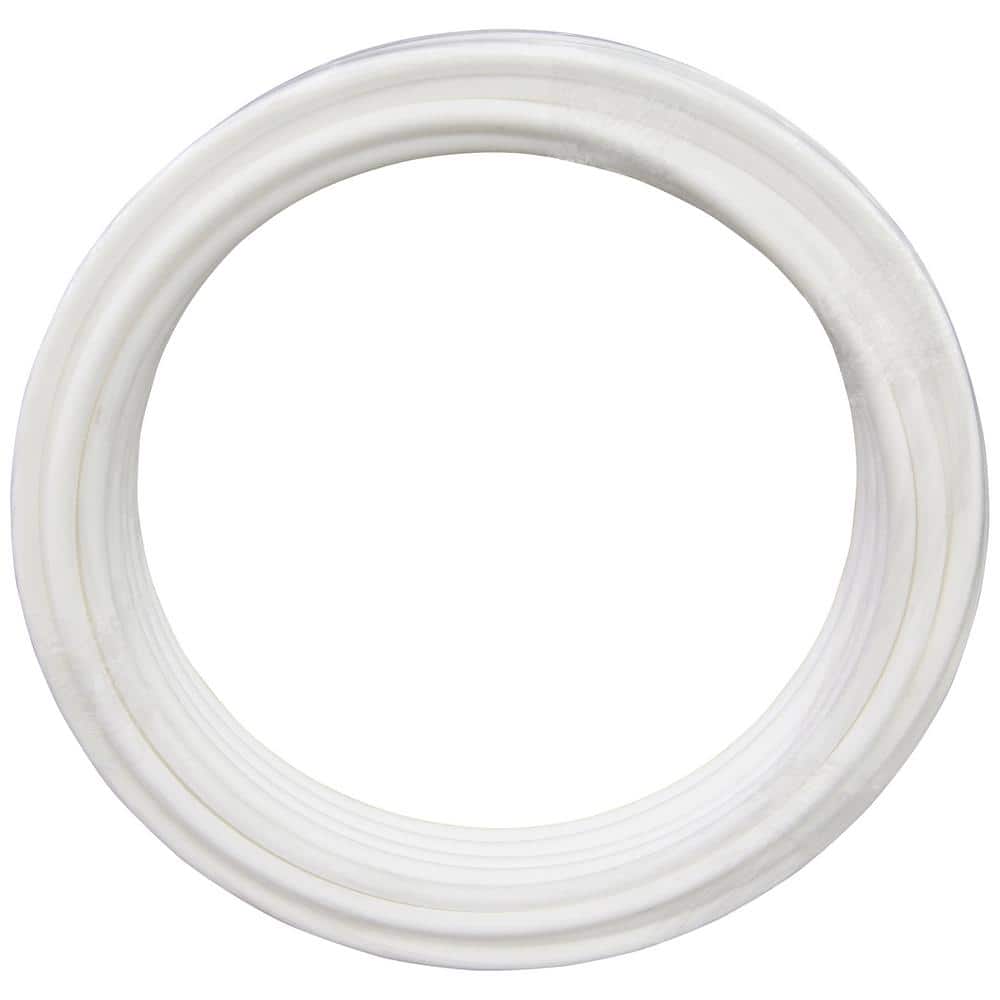
If you are looking for a reliable, code-compliant solution for residential water lines, choosing the right material is critical for long-term leak prevention. The Apollo Half-Inch White PEX-B Flexible Water Pipe Tubing Coil offers a professional-grade, NSF-certified option for potable water and radiant heating—making it an excellent choice for upgrading lines connected to a new A.O. Smith water heater. Durable, chlorine-resistant, and compatible with standard crimp and clamp fittings, it is the ideal choice for homeowners and pros performing repairs or new installations.
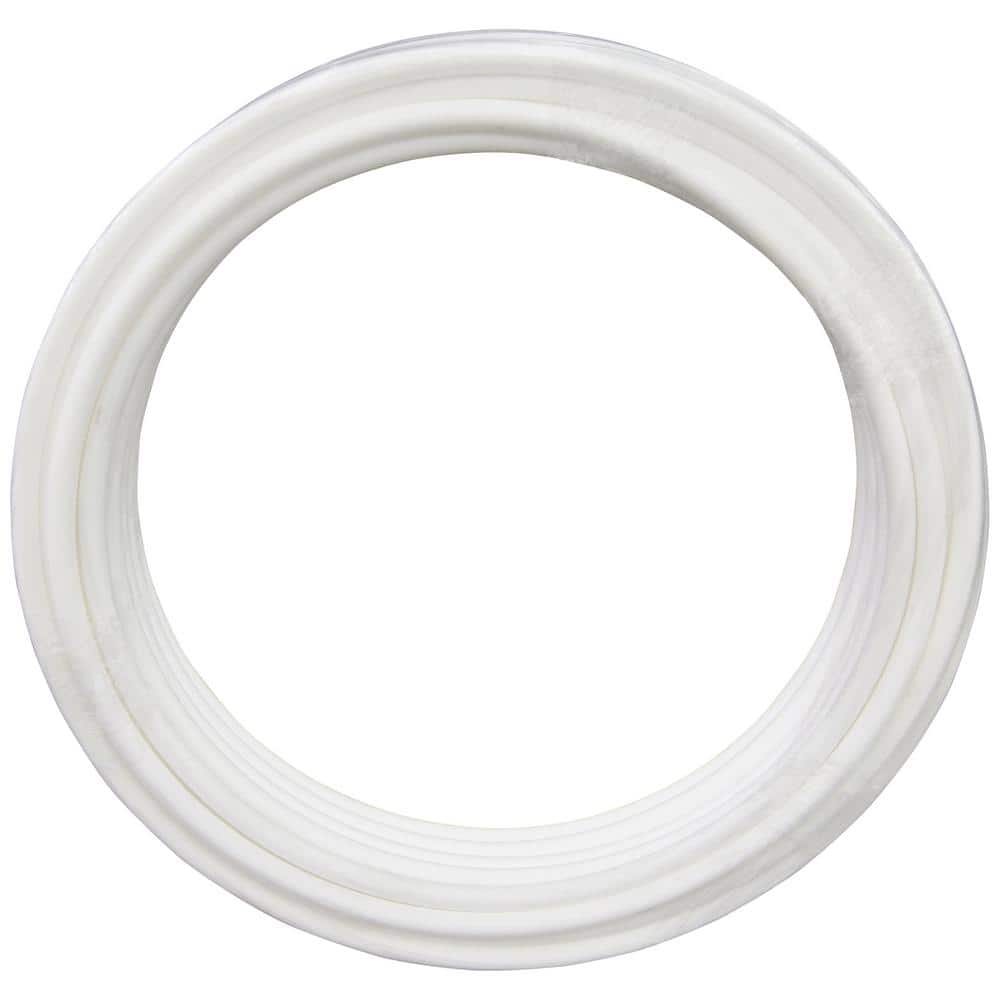
Our Top Pick: Apollo Half-Inch White PEX-B Flexible Water Pipe Tubing Coil
A dependable, NSF-certified PEX-B tubing coil that delivers excellent value for residential plumbing and heating applications. Its flexibility, chemical resistance, and broad fitting compatibility make it an easy recommendation for most homeowners and pros alike. Score: 9/10
Apollo Half-Inch White PEX-B Flexible Water Pipe Tubing Coil
The right PEX tubing can shave hours off your installation, sail through inspection, and last decades in your walls—the wrong choice can mean leaks, failed permits, and costly do-overs. Apollo Half-Inch White PEX-B Flexible Water Pipe Tubing Coil has become a go-to choice for both DIY homeowners and licensed plumbers who want a reliable, code-compliant solution without overpaying.
Related parts & accessories
PEX stands for cross-linked polyethylene, and the "-B" designation refers to the manufacturing method—in this case, a silane (moisture cure) cross-linking process. Compared to Uponor AquaPEX White PEX-A Tubing Coil (made via the Engel method), PEX-B is produced more economically, which translates directly into a lower cost per foot for the end buyer. The cross-linking in PEX-B is slightly lower (around 65–70% compared to PEX-A's 85%+), but this doesn't meaningfully affect performance in standard residential plumbing applications.
What PEX-B does particularly well is resist chlorine degradation. Municipal water supplies treat water with chlorine and chloramines, which can slowly attack polymer pipes over time. PEX-B's molecular structure makes it one of the most chlorine-resistant PEX types available, which is a significant long-term durability advantage in areas with heavily treated tap water.
Apollo is one of the most recognized names in residential plumbing hardware. Their PEX-B tubing meets ASTM-Standard Pipes and Fittings and NSF/ANSI 61 (safe for potable water contact) and NSF/ANSI 14 (material performance standards), so you won't have trouble with inspections or permit sign-offs. The white color of this particular coil makes it easy to identify in a multi-line installation—white is a common convention for cold water lines, while red is typically used for hot and blue also for cold, though the material itself is rated for both hot and cold service regardless of color.
The 10 ft coil format is ideal for smaller jobs, single runs, or situations where you only need to replace a short section of pipe. It's far less unwieldy than a 100 ft or 500 ft roll, and it can be stored easily on a shelf or in a toolbox. For larger projects, Apollo offers this same tubing in longer coil lengths, but the 10 ft size is a standout option for repairs and targeted installations.
Pros
- Affordable price per foot, especially for small jobs
- NSF/ANSI 61 & 14 certified for potable water use
- Excellent chlorine and chloramine resistance
- Flexible and easy to route through walls and joists
- Compatible with multiple fitting types (crimp, cinch, push-to-connect
- Clearly marked with specs and certifications
- Convenient 10 ft length for repairs and small jobs
- Freeze-resistant — PEX expands under pressure rather than cracking
- Trusted brand with wide availability
Cons
- Not compatible with expansion (PEX-A) fittings
- Kinks cannot be restored with heat like PEX-A
- Not UV-stable — requires protection from sunlight
- Not suitable for outdoor above-ground use without shielding
- Slightly less flexible than PEX-A in very cold conditions
- 10 ft length may mean buying multiple coils for larger projects
Key Features and Specifications
The Apollo PEX-B coil is rated for a maximum operating temperature of 200°F (93°C) and a maximum pressure of 100 PSI at 180°F—performance figures that comfortably exceed the demands of standard household hot and cold water distribution. For radiant floor heating systems operating at lower temperatures (typically 80–140°F), this pipe offers a wide safety margin.
The 1/2-inch diameter is the most common size used in residential branch lines. It's the right size for supplying individual fixtures like MOEN Chateau kitchen faucets, toilets, showers, and dishwashers. For high-end bathroom upgrades, check out our Kohler Artifacts buying guide or the Pfister Stellen guide for budget-friendly options. If you're running a main trunk line or a whole-house manifold system, you may also want 3/4-inch tubing (and compatible fittings like the Watts 3/4 inch Lead-Free Brass FPT Coupling (see our detailed Watts LFA-3/4 review)) for the supply trunk, but the 1/2-inch size handles the vast majority of branch connections.
Apollo's tubing is color-striped and stamped with size, pressure rating, and certification marks at regular intervals along its length. This makes it easy to confirm compliance on-site and helps inspectors quickly verify the installation without having to track down paperwork.
| Spec | Detail |
|---|---|
| Pipe Size | 1/2 inch |
| Length | 10 feet |
| Color | White |
| Material | PEX-B (Silane Cross-Linked Polyethylene) |
| Max Temperature | 200°F (93°C) |
| Max Pressure | 100 PSI @ 180°F |
| Certifications | NSF/ANSI 61, NSF/ANSI 14 |
| Compatible Fittings | Crimp, Clamp/Cinch, Push-to-Connect |
| Applications | Potable water, radiant heating |
| Brand | Apollo |
Installation: What You Need to Know
One of the biggest selling points of PEX tubing in general—and this coil in particular—is how easy it is to work with compared to copper or CPVC. PEX is flexible enough to bend around corners without elbows (within minimum bend radius guidelines), which reduces the number of fittings you need and speeds up the installation. The 10 ft coil can be straightened easily by hand or cut to any length with a PEX cutter or sharp tubing cutter.
For connections, you have three primary options. Crimp connections require a crimp ring (copper or stainless steel) and a crimp tool—this is the most traditional and widely used method. Clamp connections use a stainless-steel cinch clamp and a cinch clamp tool; many plumbers prefer this method because the tool is less expensive and easier to use in tight spaces.
Push-to-connect fittings, such as the SharkBite 1/2 inch Push-to-Connect Ball Valve, require no tools at all and are ideal for quick repairs.
or situations where you can't swing a crimping tool.Unlike PEX-A, PEX-B does not have "shape memory" that allows it to be expanded and then contracted around a fitting. If you kink a PEX-B tube during installation, you generally cannot use a heat gun to restore it the way you can with PEX-A. Take care when bending around tight corners, and use bend supports or elbow fittings where tight turns are unavoidable.
PEX should never be used for gas lines, exterior above-ground installations without UV shielding, or direct burial without an appropriate sleeve. For those upgrading basement utilities, pairing new piping with a reliable Ridgid SP-650C sump pump (or exploring the best submersible utility pumps for drainage) is often a priority. Always check your local building code before beginning any plumbing project. If you are managing basement water issues, our Basement Watchdog buying guide provides excellent options for flood prevention.
Who Is This Product Best For?
The Apollo 1/2 in. x 10 ft White PEX-B Coil is purpose-built for the homeowner or plumber who needs a short run of reliable, code-compliant pipe without buying a large roll. It's the ideal solution for replacing a damaged section of supply line, adding a new branch to an existing manifold, or completing a bathroom addition where only a few feet of tubing are needed per fixture (see our Delta Essa buying guide for modern baths for fixture ideas).
Plumbers doing light service work will appreciate the compact format, and the broad fitting compatibility means you're never locked into a specific tool ecosystem. If your shop van already carries a crimp tool or cinch tool, this pipe works with what you have.
Apollo PEX-B vs. the Competition: How Does It Stack Up?
Apollo isn't the only game in town when it comes to PEX-B tubing. SharkBite (known for push-to-connect fittings), Uponor AquaPEX White PEX-A Tubing Coil, and Watts all produce PEX-B in similar sizes and coil lengths. In terms of material quality and certifications, most name-brand PEX-B products are comparable—the key differentiators tend to be price, availability, and brand familiarity for inspectors in your area.
Where Apollo consistently scores well is in consistent wall thickness and print quality. The certification markings on Apollo tubing are clear and durable, which matters when your project is going through inspection. Some off-brand or value-tier PEX-B products have markings that rub off or are printed at irregular intervals, which can slow down an inspector or raise questions.
If your project specifically requires professional-grade piping like PEX-A—for instance, you're using an expansion tool system or you need the added flexibility and kink-recovery properties—Apollo also makes PEX-A tubing. While both PEX-A and PEX-B expand rather than crack when water freezes, PEX-A's higher cross-linking density and elastic memory allow it to return to its original shape more reliably after a freeze event. However, for most standard residential supply line applications, the PEX-B option delivers the same end result at a meaningfully lower cost.
| Feature | Apollo PEX-B 1/2" x 10 ft | Generic PEX-B 1/2" x 10 ft | Apollo PEX-A 1/2" x 10 ft | Copper Type M 1/2" x 10 ft |
|---|---|---|---|---|
| Material | PEX-B Polyethylene | PEX-B Polyethylene | PEX-A Polyethylene | Copper |
| Flexibility | High | High | Very High | Low (rigid) |
| Kink Recovery | No | No | Yes (with heat) | No |
| Chlorine Resistance | Excellent | Varies | Good | Moderate |
| NSF/ANSI 61 Certified | Yes | Verify | Yes | Yes |
| Compatible Fittings | Crimp, Cinch, PTC | Crimp, Cinch, PTC | Expansion, Crimp, PTC | Solder, Press, Compression |
| Freeze Resistance | Good (expands) | Good | Excellent | Poor (splits) |
| Relative Cost | Low | Very Low | Moderate | High |
The Science of PEX-B: How It Works
To understand why Apollo PEX-B is a preferred choice for many, it is helpful to understand the chemistry behind "cross-linking." Standard polyethylene is a thermoplastic, meaning it can be melted and reshaped. Cross-linking transforms the polymer into a thermoset material, creating a three-dimensional molecular network that provides significantly more strength, heat resistance, and durability.
PEX-B is created using the silane method. During production, the polyethylene is treated with silane molecules and then exposed to moisture (steam or hot water). This triggers a chemical reaction that "bridges" the polymer chains. The result is a pipe that resists deformation under pressure and can withstand the high temperatures of domestic hot water without softening or leaching chemicals into the water supply.
The "B" method is particularly effective at creating a dense, tight structure. This density is why PEX-B often exhibits superior resistance to chlorine and chloramines compared to other PEX types. In cities where water treatment is aggressive, this molecular stability prevents the inner wall of the pipe from pitting or degrading, ensuring that the pipe's internal diameter remains smooth and the wall thickness remains consistent over decades of service. For further protection of your plumbing, consider integrating a GE whole house water filter system to protect your entire system to remove contaminants before they reach your fixtures.
Comprehensive Buyer's Guide: Choosing the Right PEX
When selecting piping for your home, the choice often comes down to material, diameter, and installation method. Here is a detailed breakdown to help you decide if the Apollo PEX-B 1/2-inch coil is the right choice for your specific project.
1. Material Selection: PEX-B vs. Copper vs. CPVC
Copper has been the gold standard for decades due to its longevity and antimicrobial properties. However, copper is expensive, rigid, and requires specialized skills (soldering/sweating) to install. CPVC is a rigid plastic that is easier to ins