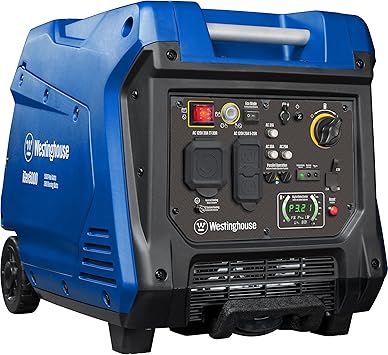
Finding a generator that balances raw power with whisper-quiet operation is harder than it sounds — but the Westinghouse iGen4500 makes a compelling case that you don't have to sacrifice one for the other. Whether you're outfitting an RV, preparing for storm season, or powering sensitive electronics on a job site, this inverter generator deserves a serious look.
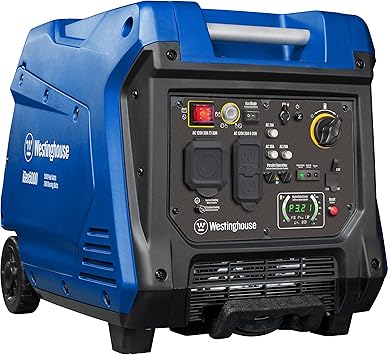
In this complete buying guide, we'll break down everything you need to know about the iGen4500: its specs, real-world performance, who it's best suited for, and how it stacks up against the competition.
TL;DR — Quick Summary
- The Westinghouse iGen4500 delivers 4,500 peak watts / 3,700 running watts of clean inverter power.
- Operates at a very quiet 52 dBA at 25% load — ideal for campsites and neighborhoods.
- Runs up to 18 hours on a single 3.4-gallon tank at 25% load.
- Features a remote start key fob, GFCI outlets, and a built-in LED data center.
- Best for: RV travelers, tailgaters, emergency home backup, and light job site use.
- Not ideal for: running large central AC units, heavy-duty construction equipment, or whole-home backup.
Our Top Pick: Westinghouse iGen4500
A rare blend of serious wattage, ultra-quiet inverter technology, and convenience features like remote start — all at a price point that undercuts comparable Honda and Yamaha models. The iGen4500 earns its place as one of the best mid-range inverter generators on the market.
Westinghouse iGen4500: In-Depth Review
The Westinghouse iGen4500 Super Quiet Inverter Generator sits in a sweet spot of the portable generator market. With a peak output of 4,500 watts and a continuous running wattage of 3,700 watts, it offers enough power to run a mid-size RV air conditioner, a refrigerator, multiple devices simultaneously, or act as a capable emergency power source for essential home appliances. It's meaningfully more powerful than most "camping" inverter generators, yet still portable enough for one person to move around with its built-in handle design.
The inverter technology at the heart of this machine is what sets it apart from conventional portable generators. Rather than producing raw AC power, the iGen4500 generates DC power and then inverts it to clean, stable AC power with less than 3% total harmonic distortion (THD). This makes it safe to use with sensitive electronics like laptops, smartphones, tablets, CPAP machines, and flat-screen televisions — the kind of gear you bring on a camping trip or need to protect during a power outage.
Noise level is one of the iGen4500's headline selling points. At 25% load, it runs at approximately 52 dBA — roughly equivalent to a quiet conversation or a humming refrigerator. Even under heavier load, it stays impressively subdued compared to conventional generators of similar output. This is made possible by Westinghouse's combination of a low-RPM engine design, advanced muffler technology, and an insulated, enclosed housing. For RV parks with strict generator quiet hours or residential neighborhoods, this difference is not trivial.
Fuel efficiency is another strong suit. The iGen4500's 3.4-gallon fuel tank can last up to 18 hours at 25% load, or approximately 6–7 hours at full load. The built-in economy mode (sometimes called "Eco Mode") automatically adjusts engine speed to match current power demand, stretching fuel further and reducing noise when you're not drawing maximum power. For weekend camping trips, this often means you can run the generator for an entire trip without refueling.
Engine & Performance
The iGen4500 is powered by a Westinghouse 224cc OHV (overhead valve) 4-stroke engine. OHV engines are known for their durability, fuel efficiency, and lower emissions compared to older side-valve designs. The engine is paired with Westinghouse's automatic voltage regulation (AVR) system, which works in tandem with the inverter circuitry to keep output voltage stable even as load fluctuates — critical for protecting sensitive electronics.
Starting the iGen4500 is flexible and convenient. It comes equipped with both electric start (key fob remote start and push-button start) and a traditional recoil pull-start as a backup. The remote start key fob works from up to 109 feet away, which is genuinely useful when the generator is stored in an RV compartment or set up at a distance from your campsite. Cold starts are generally reliable, though like all gasoline engines, very cold temperatures can make startup slightly more challenging.
Outlets & Connectivity
The output panel of the iGen4500 is well-equipped for real-world use. It features two 120V 20A GFCI household outlets, one 120V 30A RV-ready TT-30R outlet, and one 12V DC outlet suitable for charging car batteries or running 12V accessories. The GFCI outlets add an important layer of safety, particularly for outdoor use. There is also a USB charging port built into the front panel for directly charging phones or tablets without needing an outlet adapter.
For users who need to run larger loads, two iGen4500 units can be connected in parallel using Westinghouse's parallel kit (sold separately), effectively doubling available wattage to up to 9,000 peak watts and 7,400 running watts. This is a significant advantage for RVers who want to run larger AC units or for users who want a scalable power solution without buying a single larger, heavier generator.
LED Data Center & Monitoring
One of the iGen4500's most practical features is its built-in LED data center display. The digital readout shows real-time output wattage, remaining fuel level, voltage output, and run-time hours. Having this information at a glance takes the guesswork out of load management — you can see exactly how much power you're drawing, how much fuel you have left, and whether you're approaching the generator's limits. For anyone who has ever wondered why their generator suddenly cut out, this kind of transparency is invaluable.
Safety Features
Westinghouse has equipped the iGen4500 with a full suite of automatic shutdown protections. Low oil level shutdown prevents engine damage by automatically cutting power before oil runs dangerously low. An overload protection system shuts down the generator if the electrical load exceeds safe limits, protecting both the generator and connected devices. A CO (carbon monoxide) sensor is also included, automatically shutting the unit down if CO levels rise to dangerous levels — a genuinely life-saving feature that's becoming increasingly standard on new generators.
Peak Watts
4,500W
Running Watts
3,700W
Engine Displacement
224cc OHV 4-Stroke
Noise Level
52 dBA @ 25% load
Fuel Tank Capacity
3.4 gallons
Run Time (25% Load)
Up to 18 hours
Total Harmonic Distortion
<3% THD
Outlets
2x 120V 20A GFCI, 1x 30A TT-30R, 1x 12V DC, 1x USB
Start Type
Remote Key Fob, Push-Button Electric, Recoil
Weight
Approximately 98 lbs
Dimensions (L×W×H)
25.2" × 17.9" × 20.1"
Warranty
3-Year Limited (Residential), 1-Year (Commercial)
Pros
- Exceptionally quiet operation at 52 dBA
- Clean inverter power safe for sensitive electronics
- Convenient remote key fob start (up to 109 ft range)
- Impressive 18-hour runtime at 25% load
- Parallel-capable for doubled output
- Built-in CO sensor and automatic shutdown
- LED data center for real-time monitoring
- RV-ready 30A TT-30R outlet included
- Strong 3-year residential warranty
- More affordable than Honda or Yamaha equivalents
Cons
- Heavier than smaller inverter generators (~98 lbs)
- No built-in wheels or wheel kit included
- Parallel kit sold separately
- Not suitable for whole-home backup
- Plastic housing feels less premium than Honda/Yamaha
- Fuel consumption at full load is moderate
- May struggle in very cold temperatures without winterization
This guide may contain affiliate links. We may earn a commission if you purchase through links on this page, at no additional cost to you.
Who Is the iGen4500 Best For?
The iGen4500 is not a one-size-fits-all generator, but it fits a remarkably wide range of use cases better than most alternatives at its price point. Understanding whether it matches your specific needs is the key to making the right purchase.
The iGen4500 is arguably the ideal RV generator under $1,000. The 30A TT-30R outlet connects directly to most RVs without an adapter, and the 3,700 running watts is enough to power a 15,000 BTU rooftop air conditioner (which typically draws around 1,500–2,000 running watts after startup). Add quiet operation and remote start, and it's tailor-made for campground use.
For homeowners who want to run essential appliances during a power outage — refrigerator, window AC unit, lights, phone chargers, and a sump pump — the iGen4500 has more than enough capacity. The long runtime means you won't be refueling constantly through a multi-day outage.
With less than 3% THD, the iGen4500 produces power clean enough for laptops, external monitors, professional camera equipment, audio gear, and CPAP machines. Conventional generators can produce power spikes that damage or degrade electronics over time — inverter generators eliminate that risk.
If your goal is to power your entire home — including central air conditioning, electric water heater, electric range, and multiple circuits simultaneously — 3,700 running watts won't be sufficient. You'd need a standby generator in the 10,000+ watt range for that application.
If you think you might eventually need more power, buying one iGen4500 now and adding a second unit later (connected via a parallel kit) gives you a flexible, modular approach to power. Two units in parallel deliver up to 9,000 peak watts — capable of handling much more demanding loads while remaining quieter than a single conventional generator of equivalent size.
What Can the iGen4500 Run? Load Guide
Understanding wattage requirements is essential before buying any generator. Here's a practical breakdown of common appliances and how they interact with the iGen4500's 3,700 running watts and 4,500 peak watts.
| Appliance | Starting Watts | Running Watts | iGen4500 Compatible? |
|---|---|---|---|
| 15,000 BTU RV Air Conditioner | ~3,500W | ~1,700W | ✅ Yes |
| Full-Size Refrigerator | ~1,200W | ~700W | ✅ Yes |
| Sump Pump (1/2 HP) | ~1,700W | ~800W | ✅ Yes |
| Window AC Unit (10,000 BTU) | ~2,200W | ~1,200W | ✅ Yes |
| Laptop / Phone Chargers | ~100W | ~100W | ✅ Yes (multiple) |
| Microwave (1000W) | ~1,000W | ~1,000W | ✅ Yes |
| Electric Water Heater | ~4,000W | ~4,000W | ⚠️ Borderline / Not Recommended |
| Central Air Conditioner (3-ton) | ~6,000W+ | ~3,500W+ | ❌ No |
| Electric Clothes Dryer | ~5,400W | ~5,400W | ❌ No |
| CPAP Machine | ~30–60W | ~30–60W | ✅ Yes |
The most common mistake when sizing a generator is confusing starting (surge) watts with running watts. A 15,000 BTU RV AC might need 3,500 starting watts but only 1,700 running watts. As long as the total of all running appliances stays under 3,700W and no single appliance's starting wattage exceeds 4,500W, the iGen4500 can handle the load.
iGen4500 vs. The Competition
The iGen4500 competes in a crowded segment of mid-range inverter generators. Here's how it stacks up against its closest rivals across key metrics.
| Feature | Westinghouse iGen4500 | Honda EU3000iS | Champion 3500W Inverter | Yamaha EF3000iSEB |
|---|---|---|---|---|
| Peak Watts | 4,500W | 3,000W | 3,500W | 2,800W |
| Running Watts | 3,700W | 2,800W | 3,100W | 2,800W |
| Noise Level | 52 dBA | 49–58 dBA | 59 dBA | 53–60 dBA |
| Tank Size | 3.4 gal | 3.4 gal | 2.9 gal | 3.4 gal |
| Max Runtime | 18 hrs | 20 hrs | 14 hrs | 18.6 hrs |
| Remote Start | ✅ Key Fob | ❌ No | ✅ Key Fob | ❌ No |
| Parallel Capable | ✅ Yes | ✅ Yes | ✅ Yes | ✅ Yes |
| RV 30A Outlet | ✅ Yes | ❌ No | ✅ Yes | ❌ No |
| CO Sensor | ✅ Yes | ❌ No | ✅ Yes | ❌ No |
| Weight | ~98 lbs | ~134 lbs | ~95 lbs | ~148 lbs |
| Approximate Price Range | $$ | $$$$ | $ | $$$$ |
| Warranty | 3-Year Residential | 3-Year | 3-Year | 2-Year |