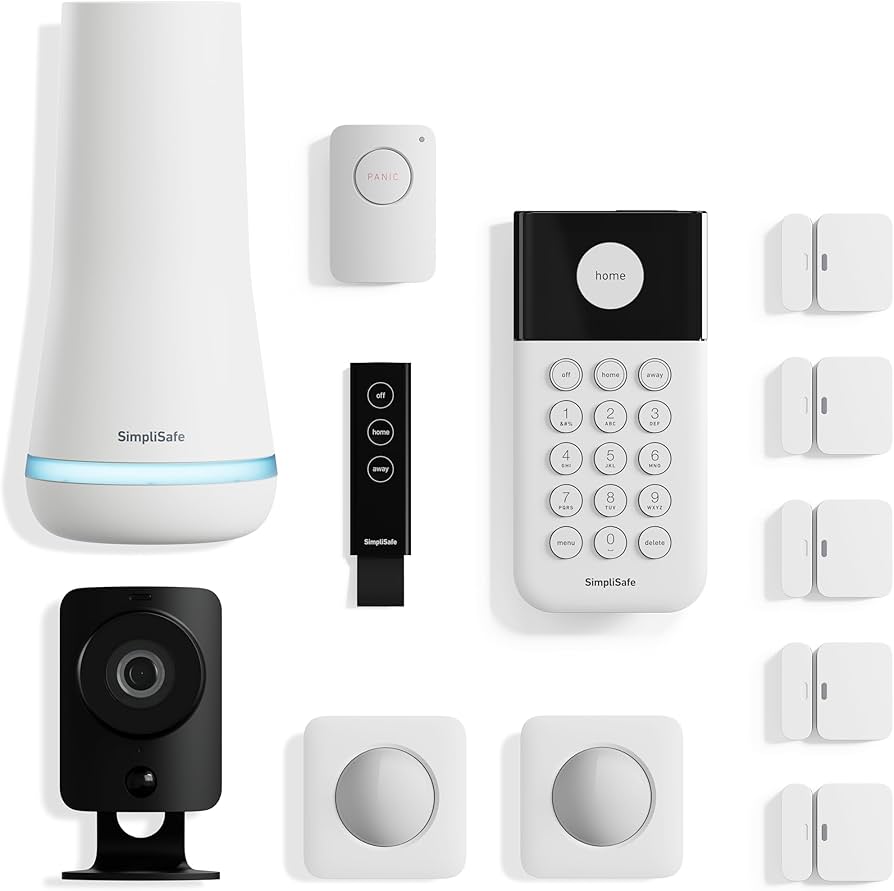
SimpliSafe 12-Piece Wireless Home Security System with 24/7 Professional Monitoring
Score: 8.7/10 — A strong DIY wireless security kit for renters and homeowners who want easy installation, broad entry-point coverage, and flexible protection with the SimpliSafe 12-Piece Wireless Home Security System, providing professional 24/7 monitoring without a traditional long-term contract.
We may earn a commission from qualifying purchases made through links on this page.
Overview
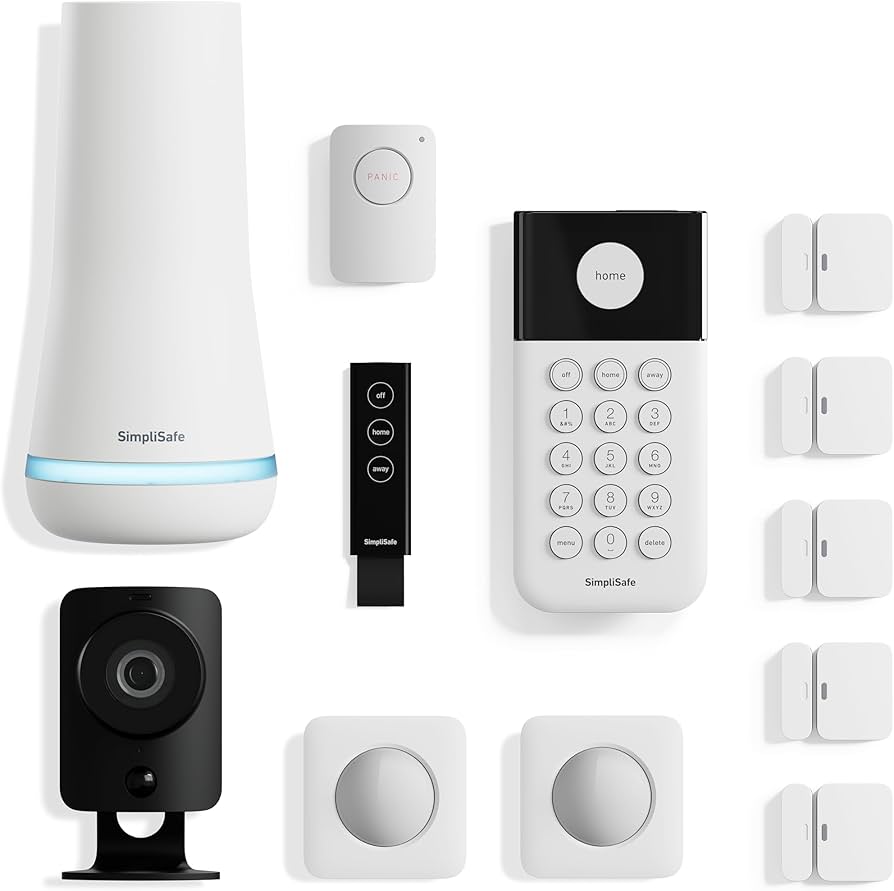
The SimpliSafe 12-Piece Wireless Home Security System with 24/7 Professional Monitoring is a comprehensive, no-contract DIY security starter kit designed to cover the most critical vulnerabilities of a typical residential property without the need for professional installation.
If you are weighing this kit against other DIY options, we recommend comparing it to the SimpliSafe 13-Piece Wireless Home Security System with Smart Alarm Indoor Camera to see if additional camera integration is worth the investment.
Unlike traditional security systems that require drilling through walls or hiring expensive contractors, the SS3-11 is built around a plug-and-play philosophy. It centers on a robust base station and a physical keypad, supported by a suite of motion and entry sensors that can be deployed across a home in minutes.The primary appeal of this system is its strategic balance of accessibility and reliability, making it a strong contender for those seeking the best home security options for DIY setup. For those still deciding, the buying guide provides a deeper breakdown of the value proposition. It is intuitive enough for first-time security buyers who have never owned an alarm system, yet it provides the "serious" security infrastructure required for true peace of mind (see our SimpliSafe (SS3-13PKGCAM) review for a detailed comparison of camera-integrated kits). By supporting professional 24/7 monitoring, the system ensures that emergency services can be dispatched within seconds of a triggered alarm, even if the homeowner is asleep, away on vacation, or unable to access their smartphone. This versatility makes it an ideal fit for apartments, townhomes, and single-family residences. For those securing basements, pairing a security system with a reliable sump pump system (see also our Basement Watchdog review) ensures total home protection against both intruders and flooding.
For the target consumer, the 12-piece kit offers a "middle ground" solution. It provides significantly more coverage than a basic starter kit but remains far less complex than a full-scale enterprise home automation system. It is best for those who prioritize rapid deployment and flexible, no-contract monitoring. While it may not offer the deep, native integration with every single third-party smart-home ecosystem, it excels at its core mission: detecting unauthorized intrusion and alerting the proper authorities with minimal latency.
Key features
Includes core security components for covering multiple entry points and common areas right out of the box.
No professional installation is required, making it suitable for renters and homeowners who want a clean setup.
Supports professional monitoring, allowing alarm events to be escalated to emergency services when active.
Designed around flexible security coverage without the traditional multi-year contract obligations.
Includes specialized sensors to monitor key access points and interior movement zones effectively.
The SS3-11 serves as a base for a broader security setup if additional sensors or a more comprehensive system is ever needed.
If you need integrated camera support, the SimpliSafe 13-Piece Wireless Home Security System with Smart Alarm Indoor Camera is an excellent upgrade (see our SimpliSafe (SS3-13PKGCAM) review).
| Feature | Value |
|---|---|
| Product Name | SimpliSafe 12-Piece Wireless Home Security System with 24/7 Professional Monitoring (SS3-11) |
| Model Number | SS3-11 |
| Category | Home Security Systems |
| System Type | Wireless DIY home security system |
| Number of Pieces | 12-piece kit |
| Installation Type | Self-installation; no professional installer required |
| Included Core Components | Base station, keypad, motion sensor, entry sensors, and additional kit components |
| Monitoring | 24/7 professional monitoring supported |
| Contract Requirement | No long-term contract required |
| Best Use Case | Apartments, rental homes, townhomes, and small-to-medium homes |
| Primary Protection Areas | Doors, windows, entry points, and interior motion zones |
Pros & cons
Pros
- Rapid wireless setup with no professional installation required
- Broad initial coverage thanks to the 12-piece bundle
- Perfect for renters due to non-permanent adhesive installation
- Flexible monitoring plans without long-term contracts
- Simple arming/disarming via the physical keypad
- Highly expandable for larger properties
Cons
- Advanced features require a monthly subscription plan
- Lacks deep integration with some 3rd-party smart home ecosystems
- Large homes may require additional sensors beyond the 12 provided
- No integrated cameras in this specific bundle
- Professional installation not available for those who prefer it
Performance
In real-world daily use, the SimpliSafe 12-Piece Wireless Home Security System with 24/7 Professional Monitoring is engineered to remove the friction typically associated with home security. The wireless components are straightforward to place, and the system avoids the biggest pain point of legacy alarm setups: complicated wiring. For most users, the base station can be positioned centrally, the keypad placed near a main entry point, and sensors assigned to doors and windows without altering the home's structure or requiring a drill.
The standout performance trait of the SS3-11 is its seamless integration into a daily routine. Arming the system when leaving for work, disarming it upon return, and checking the status of specific zones via the app are all intuitive processes. Sensor coverage is remarkably strong for a kit of this size. The 12-piece configuration is well-suited to covering the most obvious access points first, such as the front door, back door, and ground-level windows. For apartments and smaller homes, the included hardware is often sufficient for a complete baseline setup without needing to purchase extra peripherals.
The professional monitoring support is what elevates this system from a simple local alarm to a true security solution. While a loud siren can alert neighbors, it does nothing if you are out of town or asleep. Professional monitoring adds a layer of escalation, ensuring that if an alarm is triggered and you cannot respond to the app notification, a trained operator will contact you and, if necessary, dispatch emergency services. The response time is designed for rapid execution, connecting the household to emergency services within seconds of a confirmed breach.
How the SimpliSafe System Works: A Technical Deep Dive
The SimpliSafe 12-Piece Wireless Home Security System operates on a hub-and-spoke model. The Base Station acts as the central "brain," communicating with all peripheral sensors using a proprietary wireless frequency. This specific frequency is chosen for its reliability and ability to penetrate walls and floors better than standard 2.4GHz Wi-Fi, ensuring that a sensor in a far-off bedroom or basement still communicates with the base station without signal drop-off.
The Base Station: This is the heart of the SS3-11. It contains the primary siren and manages the cellular backup. One of the most critical performance aspects of the base station is its dual-path communication. Unlike systems that rely solely on home Wi-Fi, SimpliSafe utilizes a cellular link to the monitoring center. This is a vital security fail-safe; if an intruder cuts the physical internet line to your home or if your router crashes, the system remains online and can still send an emergency signal to the monitoring center via cellular networks.
The Sensors: The entry sensors consist of a two-piece magnetic assembly: a sensor and a magnet. When a door or window opens, the magnetic contact is broken, which immediately triggers the alarm circuit. The motion sensors utilize Passive Infrared (PIR) technology, which detects changes in heat signatures rather than visual movement. This prevents the system from being triggered by a curtain moving in a draft, although very large pets can occasionally trip the sensor if it is placed too low to the ground.
The Keypad: While the mobile app is convenient, the physical keypad remains essential for guests, children, or elderly residents who may not have a smartphone. The keypad allows for "Stay" mode (arming only the perimeter sensors while leaving interior motion sensors off) and "Away" mode (arming everything). This distinction allows users to move freely inside their home at night while remaining protected from exterior intrusions.
Comprehensive Installation Guide
Setting up the SimpliSafe 12-Piece Wireless Home Security System with 24/7 Professional Monitoring is designed to be a "plug-and-play" experience. To ensure maximum security and reliability, follow this optimized deployment process.
Step 1: Base Station Placement
Place the base station in a central location in your home, ideally on a sturdy table or shelf. Avoid placing it inside a metal cabinet, behind a heavy appliance, or directly next to a large mirror, as these materials can interfere with the wireless signal. Plug it into a power outlet and connect it to your Wi-Fi network via the SimpliSafe app. This central positioning ensures the strongest signal reach for all 12 pieces in the kit, reducing the risk of "sensor offline" errors.
Step 2: Keypad Positioning
Mount the keypad near the door you use most frequently. Since it is wireless and battery-operated, you can use the provided high-strength adhesive strips to mount it to the wall or simply leave it on a side table. Ensure it is within a clear line of sight for the person entering the home, preferably 3-5 feet from the entry door. This provides enough time to disarm the system before you accidentally trigger a motion sensor in the hallway.
Step 3: Entry Sensor Deployment
Apply the entry sensors to all exterior doors and ground-floor windows. Ensure the magnet is aligned with the sensor according to the manual—usually within half an inch of the sensor body. Test each sensor by opening and closing the door to ensure the base station registers the event. It is recommended to prioritize "high-risk" points first, such as sliding glass doors or back alley entrances, before moving to the front door.
Step 4: Motion Sensor Strategy
Place motion sensors in "bottleneck" areas. These are zones that an intruder must pass through to reach the rest of the house, such as a main hallway, the living room, or the master bedroom entrance. Avoid pointing sensors directly at a fireplace or a sun-drenched window, as rapid temperature changes can occasionally cause false triggers. A mounting height of 6-8 feet is typically ideal to capture human movement while minimizing the risk of pets triggering the alarm.
Maintenance and Long-Term Care
Because the SS3-11 is a wireless system, maintenance is primarily focused on power management and signal integrity. Neglecting these can lead to "blind spots" in your security coverage.
Battery Management: The sensors run on small batteries that are designed to last for several years. However, the system will notify you via the app and the base station when a sensor's battery is running low. It is highly recommended to replace batteries immediately upon notification. Waiting too long can result in a sensor going offline, which means a door or window could be opened without triggering an alert.
Signal Audits: Every six months, it is a good practice to perform a "walk test." This involves triggering each sensor one by one to ensure the base station is receiving the signal. This is especially important if you have rearranged furniture or added new electronics (like a powerful new mesh Wi-Fi system) that might interfere with the proprietary wireless frequency used by the SS3-11.
For those needing more comprehensive visual coverage, consider the SimpliSafe 13-Piece Wireless Home Security System with Smart Alarm Indoor Camera.
Physical Inspection: Check the adhesive on your sensors and keypad. While SimpliSafe uses high-quality adhesive, extreme temperature fluctuations (such as in a drafty mudroom or a sun-baked window frame) can cause the adhesive to weaken over time. A quick press-check ensures that sensors won't fall off, which would trigger a false alarm.
Value for Money
When evaluating the value of the SimpliSafe 12-Piece Wireless Home Security System with 24/7 Professional Monitoring (SS3-11), one must look beyond the initial hardware cost. The true value lies in the "cost of ownership" over a 3-to-5-year window. Traditional security companies often lock users into 36-month contracts with steep cancellation fees. The SS3-11 flips this model, offering a low-barrier entry point with no mandatory long-term commitments (compare with other no-contract options like the Eufy Security Alarm (see our detailed Eufy S330 review) (see our detailed review)).
For the price of the 12-piece kit, the consumer receives a comprehensive "security shell." If you were to buy these components individually, the cost would be significantly higher. The bundling of the base station, keypad, and a wide array of sensors provides an immediate, full-home solution. For renters, the value is even higher; the ability to take the entire system with you to a new apartment without paying "removal fees" or leaving behind wired infrastructure is a massive financial and practical advantage.
The professional monitoring subscription is where the ongoing cost resides. While some may see this as a drawback compared to "self-monitored" systems, the value here is the transfer of risk. The peace of mind knowing that a human operator is watching your home while you are at work or asleep is a service that justifies the monthly fee for most homeowners. Furthermore, the option to switch between self-monitoring and professional monitoring allows users to adjust their spending based on their current ne