Choosing a new toilet sounds simple until you walk into a showroom (or scroll through a retailer's website) and realize there's a fundamental fork in the road: one-piece or two-piece? Each style flushes the same waste and uses the same water, but they differ in price, installation, cleaning, and aesthetics. This guide walks you through how to decide which design fits your bathroom and your lifestyle.
TL;DR: One-piece toilets are sleeker, easier to clean, and ideal for small or modern bathrooms — but they're heavier and cost more. Two-piece toilets are more affordable, easier to handle during installation, and offer wider style/height options, but the seam between tank and bowl traps grime.
Understand the Core Difference
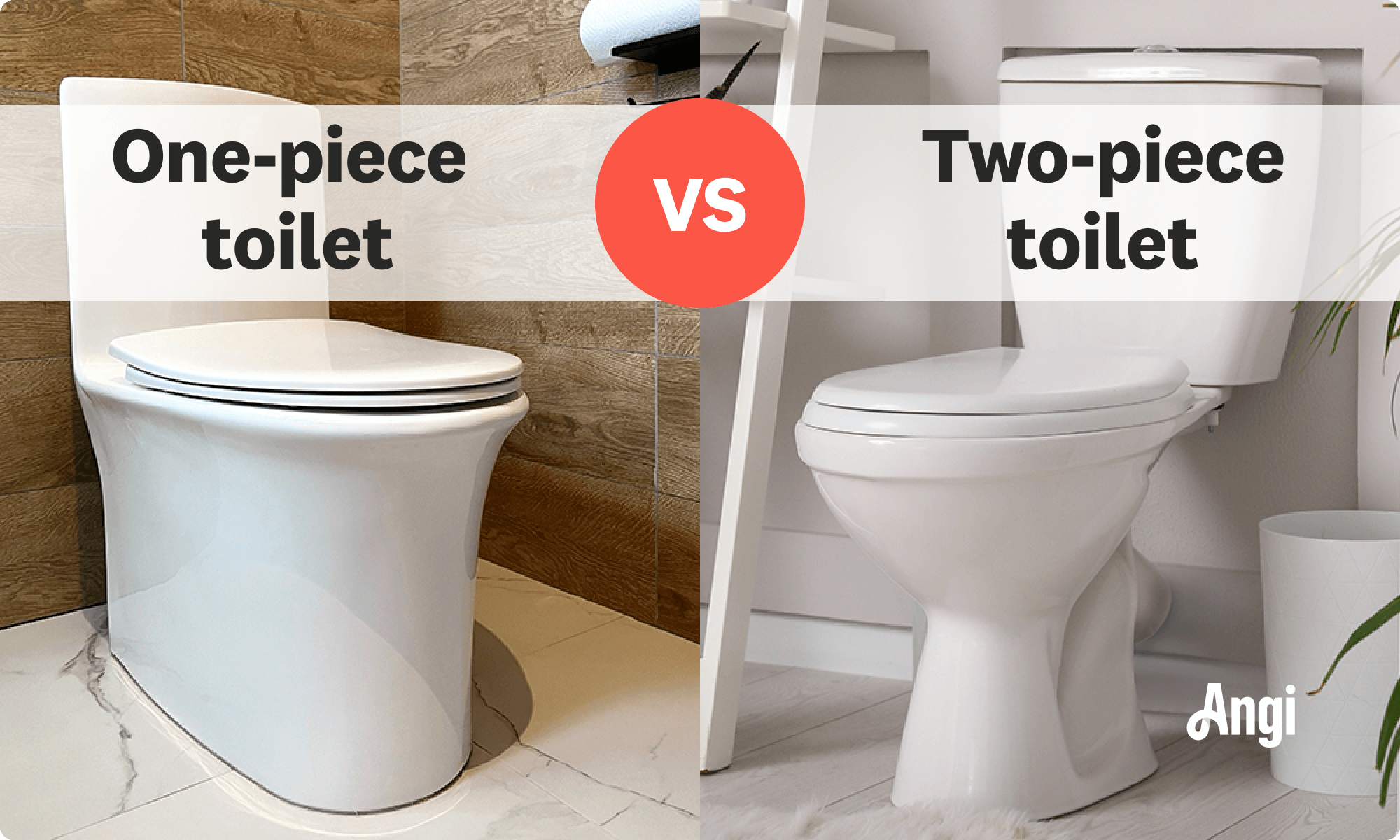
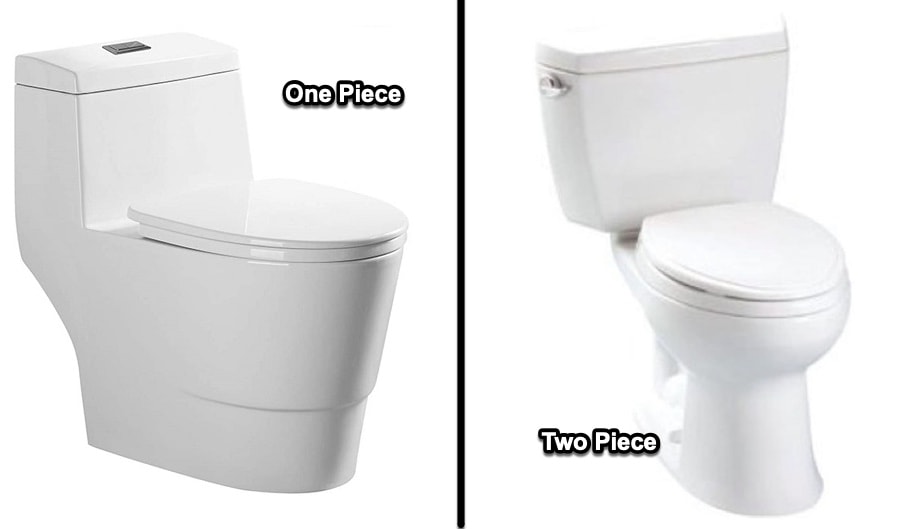
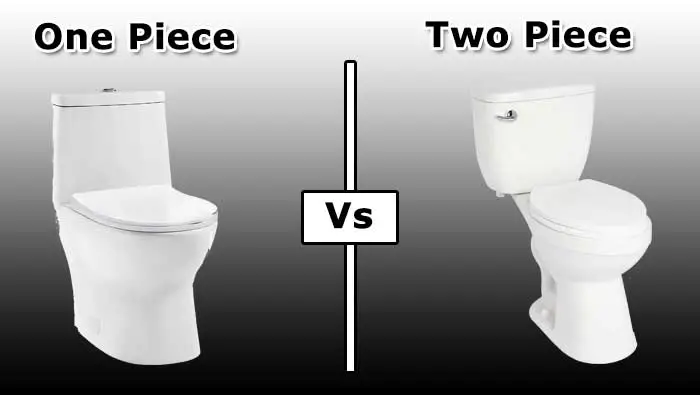
A one-piece toilet is manufactured as a single fused ceramic unit, with the tank and bowl molded together. A two-piece toilet has a separate tank that bolts onto the bowl at installation, with a gasket and bolts forming the connection. That single design choice cascades into nearly every other comparison point below.
Compare the Key Factors
Two-piece toilets typically run $150–$400, while one-piece models start around $300 and easily climb past $1,000 for premium designs.
Two-piece units are lighter to carry (each half can weigh 40–60 lbs). One-piece toilets often exceed 100 lbs and usually need two people to lift.
One-piece toilets have no seam between tank and bowl, so there are fewer crevices for dust, hair, and grime to collect.
One-piece toilets have a low, sculpted profile that suits modern bathrooms. Two-piece toilets have a more traditional silhouette.
If a tank cracks on a two-piece, you replace just the tank. On a one-piece, a crack usually means replacing the entire unit.
Two-piece toilets come in a wider range of bowl heights, including comfort-height (17"–19") and ADA-compliant variants.
Step 1: Measure Your Rough-In
Before anything else, measure the distance from the finished wall behind the toilet to the center of the closet bolts (the bolts in the floor that hold the toilet down). This is your rough-in, and it's almost always 10", 12", or 14". A 12" rough-in is standard and gives you the widest selection in both one-piece and two-piece styles. If you have a 10" or 14" rough-in, two-piece toilets generally offer more options.
Step 2: Assess Your Bathroom Size and Style
In a small powder room or compact half-bath, a one-piece toilet's lower profile can make the space feel less cramped. Skirted one-piece designs also hide the trapway, giving a clean, uninterrupted look. In a larger or more traditional bathroom, a two-piece toilet often fits visually and won't dominate the room.
Tip: Measure the doorway and any tight hallways leading to the bathroom. A one-piece toilet in a single box can be awkward to navigate through narrow openings — sometimes a two-piece is the only practical choice for an upstairs or attic bathroom.
Step 3: Think About Who Will Use It
Households with older adults, tall users, or anyone with mobility issues benefit from a comfort-height toilet (often labeled "Right Height" or "Chair Height"). These are available in both styles, but two-piece models offer the most variety. For kids' bathrooms, a standard 15" bowl height (more common in two-piece units) is friendlier.
Step 4: Consider Long-Term Maintenance
One-Piece Advantages
- No tank-to-bowl gasket to leak over time
- Seamless exterior wipes clean in seconds
- Fewer external bolts and caps to corrode
- Generally more durable as a single fired unit
Two-Piece Advantages
- Individual parts (tank, bowl, flush valve) easier to replace
- Lower upfront cost
- Easier DIY installation for a single person
- Wider availability in budget price tiers
Step 5: Check the Flush Performance
Don't assume one style flushes better than the other — both come in gravity-fed, pressure-assisted, and dual-flush versions. Look at these specs instead:
- GPF (gallons per flush): 1.28 GPF is the WaterSense standard; 1.6 GPF is older but more powerful.
- MaP score: Maximum Performance rating measures how many grams of waste a toilet clears in a single flush. Aim for 800g or higher.
- Trapway size: A fully glazed 2-1/8" trapway resists clogs better than a 2" unglazed one.
Step 6: Factor in Installation
If you're hiring a plumber, the labor cost is similar for either style — typically $150–$300. If you're installing it yourself, a two-piece is significantly easier: you set the bowl on the wax ring, bolt down the tank, and connect the supply line. A one-piece arrives as a single heavy unit you must lift onto the flange in one motion. Plan for a helper.
Watch out: A heavy one-piece toilet can crack a tile floor if dropped. Always lay down cardboard or a blanket during installation, and lift with two people using the bowl rim — never by the tank.
Quick Decision Guide
| If you prioritize… | Choose |
|---|---|
| Lowest price | Two-piece |
| Modern, seamless look | One-piece |
| Easy cleaning | One-piece |
| DIY installation | Two-piece |
| Small bathroom | One-piece |
| Comfort-height variety | Two-piece |
| Long-term durability | One-piece |
| Easy part replacement | Two-piece |
Frequently Asked Questions
Do one-piece toilets really last longer?
They tend to have fewer failure points because there's no tank-to-bowl gasket and no external bolts holding the tank in place. The flush valve, fill valve, and flapper inside still wear out on the same schedule as a two-piece — roughly every 5–7 years.
Is a one-piece toilet worth the extra money?
If you value easy cleaning, a modern look, or have a small bathroom where every inch matters, yes. If you're outfitting a rental property, a guest bath, or simply want the most toilet for your dollar, a two-piece delivers better value.
Can I replace a two-piece with a one-piece?
Almost always, as long as the rough-in measurement matches. You may need to verify clearance behind the toilet, since some one-piece tanks sit slightly farther forward.
Are skirted toilets the same as one-piece toilets?
Not exactly. A skirted toilet has a smooth, concealed trapway on the outside of the bowl, but it can be either a one-piece or two-piece design. Skirted models are easier to clean but slightly harder to install because they hide the floor bolts.
Which is better for resale value?
For mid-range homes, a quality two-piece toilet is perfectly acceptable. For high-end or modern renovations, a sleek one-piece (especially a skirted model) signals an updated bathroom and can support a slightly higher appraisal.
Final Thoughts
There's no universally "better" toilet — only the one that fits your bathroom, your budget, and the people who'll use it. Measure your rough-in first, decide whether aesthetics or affordability matters more, and don't skip the flush performance specs. Either style, properly chosen, should serve you reliably for 15–20 years.